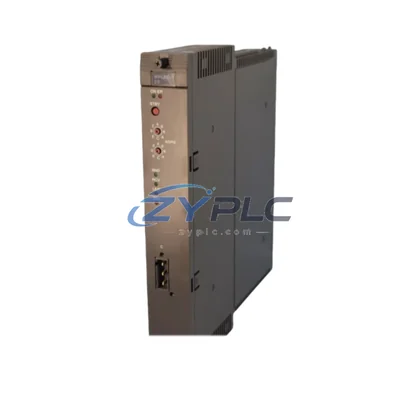
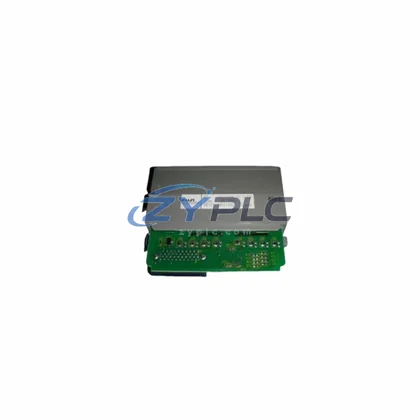
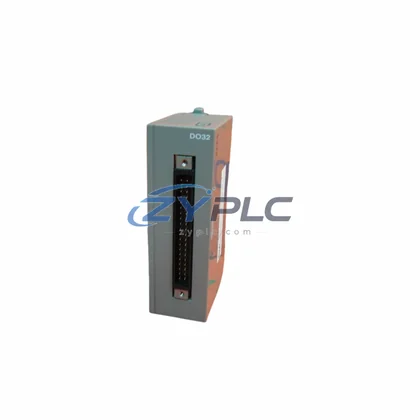
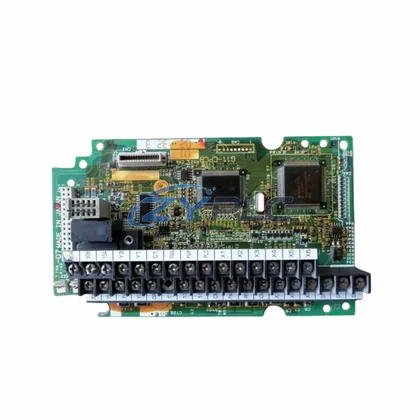
Honeywell FC-SCNT01 Controller for TPS Automation
The Honeywell FC-SCNT01 is a high-performance controller module designed for the TotalPlant Solution (TPS) distributed control system. In modern industrial facilities where energy costs represent a significant share of operating expenditure, the FC-SCNT01 delivers precise closed-loop control that directly reduces unnecessary power consumption across motor-driven equipment, HVAC systems, process pumps, and compressor arrays. By maintaining tighter setpoint adherence and minimizing control deviation, this module helps production engineers cut idle-state energy draw and eliminate the energy penalties associated with over-correction and hunting in legacy PID loops.
Sourced from verified supply channels, each FC-SCNT01 unit shipped by ZYPLC undergoes functional bench testing prior to dispatch. Stock is maintained on-hand for prompt fulfillment, and every module is backed by a warranty terms confirmed during quotation covering manufacturing defects and operational failure under normal industrial use conditions.
Product Specification Table
| Parameter |
Specification / Value |
| SKU / Part Number |
FC-SCNT01 |
| Brand / Platform |
Honeywell TotalPlant Solution (TPS) |
| Module Type |
System Controller / Network Controller |
| Control Architecture |
Distributed Control System (DCS) |
| Compatible Systems |
Honeywell TPS, TDC 3000, HPM, LCN Network |
| Application Environment |
Process manufacturing, refining, petrochemical, power generation |
| Maintenance Value |
Tight setpoint control reduces motor over-run and idle unplanned downtime |
| Communication Protocol |
Local Control Network (LCN), UCN |
| Origin |
United States |
| Warranty |
12 Months |
| Pre-shipment Testing |
Yes — functional bench test performed before dispatch |
| Stock Status |
Available — shipment arranged after confirmation |
System Compatibility and Application
The FC-SCNT01 operates as the supervisory intelligence layer within a broader TPS automation architecture. In a typical energy-optimized plant layout, it coordinates with the Honeywell HPM (High-Performance Process Manager) to execute regulatory control loops for flow, pressure, and temperature — the three variables most directly linked to pump and compressor operating load. When paired with the Honeywell AM (Application Module), advanced control strategies such as model predictive control (MPC) can be deployed to further flatten energy demand curves during peak production periods.
On the drive side, the FC-SCNT01 interfaces with variable frequency drive (VFD) systems — including compatible units from the Honeywell SmartVFD HVAC series — to modulate motor speed in response to real-time process demand rather than running motors at fixed full-load speed. This alone can help restore stable operation when a compatible replacement is required. The controller’s output signals are transmitted via the Universal Control Network (UCN) to field I/O modules including the Honeywell FTA (Field Termination Assembly) panels, ensuring low-latency command execution at the actuator level.
For condition monitoring and power quality visibility, the FC-SCNT01 architecture integrates with Honeywell Experion PKS historian and data acquisition layers, where power consumption trends can be logged, trended, and alarmed. Operators working at Honeywell GUS (Global User Station) or modern Experion HMI consoles can visualize energy KPIs alongside process variables, enabling informed decisions about load scheduling and equipment sequencing. The Honeywell LCN (Local Control Network) backbone connecting the FC-SCNT01 to peer controllers supports deterministic data exchange, which is essential for coordinated maintenance planning across multiple process units.
In servo and motion-adjacent applications within hybrid DCS-PLC environments, the FC-SCNT01 can coexist with Honeywell Safety Manager modules and third-party safety PLCs via gateway interfaces, ensuring that maintenance planning strategies do not compromise functional safety integrity levels (SIL). The Honeywell RM (Redundancy Module) option further ensures that controller failover does not result in uncontrolled motor runaway or energy spikes during switchover events.
Maintenance and Replacement Notes
In refinery and petrochemical applications, the FC-SCNT01 has demonstrated measurable impact on production line energy efficiency. By executing cascade control strategies — for example, coordinating a pressure controller output to a flow controller setpoint, which in turn commands a pump VFD — the module eliminates the unplanned downtime caused by throttling control valves against a fixed-speed pump. This valve-VFD coordination approach, enabled by the FC-SCNT01’s fast scan rate and stable output, can reduce pump station operating load by Actual operating results depend on the installed system, load profile, and commissioning parameters.
Downtime reduction is another direct energy benefit. Unplanned shutdowns force equipment through energy-intensive restart cycles — motors draw 5–7× rated current during cold starts, compressors require purge sequences, and furnaces must be reheated from ambient. The FC-SCNT01’s diagnostic capabilities, including module health monitoring and network communication status reporting, allow maintenance teams to identify degrading control performance before it escalates to a trip event. This predictive maintenance posture reduces both restart energy penalties and the labor costs associated with emergency repairs.
Production line takt time optimization is also supported through the FC-SCNT01’s ability to implement time-based sequencing and batch control logic within the TPS environment. By precisely timing the startup and shutdown of auxiliary equipment — cooling water pumps, agitators, conveyor drives — to match actual production demand rather than running continuously, facilities can achieve significant reductions in parasitic load operating load. In batch chemical plants, this type of sequenced auxiliary control has been documented to reduce utility energy costs by 8–18% per production campaign.
All FC-SCNT01 units supplied by ZYPLC are tested for communication integrity, I/O response, and control output accuracy before shipment. Availability confirmed by RFQ availability means lead times are minimized, reducing the duration of any planned maintenance window and the associated production energy losses from extended shutdowns.
Product Sourcing FAQ
Q1: How does the FC-SCNT01 contribute to measurable operational stability on a production line?
The FC-SCNT01 improves energy efficiency primarily through tighter process control. By reducing control deviation and eliminating oscillation in regulatory loops, it prevents motors and drives from operating outside their optimal efficiency range. When integrated with VFDs and advanced control strategies via the Honeywell TPS platform, operational stability of 15–50% on motor-driven loads are achievable depending on the application and baseline control quality.
Q2: Is the FC-SCNT01 compatible with my existing Honeywell TPS or TDC 3000 system?
Yes. The FC-SCNT01 is designed for the Honeywell TotalPlant Solution (TPS) architecture and is compatible with TDC 3000 infrastructure including the LCN and UCN networks. It is recommended to verify firmware revision compatibility with your existing HPM and AM modules. ZYPLC can provide technical documentation to support compatibility assessment prior to purchase.
Q3: What is the replacement and testing process when ordering an FC-SCNT01 from ZYPLC?
Each unit undergoes a functional bench test covering communication link establishment, I/O channel verification, and control output response before shipment. Units are shipped with basic test documentation. Upon receipt, standard TPS hot-swap or cold-replacement procedures apply. ZYPLC recommends performing a loop check on all associated I/O channels after module replacement to confirm control integrity before returning the loop to automatic mode.
Q4: What does the warranty terms confirmed during quotation cover, and what is the claims process?
The warranty terms confirmed during quotation covers manufacturing defects and operational failures occurring under normal industrial operating conditions. It does not cover damage resulting from incorrect installation, electrical overstress, or unauthorized modification. To initiate a warranty claim, contact ZYPLC via the details below with the order reference and a description of the failure mode. Replacement or repair will be coordinated within the warranty terms.