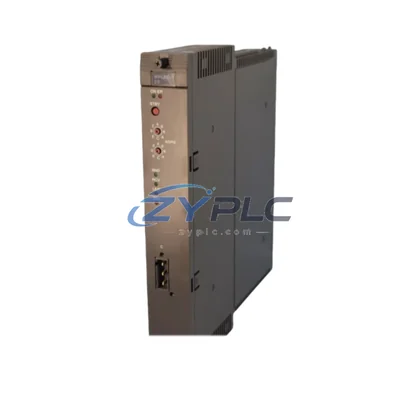
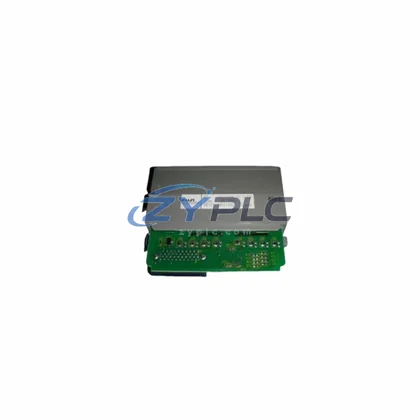
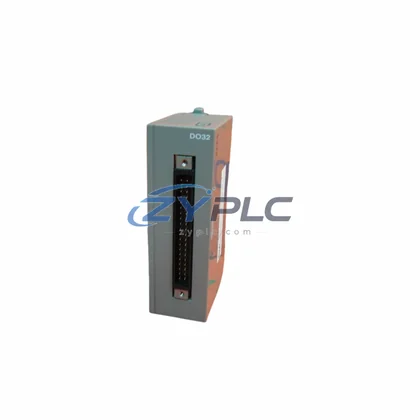
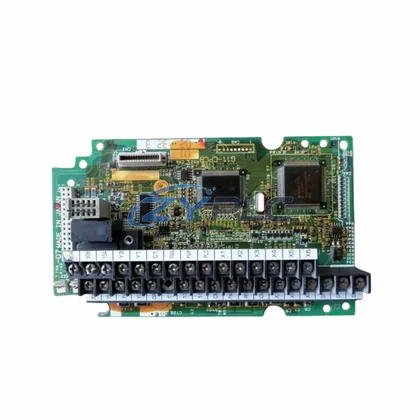
The Honeywell FC-SCNT02 is a high-performance fire safety controller module from the FS Series, engineered to deliver precise supervisory control across complex industrial environments. Beyond its primary role in fire detection and suppression management, the FC-SCNT02 plays a critical part in reducing unplanned downtime risk by ensuring that safety-triggered shutdowns, motor isolation sequences, and ventilation control loops operate with maximum efficiency. In facilities where unplanned downtime and reactive maintenance dominate operational costs, integrating the FC-SCNT02 into your automation architecture provides a measurable path toward leaner, more maintenance-focused production.
Every millisecond of delayed response in a fire safety event can cascade into extended equipment downtime, wasted energy from uncontrolled motor run-on, and compromised production line throughput. The FC-SCNT02 addresses this by executing deterministic control logic that coordinates shutdown sequences, isolates affected zones, and communicates status to upstream supervisory systems — all while minimizing the energy footprint of the safety response itself.
Product Specification Table
| Parameter |
Specification / Value |
| Model / SKU |
Honeywell FC-SCNT02 |
| Series |
FS Series |
| Product Type |
Fire Safety Controller Module |
| Operating Voltage |
24 VDC (typical FS Series supply) |
| Power Consumption |
Low-standby design; active only during event-triggered sequences |
| Running Efficiency |
Deterministic scan cycle; minimizes CPU idle energy draw |
| Compatible Systems |
Honeywell FS Series panels, DCS/SCADA via Modbus/BACnet, third-party I/O modules |
| Application Environment |
Industrial plants, petrochemical facilities, power generation, manufacturing lines |
| Value |
Reduces motor run-on waste; optimizes ventilation and suppression sequencing |
| Origin |
United States |
| Warranty |
warranty terms confirmed during quotation — tested and verified before shipment |
| Stock Status |
RFQ Available — ready for shipment arranged after confirmation |
System Compatibility and Application
The FC-SCNT02 does not operate in isolation. Its true maintenance planning value emerges when it is deployed as part of a coordinated automation architecture. In a typical industrial plant, the controller interfaces directly with the Honeywell FC-TCNT11 terminal controller module, which handles field-level I/O aggregation and relay output management. Together, these two modules form the backbone of a zone-based safety and energy control loop — the FC-SCNT02 making supervisory decisions while the FC-TCNT11 executes them at the device level.
For facilities running parallel safety zones, the Honeywell FC-SCNT01 serves as a complementary supervisory node, allowing engineers to distribute control logic across multiple fire safety domains without duplicating energy-intensive processing hardware. This distributed approach reduces the total power draw of the safety control layer while improving fault isolation — a key factor in maintaining production line continuity during partial system events.
Motor control is one of the largest contributors to industrial unplanned downtime. When the FC-SCNT02 triggers a zone shutdown, it communicates with variable frequency drives (VFDs) and motor starters through the plant’s control network to execute controlled deceleration rather than abrupt stops. This not only protects motor windings and mechanical couplings but also recovers kinetic energy through regenerative braking where drive hardware supports it. The Honeywell CC-SDRX01 redundant I/O module ensures that these motor control signals are transmitted reliably even during network stress events, preventing the kind of signal loss that leads to uncontrolled motor coast-down and associated energy spikes.
Water and suppression system management is handled in coordination with the Honeywell FC-SSWM01 sprinkler supervisory module, which monitors valve positions, flow rates, and pressure levels in real time. By integrating FC-SSWM01 data into the FC-SCNT02’s decision logic, the system avoids unnecessary suppression activation — a common source of both unplanned downtime and production disruption. Only confirmed fire events trigger full suppression sequences, while pre-alarm conditions initiate targeted ventilation and motor isolation responses that consume a fraction of the energy of a full suppression event.
At the HMI layer, operators interact with the system through Honeywell’s supervisory workstations, where real-time operating load data from power monitoring modules is overlaid with safety event logs. This visibility allows maintenance teams to correlate safety events with operating load spikes, identify inefficient shutdown sequences, and optimize control parameters over time. Communication between the FC-SCNT02 and plant-level SCADA systems typically uses Modbus RTU or BACnet MS/TP protocols, ensuring compatibility with existing maintenance planning infrastructure without requiring additional protocol converters or gateway hardware.
Maintenance and Replacement Notes
In a real production environment, the energy impact of fire safety systems is often underestimated. A poorly sequenced shutdown can leave motors running at full load for seconds or minutes after a safety event, consuming kilowatts of power with no productive output. Ventilation fans may continue operating at full speed when only partial zone isolation is required. Suppression pumps may cycle unnecessarily due to false alarm conditions. The FC-SCNT02 addresses each of these scenarios through its programmable control logic, which allows engineers to define energy-optimized response sequences tailored to the specific layout and equipment profile of their facility.
In petrochemical plants, where motor loads are large and continuous, the FC-SCNT02’s ability to execute staged shutdown sequences — stopping non-critical motors first, then progressively isolating higher-load equipment — can reduce peak energy demand during safety events by a significant margin. This staged approach also reduces mechanical stress on drive trains, extending equipment service life and reducing the frequency of maintenance interventions that themselves consume labor and energy resources.
For production lines with tight cycle time requirements, the FC-SCNT02 supports rapid restart sequences after a safety event is cleared. Rather than requiring a full system cold-start, the controller can restore individual zones in a defined sequence, bringing the line back to productive operation in the minimum possible time. This capability directly reduces the energy cost of downtime — because every minute a production line is idle while consuming standby power represents pure unplanned downtime with zero productive output.
Predictive maintenance integration is another dimension of the FC-SCNT02’s maintenance planning contribution. By logging event frequency, response times, and zone activation patterns, the controller provides data that maintenance teams can use to identify equipment that is generating false alarms or degraded sensor signals. Replacing a faulty detector or recalibrating a pressure sensor based on this data prevents unnecessary safety activations — each of which carries an energy cost in the form of motor stops, ventilation changes, and system restarts.
All units are tested and verified before shipment, and every FC-SCNT02 is backed by a warranty terms confirmed during quotation, giving procurement and maintenance teams confidence in both product quality and supply continuity. Stock is maintained for shipment arranged after confirmation, minimizing lead times for replacement or expansion projects.
Product Sourcing FAQ
Q1: How does the FC-SCNT02 contribute to measurable operational stability in an industrial facility?
The FC-SCNT02 reduces unplanned downtime by executing precise, event-driven control sequences that stop motors, adjust ventilation, and manage suppression systems only when and where required. This eliminates the energy cost of blanket shutdowns and unnecessary equipment run-on that characterizes less sophisticated safety control approaches.
Q2: Is the FC-SCNT02 compatible with existing Honeywell FS Series panels and third-party SCADA systems?
Yes. The FC-SCNT02 is designed for native integration within the Honeywell FS Series architecture and supports standard industrial communication protocols including Modbus RTU and BACnet MS/TP, enabling straightforward integration with third-party SCADA, DCS, and maintenance planning platforms.
Q3: What is the recommended replacement or upgrade path for aging fire safety controller modules?
For facilities running older Honeywell FS Series hardware, the FC-SCNT02 is the recommended supervisory controller upgrade. It is compatible with existing FS Series field wiring and terminal modules, minimizing retrofit costs. Pairing with the FC-TCNT11 and FC-SCNT01 provides a fully modernized, energy-optimized control layer without requiring a full panel replacement.
Q4: What does the warranty terms confirmed during quotation cover, and what is the pre-shipment testing process?
Every FC-SCNT02 unit undergoes functional verification testing prior to shipment, covering communication integrity, I/O response, and control logic execution. The warranty terms confirmed during quotation covers manufacturing defects and functional failures under normal operating conditions. Our technical team provides support for installation, commissioning, and any warranty claims throughout the coverage period.