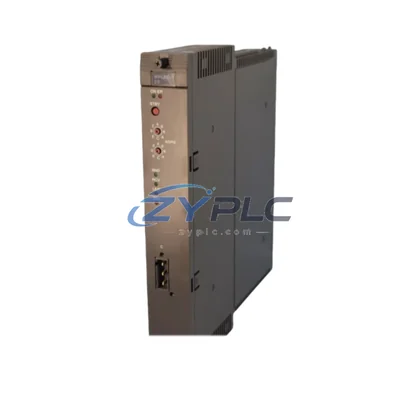
Honeywell FS-CPB-0001 Safety Backplane: Efficiency Control & Production Line Optimization
The Honeywell FS-CPB-0001 is a high-integrity Safety Manager Backplane Module engineered for demanding industrial environments where energy efficiency, system reliability, and functional safety must operate in unison. As the structural and electrical backbone of the Honeywell Safety Manager system, the FS-CPB-0001 enables precise coordination between safety-rated I/O modules, communication cards, and the central processing unit — reducing redundant power draw, minimizing idle-state energy consumption, and ensuring that every connected component operates within its optimal power envelope.
In modern process plants, automotive assembly lines, and discrete manufacturing facilities, uncontrolled energy consumption at the controller level is a silent cost driver. The FS-CPB-0001 addresses this by providing a structured, low-impedance backplane bus that reduces signal loss and heat generation across the Safety Manager rack. When paired with the Honeywell FS-CPU-0001 Safety Manager CPU, the system achieves deterministic scan cycles that eliminate unnecessary processing overhead — directly translating into lower average power consumption per safety loop.
Product Specification Table
| Parameter |
Specification / Value |
| Model / SKU |
Honeywell FS-CPB-0001 |
| Product Series |
Safety Manager |
| Product Category |
Safety Controller Backplane |
| Safety Integrity Level |
SIL 2 / SIL 3 Capable |
| Operating Voltage |
24 VDC (Nominal) |
| Power Consumption |
Low-impedance bus design; minimizes resistive losses across I/O modules |
| Running Efficiency |
Deterministic scan cycle; eliminates redundant processing overhead |
| Compatible Systems |
Honeywell Safety Manager Series (FS-CPU-0001, FS-DIO-0001, FS-AIO-0001, FS-COM-0001) |
| Application Environment |
Process plants, oil & gas, chemical, automotive, discrete manufacturing |
| Value |
Reduces idle-state draw; structured bus lowers heat generation and cooling load |
| Origin |
United States |
| Warranty |
warranty terms confirmed during quotation |
| Stock Status |
RFQ Available — Ships After Outgoing Test |
System Compatibility and Application
The FS-CPB-0001 does not operate in isolation — its energy efficiency value is fully realized when integrated into a well-designed safety automation architecture. In a typical Safety Manager rack configuration, the backplane connects the FS-CPU-0001 central processing unit with digital and analog I/O modules such as the FS-DIO-0001 and FS-AIO-0001, enabling synchronized data acquisition from field sensors without polling delays that waste CPU cycles and inflate power budgets.
For facilities running Profibus DP or Modbus RTU networks, the FS-COM-0001 communication module slots directly into the FS-CPB-0001 backplane, allowing the Safety Manager to exchange real-time process data with upstream SCADA systems or DCS platforms — including Honeywell Experion PKS — without requiring additional gateway hardware that would introduce both latency and additional power draw. This tight integration reduces the number of active network nodes, which is a measurable contributor to system-wide energy reduction.
On the drive side, plants that pair the Safety Manager system with Honeywell variable frequency drives (VFDs) or third-party drives integrated via the safety I/O bus benefit from coordinated motor control: the FS-CPB-0001-based rack can issue safe-stop and safe-speed commands directly to drive systems, eliminating the need for external safety relays and their associated standby power consumption. When a motor is not required at full speed, the safety system’s output — routed through the backplane — enables precise speed regulation that reduces unplanned downtime during partial-load operation.
Power monitoring at the rack level is further enhanced when the FS-CPB-0001 is used alongside Honeywell power supply modules designed for the Safety Manager platform. These modules provide regulated, filtered DC power to each backplane slot, ensuring that voltage fluctuations — which cause I/O modules to draw excess current during correction cycles — are suppressed at the source. The result is a flatter power consumption curve across the production shift, which simplifies energy budgeting and reduces peak demand charges.
For HMI integration, operators using Honeywell Experion Station or compatible third-party HMI panels can visualize real-time safety loop status, module health, and energy consumption trends sourced from the Safety Manager rack. This visibility enables shift supervisors to identify underperforming loops, schedule predictive maintenance before failures occur, and adjust production parameters to maintain optimal equipment utilization rates — all without interrupting the safety function of the FS-CPB-0001 backplane.
Maintenance and Replacement Notes
In a chemical processing plant running continuous batch operations, unplanned safety system downtime carries a dual cost: lost production and the energy required to restart and re-stabilize the process. The Honeywell FS-CPB-0001 contributes to uptime optimization by providing a mechanically robust, electrically stable backplane that maintains signal integrity across all connected modules even under vibration, temperature cycling, and EMI conditions common in heavy industrial environments.
From an energy consumption perspective, the backplane’s low-impedance bus design means that I/O modules spend less time in error-correction states — states that consume additional processing power and generate excess heat. Reduced heat generation directly lowers the cooling load on the control cabinet, which in facilities with large PLC rooms can represent a meaningful reduction in HVAC energy consumption over the course of a year.
Production line takt time optimization is another area where the FS-CPB-0001 delivers measurable value. Because the backplane supports deterministic, high-speed communication between the CPU and I/O modules, safety-related interlocks respond within defined scan cycle windows. This predictability allows production engineers to tighten safety margins without adding buffer time to the production cycle — effectively increasing throughput per unit of energy consumed.
Predictive maintenance is enabled by the Safety Manager’s self-diagnostic capabilities, which are routed through the FS-CPB-0001 backplane. Module health data, communication error counts, and power supply status are continuously monitored and can be exported to maintenance management systems. By acting on early warning indicators rather than waiting for failures, maintenance teams reduce both emergency repair costs and the unplanned downtime associated with running degraded equipment at reduced efficiency.
Every unit of the Honeywell FS-CPB-0001 supplied by ZYPLC undergoes a full outgoing functional test prior to shipment, verifying backplane bus integrity, slot connectivity, and power distribution performance. This testing protocol ensures that the module arrives ready for installation without requiring additional on-site commissioning time — reducing the energy and labor cost of system startup. All units are covered by a warranty terms confirmed during quotation, and ZYPLC maintains inventory stock for rapid dispatch to minimize production line downtime.
Product Sourcing FAQ
Q1: How does the FS-CPB-0001 contribute to operational stability in a Safety Manager installation?
The FS-CPB-0001’s low-impedance backplane bus minimizes resistive power losses between the CPU and I/O modules, reduces heat generation in the control cabinet (lowering cooling load), and supports deterministic scan cycles that eliminate redundant processing overhead. Together, these characteristics reduce the average power draw of the Safety Manager rack during normal operation.
Q2: Is the FS-CPB-0001 compatible with existing Honeywell Safety Manager systems, and can it replace a faulty backplane without full system replacement?
Yes. The FS-CPB-0001 is designed as a direct replacement backplane for Honeywell Safety Manager racks. It is compatible with standard Safety Manager CPU modules (FS-CPU-0001), I/O modules (FS-DIO-0001, FS-AIO-0001), and communication modules (FS-COM-0001). Replacement can typically be performed during a planned maintenance window without requiring full system reconfiguration, provided the replacement module passes pre-installation testing.
Q3: What is the testing process for FS-CPB-0001 units supplied by ZYPLC, and what does the warranty terms confirmed during quotation cover?
Each FS-CPB-0001 unit undergoes a full outgoing functional test at ZYPLC’s facility, including backplane bus integrity verification, slot connectivity checks, and power distribution performance validation. The warranty terms confirmed during quotation covers manufacturing defects and functional failures under normal operating conditions. Units that fail during the warranty period are replaced or repaired at no additional cost to the customer.
Q4: Can the FS-CPB-0001 support integration with condition monitoring systems or SCADA platforms?
Yes. When used with the FS-COM-0001 communication module, the Safety Manager system — anchored by the FS-CPB-0001 backplane — can interface with SCADA platforms, DCS systems such as Honeywell Experion PKS, and maintenance planning systems via standard industrial protocols including Modbus RTU and Profibus DP. This enables real-time energy consumption monitoring at the safety system level and supports data-driven optimization of production line energy use.