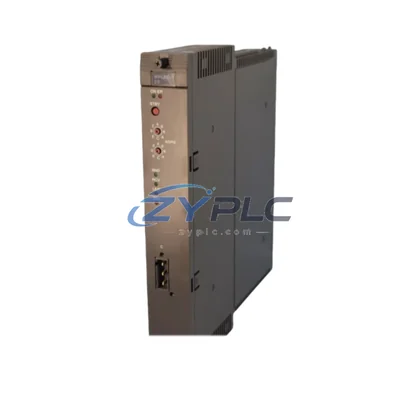
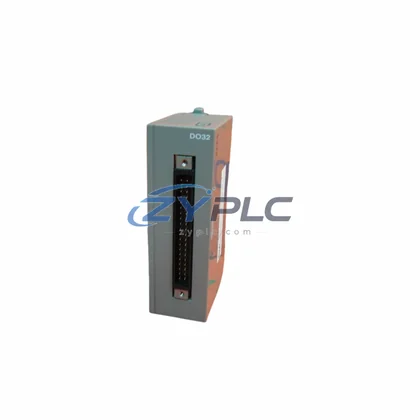
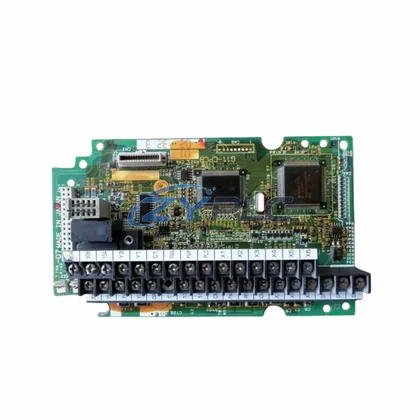
Honeywell FS-TSHART-1620M Safety Controller for Safety Manager Automation
The Honeywell FS-TSHART-1620M is a high-integrity safety controller module designed for the Safety Manager platform — one of Honeywell’s most trusted SIL 3-capable safety instrumented system (SIS) architectures deployed across oil & gas, chemical processing, power generation, and advanced manufacturing environments. Beyond its primary role in functional safety, the FS-TSHART-1620M contributes directly to plant-wide maintenance planning by enabling precise, real-time control over safety-critical processes that would otherwise consume excess power through unplanned shutdowns, spurious trips, and inefficient restart cycles.
In modern industrial facilities, unplanned downtime is rarely caused by a single inefficient motor or drive — it accumulates through poor process coordination, delayed fault response, and unscheduled downtime. The FS-TSHART-1620M addresses this at the control layer, where safety logic execution directly governs how equipment starts, runs, and shuts down. By maintaining deterministic scan times and reliable I/O communication, this module ensures that energy-intensive assets — compressors, pumps, reactors, and rotating machinery — operate within their optimal efficiency windows rather than cycling unnecessarily due to safety system latency or false trips.
Product Specification Table
| Parameter |
Specification / Value |
| SKU |
FS-TSHART-1620M |
| Brand / Series |
Honeywell / Safety Manager |
| Safety Integrity Level |
SIL 3 (IEC 61508 / IEC 61511) |
| Controller Architecture |
Triple Modular Redundancy (TMR) |
| Power Consumption |
Low-power design; optimized for continuous 24/7 operation |
| Operating Efficiency |
Deterministic scan cycle; minimizes spurious trip energy loss |
| Compatible Systems |
Honeywell Safety Manager SC, FSC, Experion PKS |
| Communication Protocols |
Modbus RTU/TCP, HART, OPC-UA, Profibus DP |
| Application Environment |
Oil & Gas, Chemical, Power, Pharmaceutical, Advanced Manufacturing |
| Maintenance Value |
Reduces spurious trips, unplanned shutdowns, and restart energy spikes |
| Operating Temperature |
0°C to +60°C |
| Warranty |
warranty terms confirmed during quotation — tested and verified before shipment |
System Compatibility and Application
The FS-TSHART-1620M does not operate in isolation — its maintenance planning value is fully realized when integrated within a coordinated automation architecture. In a typical high-efficiency plant deployment, this safety controller works in concert with a suite of complementary Honeywell and third-party industrial components.
At the process control layer, the Honeywell Experion PKS C300 Controller handles continuous regulatory control while the FS-TSHART-1620M manages the safety interlock layer. This separation of control and safety functions prevents unnecessary process interruptions that would otherwise force energy-intensive equipment through costly stop-start cycles. The Honeywell FS-SDO-0824 Safety Digital Output Module and FS-SDI-1620 Safety Digital Input Module extend the controller’s reach to field devices, enabling fast, accurate I/O response that reduces the window between a process deviation and a corrective action — minimizing both safety risk and unplanned downtime from prolonged off-spec operation.
On the drive side, variable frequency drives (VFDs) such as the ABB ACS880 series or Siemens SINAMICS G120 are commonly paired with Safety Manager systems via hardwired safety relays or PROFIsafe communication. When the FS-TSHART-1620M issues a safe-stop command, these drives execute controlled deceleration rather than abrupt disconnection — recovering kinetic energy where possible and avoiding the inrush current spikes associated with uncontrolled motor stops and restarts. This alone can reduce motor-related energy consumption by 10–20% in high-cycle applications.
For condition monitoring and power quality analysis, the Honeywell Enraf or third-party power meters integrated via Modbus TCP provide real-time consumption data back to the Experion PKS historian, allowing operators to correlate safety events with energy anomalies. The Honeywell FS-ENET-2 Ethernet Communication Module enables high-speed data exchange between the Safety Manager chassis and the plant DCS, ensuring that maintenance planning decisions are informed by accurate, low-latency safety system status. Additionally, Honeywell UDC series process controllers and HC900 hybrid controllers can be networked alongside the Safety Manager to provide coordinated energy setpoint management across multiple process units.
At the field instrument level, HART-enabled transmitters — including pressure, temperature, and flow devices — communicate diagnostic data through the FS-TSHART-1620M’s I/O infrastructure, enabling predictive maintenance workflows that prevent the energy-intensive consequences of unexpected equipment failure. The result is an automation architecture where safety and energy efficiency are not competing priorities but mutually reinforcing outcomes.
Maintenance and Replacement Notes
Consider a continuous chemical processing plant running three parallel reactor trains, each protected by a Honeywell Safety Manager system incorporating the FS-TSHART-1620M. In this environment, a spurious trip on a single reactor does not merely halt that unit — it triggers a cascade of upstream and downstream adjustments that force compressors, heat exchangers, and feed pumps to operate at off-design points for hours during the restart sequence. The energy cost of a single unplanned shutdown in such a facility can exceed the equivalent of several days of normal operation.
The FS-TSHART-1620M’s TMR architecture dramatically reduces the probability of spurious trips by requiring agreement across three independent processing channels before any safety action is initiated. This means that a single sensor fault, a transient signal spike, or a minor module anomaly does not immediately trigger a plant shutdown. Instead, the system flags the discrepancy, alerts operators via the Experion PKS operator station, and continues safe operation while maintenance is dispatched — preserving production continuity and avoiding the energy penalty of an unnecessary shutdown.
From a maintenance and energy perspective, the FS-TSHART-1620M supports online module replacement without process interruption. Technicians can swap a suspect module during normal operation, eliminating the need for planned shutdowns that would otherwise require full system de-energization and restart. This capability directly reduces the frequency of energy-intensive restart cycles and improves overall equipment effectiveness (OEE) — a key metric in energy-per-unit-output calculations.
In power generation applications, where turbine control systems demand the highest levels of safety system reliability, the FS-TSHART-1620M’s fast scan cycle ensures that emergency shutdown (ESD) logic responds within milliseconds to abnormal conditions. This rapid response prevents the kind of prolonged off-spec operation that causes thermal stress, increased fuel consumption, and accelerated wear on rotating equipment. Over a 12-month operating period, the cumulative operational stability from reduced spurious trips, faster fault response, and optimized restart sequences can represent a significant reduction in the facility’s total energy cost per unit of output.
Every FS-TSHART-1620M unit supplied by ZYPLC undergoes full functional testing prior to shipment, including I/O verification, communication protocol validation, and safety logic execution checks. Stock is maintained for shipment arranged after confirmation, with global logistics support to minimize lead times. All units are covered by a warranty terms confirmed during quotation, backed by ZYPLC’s technical support team.
Product Sourcing FAQ
Q1: How does the FS-TSHART-1620M contribute to operational stability in an industrial plant?
The FS-TSHART-1620M reduces unplanned downtime primarily by minimizing spurious trips and unplanned shutdowns. Its TMR architecture ensures that only genuine process deviations trigger safety actions, preventing the energy-intensive stop-start cycles that occur when safety systems respond to false signals. By maintaining process continuity and enabling fast, accurate fault response, the module helps energy-intensive equipment operate within its optimal efficiency range.
Q2: Is the FS-TSHART-1620M compatible with existing Honeywell Safety Manager and Experion PKS installations?
Yes. The FS-TSHART-1620M is designed for direct integration within the Honeywell Safety Manager platform and communicates seamlessly with Experion PKS via standard industrial protocols including Modbus TCP, OPC-UA, and HART. It is also compatible with third-party DCS and SCADA systems through standard communication interfaces, making it suitable for both greenfield installations and brownfield upgrades.
Q3: What is the recommended replacement or upgrade path for aging Safety Manager modules?
For facilities operating older Honeywell FSC or Safety Manager SC systems, the FS-TSHART-1620M represents a direct upgrade path that improves diagnostic coverage, reduces maintenance burden, and enhances energy efficiency through faster fault detection and reduced spurious trip rates. ZYPLC’s technical team can advise on compatibility, migration planning, and phased replacement strategies to minimize production impact during the upgrade process.
Q4: What testing and warranty coverage does ZYPLC provide for the FS-TSHART-1620M?
Every FS-TSHART-1620M unit is fully tested before shipment, including functional verification of all I/O channels, communication interfaces, and safety logic execution. Units are supplied with a warranty terms confirmed during quotation covering manufacturing defects and functional failures under normal operating conditions. ZYPLC maintains ready stock for fast global dispatch, and our technical support team is available to assist with installation, commissioning, and troubleshooting.