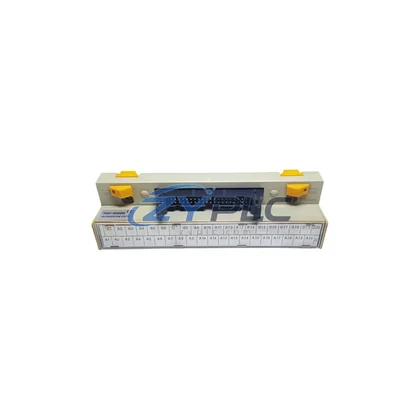
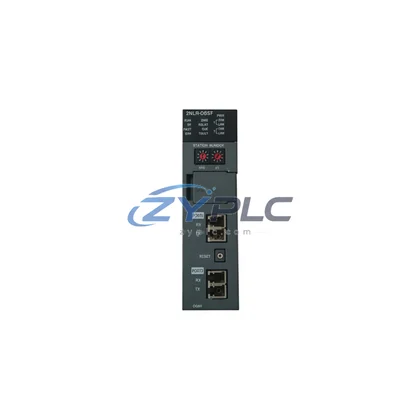
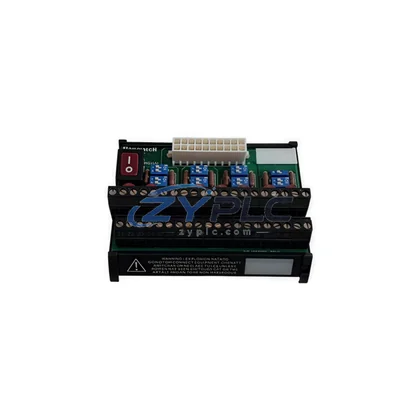
The Honeywell HC-SDS720 Control Station Designer is a purpose-built software configuration tool engineered to serve as the central programming and commissioning interface within the HC900 Distributed Control System architecture. Rather than functioning as a standalone utility, the HC-SDS720 occupies a critical position in the full automation stack — bridging the control layer, I/O layer, network layer, and human-machine interface layer into a coherent, maintainable system. For engineers designing process control solutions across manufacturing, power generation, petrochemical, water treatment, mining, metallurgy, packaging lines, or continuous process industries, the HC-SDS720 delivers the configuration depth and system-level system integration required to build reliable, scalable, and redundant control architectures.
At its core, the HC-SDS720 is the offline and online configuration environment for the HC900 controller family. It enables engineers to define control strategies, configure I/O assignments, establish communication parameters, and manage rack topology — all within a single unified workspace. This system-compatible approach ensures that every element of the control architecture, from the CPU module to the field terminal block, is configured with full awareness of its role in the broader system hierarchy.
Product Specification Table
| Parameter |
Specification |
| Part Number / SKU |
HC-SDS720 |
| Brand |
Honeywell |
| Series |
HC900 Distributed Control System (DCS) |
| Product Type |
DCS Configuration & Engineering Software |
| System Role |
Control Station Designer — offline/online configuration, rack topology, I/O mapping, strategy programming |
| Compatible Controllers |
HC900 C30, C50, C70, C70R (Redundant) CPU modules |
| Communication Protocols Supported |
Ethernet (Modbus TCP), OPC, RS-485 Modbus RTU |
| Network Layer Integration |
Peer-to-peer controller linking, supervisory SCADA/DCS connectivity |
| I/O Configuration Capability |
Analog input/output, digital input/output, pulse, thermocouple, RTD modules |
| Redundancy Support |
Compatible with HC900 C70R redundant CPU architecture |
| Installation Environment |
Engineering workstation (Windows-based); panel or control room deployment |
| Origin |
United States |
| Warranty |
warranty terms confirmed during quotation (ZYPLC) |
System Compatibility Notes
The HC-SDS720 does not operate in isolation — its value is fully realized when deployed as part of a coordinated HC900 system architecture. In a typical HC900 installation, the HC-SDS720 serves as the engineering interface that ties together every layer of the control hierarchy.
At the control layer, the HC-SDS720 is used to program and configure the HC900 C50 or HC900 C70 CPU modules, defining the control strategy, loop parameters, setpoints, and alarm thresholds. For high-availability applications, the HC-SDS720 supports configuration of the HC900 C70R redundant CPU pair, enabling seamless bumpless transfer between primary and backup controllers without process interruption.
At the I/O layer, the software manages the assignment of HC900 analog input modules (such as the HC-TDIL-0800 8-channel thermocouple input) and HC900 digital output modules to specific rack slots and controller scan groups. Engineers can define signal scaling, engineering units, and fault-state behavior for each I/O channel directly within the HC-SDS720 environment, ensuring that the physical field wiring maps precisely to the control strategy logic.
At the network layer, the HC-SDS720 configures Ethernet-based peer-to-peer communication between multiple HC900 controllers, enabling coordinated multi-unit process control across large plant sections. It also establishes OPC server parameters and Modbus TCP/RTU communication tables that allow supervisory SCADA systems, historian servers, and third-party HMI platforms to exchange real-time data with the HC900 controller.
At the power layer, the rack topology configured in HC-SDS720 accounts for the HC900 power supply module assignments, ensuring that I/O expansion racks are correctly associated with their respective power domains and that load distribution across the backplane is validated before commissioning.
At the human-machine interface layer, the HC-SDS720 configuration defines the data tags and communication addresses that HC900-compatible HMI terminals and SCADA workstations use to display process variables, operator setpoints, and alarm states. This tag-level system integration ensures that the HMI accurately reflects the live control strategy without manual re-entry of variable definitions.
At the execution layer, the HC-SDS720 supports download and online monitoring of the control strategy to the HC900 controller, allowing engineers to observe real-time variable states, force I/O points for commissioning, and perform live edits to control parameters without taking the process offline. This capability is essential for reducing commissioning time and minimizing production disruption during system upgrades or loop tuning.
Across a complete HC900 system, the HC-SDS720 works in direct coordination with components including the HC900 C30 compact controller for smaller process sections, HC900 remote I/O expansion racks connected via the HC900 rack communication bus, HC900 analog output modules for final control element positioning, HC900 communication gateway modules for legacy serial device integration, and HC900 redundant power supply pairs for continuous operation in critical process environments. This breadth of system-level coordination makes the HC-SDS720 an indispensable tool for any engineer responsible for HC900 architecture design, commissioning, or long-term maintenance.
Industrial Application Notes
The HC-SDS720 finds application across a wide range of industrial sectors where the HC900 DCS platform is deployed as the primary process control solution.
In petrochemical and refinery environments, the HC-SDS720 is used to configure multi-loop control strategies for distillation columns, heat exchangers, and reactor temperature control, where precise I/O mapping and redundant CPU configuration are essential for safe and continuous operation.
In power generation and utilities, the software supports configuration of boiler combustion control, turbine auxiliary systems, and cooling water management loops, where the HC900’s peer-to-peer networking capability — configured through HC-SDS720 — enables coordinated control across multiple plant sections.
In water and wastewater treatment facilities, the HC-SDS720 is used to define control strategies for pump sequencing, chemical dosing, and filtration process management, with Modbus TCP communication tables linking the HC900 controller to SCADA supervisory systems for remote monitoring and reporting.
In mining and metallurgy operations, the HC-SDS720 supports configuration of conveyor drive control, crusher load management, and flotation cell process loops, where the ability to perform online strategy edits without process shutdown is critical for maintaining production continuity.
In food, beverage, and packaging production lines, the HC-SDS720 enables rapid commissioning of batch control sequences, temperature profiling, and line synchronization logic, reducing engineering time and accelerating time-to-production for new installations.
In all of these applications, the HC-SDS720’s role as the system-level configuration interface — rather than a point-solution tool — ensures that the entire HC900 architecture is engineered, documented, and maintained as a coherent system, supporting long-term operational reliability and simplified troubleshooting.
Product Compatibility FAQ
Q1: Is the HC-SDS720 compatible with all HC900 CPU variants, including the redundant C70R?
Yes. The HC-SDS720 Control Station Designer supports configuration of the full HC900 CPU family, including the C30, C50, C70, and C70R redundant controller. For redundant architectures, the software provides specific configuration options for defining the primary and secondary CPU roles, synchronization parameters, and bumpless transfer behavior, ensuring that the redundant pair operates as a unified control node within the system architecture.
Q2: Can the HC-SDS720 be used for online monitoring and live edits during plant operation?
Yes. The HC-SDS720 supports both offline configuration and online connection to a running HC900 controller. In online mode, engineers can monitor real-time variable states, adjust tuning parameters, and perform controlled strategy modifications without requiring a full controller restart. This capability is particularly valuable during commissioning, loop tuning, and incremental system upgrades, where minimizing process disruption is a priority. All online changes are logged and can be synchronized back to the offline project file for documentation purposes.
Q3: What does the warranty terms confirmed during quotation cover, and how does ZYPLC support long-term system maintenance?
All HC-SDS720 units supplied by ZYPLC are covered by a warranty terms confirmed during quotation against defects in materials and functionality. In addition to warranty coverage, ZYPLC maintains inventory of HC900 system components — including CPU modules, I/O modules, power supplies, and communication gateways — to support both immediate replacement needs and planned maintenance programs. Our technical team can assist with compatibility verification, system architecture review, and sourcing of obsolete or long-lead HC900 components to ensure the continuity of your control system investment.