Honeywell HC-SDS730 Signal Distribution for HC900
The Honeywell HC-SDS730 Signal Distribution Module is a purpose-engineered component within the HC900 Hybrid Controller platform, designed to serve as a critical signal routing and distribution node across multi-layer industrial control architectures. Rather than functioning as a standalone device, the HC-SDS730 is conceived as an integral element of a coordinated control system — one that bridges the gap between field instrumentation, I/O subsystems, communication networks, and supervisory control layers. In process-intensive industries such as petrochemical refining, power generation, water treatment, mining, metallurgy, and advanced manufacturing, the reliability of signal distribution directly determines the integrity of the entire automation loop. The HC-SDS730 addresses this requirement with precision-engineered signal conditioning, robust electrical isolation, and seamless compatibility with the broader HC900 ecosystem.
Within the HC900 architecture, the HC-SDS730 occupies the I/O distribution layer, receiving analog and discrete signals from field transmitters, sensors, and actuators, then routing them with high fidelity to the appropriate controller modules. This positional role makes it indispensable in systems where signal integrity, channel density, and wiring simplification are engineering priorities. The module’s design supports the HC900’s modular expansion philosophy, allowing engineers to scale I/O capacity without redesigning the control cabinet or reconfiguring the communication backbone. This scalability is particularly valuable in greenfield projects and brownfield upgrades alike, where future-proofing the control architecture is a key design criterion.
From a system architecture perspective, the HC-SDS730 interacts directly with the HC900 Process Controller CPU — such as the HC900 C30, C50, or C70 controller variants — which serve as the computational core of the automation system. The CPU processes the distributed signals, executes control logic, and communicates upstream to SCADA or DCS supervisory platforms via Ethernet or serial communication protocols. The HC-SDS730 ensures that the signal chain from field device to controller remains clean, electrically isolated, and free from ground loop interference, which is a common failure mode in large-scale industrial installations.
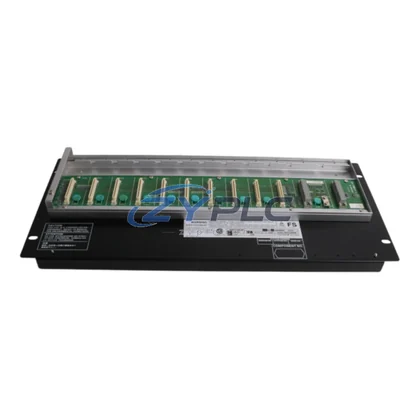
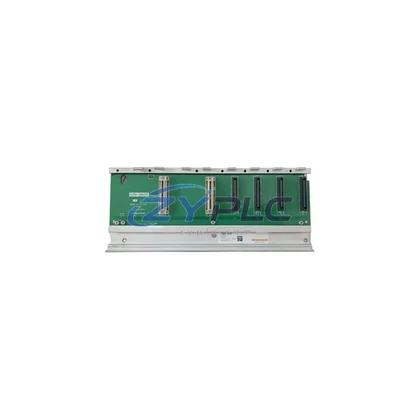
The power layer of the HC900 system, typically supplied by dedicated HC900 Power Supply modules, provides stable DC power to the HC-SDS730 and adjacent I/O modules mounted on the HC900 I/O Expansion Rack. The rack-based architecture allows multiple signal distribution and I/O modules to share a common backplane, reducing inter-module wiring complexity and improving overall system reliability. The HC-SDS730’s compatibility with the HC900 rack backplane ensures that it draws power and communicates with the controller through a unified, low-impedance bus — eliminating the need for external signal conditioners or additional terminal blocks in most applications.
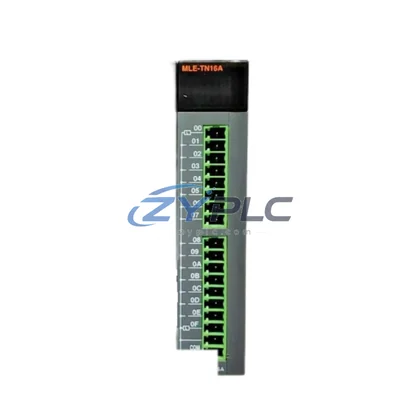
At the field interface level, the HC-SDS730 connects to terminal modules and marshalling panels that aggregate signals from distributed field instruments. In conjunction with HC900 Analog Input Modules (such as the HC-AIM-8 or equivalent), Analog Output Modules, and Discrete I/O Modules, the HC-SDS730 forms a complete signal acquisition and distribution subsystem. This subsystem feeds real-time process data — including temperature, pressure, flow, and level measurements — into the HC900 controller for closed-loop PID control, sequence logic, and alarm management.
For systems requiring high availability, the HC-SDS730 supports integration into redundant HC900 architectures. When paired with redundant HC900 controller modules and redundant power supplies, the signal distribution layer can be configured to maintain continuous operation even in the event of a single-point hardware failure. This redundancy capability is essential in critical process applications — such as boiler control, compressor management, and reactor temperature regulation — where unplanned downtime carries significant safety and financial consequences.
Communication stability is another dimension where the HC-SDS730 contributes to overall system performance. The HC900 platform supports Modbus TCP/IP, Ethernet/IP, and OPC connectivity, allowing the controller — and by extension, the signal data processed through the HC-SDS730 — to be accessed by historian servers, MES platforms, and remote HMI terminals. Operator interface stations running Honeywell’s HC Designer or third-party SCADA software can display real-time signal values, trend data, and alarm states derived from the HC-SDS730’s distribution channels, enabling informed decision-making at every level of the automation hierarchy.
From an engineering and commissioning standpoint, the HC-SDS730 simplifies field wiring through its structured terminal layout, which is compatible with standard DIN rail mounting and 35mm rail systems common in industrial control cabinets. The module’s plug-and-play integration with the HC900 rack reduces commissioning time significantly compared to discrete wiring approaches, and its clearly labeled terminal blocks minimize the risk of wiring errors during installation. Maintenance engineers benefit from the module’s hot-swap capability (where supported by the rack configuration), allowing channel-level servicing without shutting down the entire control system.
Long-term maintainability is a core value proposition of the HC-SDS730. As part of Honeywell’s HC900 product family — which includes a broad portfolio of CPU modules, I/O modules, communication gateways, and power supplies — the HC-SDS730 benefits from a well-established supply chain and long product lifecycle support. Spare parts availability, firmware compatibility, and technical documentation are maintained across the HC900 platform, reducing the total cost of ownership over the system’s operational life. ZYPLC maintains availability subject to RFQ confirmation of the HC-SDS730 and related HC900 components, with a warranty terms confirmed during quotation on all supplied units, ensuring that replacement and expansion projects can be executed with confidence and minimal lead time.
Product Specification Table
| Parameter |
Specification |
| System Role |
Signal Distribution Module — HC900 I/O Layer |
| Compatible Platform |
Honeywell HC900 Hybrid Controller System |
| Compatible Controllers |
HC900 C30, C50, C70 Process Controllers |
| Signal Types Supported |
Analog (4–20 mA, 0–10 V) and Discrete (24 VDC) |
| Electrical Isolation |
Channel-to-channel and channel-to-bus isolation |
| Mounting |
HC900 I/O Expansion Rack, DIN Rail compatible |
| Power Supply |
Supplied via HC900 rack backplane (24 VDC bus) |
| Communication Interface |
HC900 backplane bus (Modbus TCP/IP upstream via CPU) |
| Operating Temperature |
0°C to 60°C (32°F to 140°F) |
| Relative Humidity |
5% to 95% non-condensing |
| Installation Environment |
Industrial control cabinet, IP20 enclosure minimum |
| Certifications |
CE, UL (per HC900 platform standards) |
| Country of Origin |
United States |
| Warranty |
warranty terms confirmed during quotation (supplied by ZYPLC) |
System Compatibility Notes
The HC-SDS730 achieves its full value when integrated within a complete HC900 control system architecture. At the controller layer, the HC900 C50 or HC900 C70 Process Controller CPU serves as the central processing unit, executing control strategies and managing I/O communication across the backplane. The HC-SDS730 distributes field signals to these controllers with minimal latency, supporting fast scan rates required by closed-loop control applications.
Power integrity is maintained by dedicated HC900 Power Supply modules, which provide regulated 24 VDC to the rack backplane. In redundant configurations, dual power supplies are deployed to eliminate single points of failure at the power layer. The HC900 I/O Expansion Rack accommodates the HC-SDS730 alongside Analog Input Modules, Analog Output Modules, and Discrete Input/Output Modules, forming a dense, organized I/O subsystem within a compact cabinet footprint.
At the network layer, the HC900 Ethernet Communication Module enables Modbus TCP/IP and OPC-DA connectivity, linking the controller — and the process data routed through the HC-SDS730 — to plant-level SCADA systems, historian databases, and remote monitoring platforms. For legacy serial integration, the HC900 Serial Communication Module provides RS-485 Modbus RTU connectivity to field devices and third-party controllers.
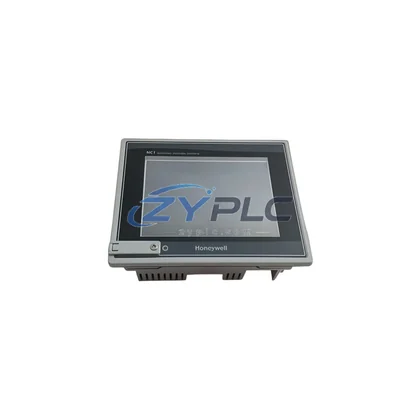
Human-machine interface integration is achieved through Honeywell HC Designer software or compatible third-party HMI terminals, which display real-time values from the HC-SDS730’s signal channels. At the execution layer, the control outputs derived from HC-SDS730 signal inputs drive variable frequency drives (VFDs), control valves, motor starters, and relay output modules — completing the closed-loop automation cycle from field measurement to final control element.
Industrial Application Notes
In petrochemical and refining plants, the HC-SDS730 is deployed in distillation column control systems, where precise temperature and pressure signal distribution across multiple control loops is critical to product quality and process safety. Its electrical isolation prevents ground loops that could corrupt measurement signals in high-noise electrical environments common in refinery control rooms.
In power generation facilities — including thermal, hydro, and combined-cycle plants — the HC-SDS730 supports boiler management systems and turbine control architectures, where signal integrity and system redundancy are non-negotiable requirements. The module’s compatibility with redundant HC900 controller configurations ensures continuous operation during planned maintenance windows.
In water and wastewater treatment plants, the HC-SDS730 facilitates distributed signal collection from flow meters, pH sensors, dissolved oxygen analyzers, and level transmitters across geographically dispersed pump stations and treatment basins. Its rack-based architecture simplifies the integration of multiple I/O points into a centralized HC900 control system.
In mining and metallurgical operations, the HC-SDS730 is used in conveyor control systems, crusher automation, and flotation cell management, where robust signal distribution under harsh environmental conditions — including vibration, dust, and wide temperature ranges — is essential for reliable process control.
In packaging and discrete manufacturing lines, the HC-SDS730 supports high-speed signal distribution for machine sequencing, vision system integration, and quality control instrumentation, enabling the HC900 controller to manage complex multi-axis production processes with consistent timing and signal accuracy.
Product Compatibility FAQ
Q1: Is the HC-SDS730 compatible with all HC900 controller variants, and can it be added to an existing HC900 system without reconfiguration?
The HC-SDS730 is designed for use within the HC900 Hybrid Controller platform and is compatible with HC900 C30, C50, and C70 controller variants. It can be added to an existing HC900 I/O Expansion Rack without requiring a full system reconfiguration, provided that available rack slots and I/O channel capacity are within the controller’s configured limits. Engineers should verify the HC Designer configuration file to confirm channel assignments and update the I/O map accordingly before commissioning the new module.
Q2: How does the HC-SDS730 support system redundancy, and what additional components are required for a fully redundant architecture?
The HC-SDS730 contributes to system redundancy by providing reliable signal distribution within the I/O layer. For a fully redundant HC900 architecture, the HC-SDS730 should be deployed alongside redundant HC900 Process Controller modules, dual HC900 Power Supply units, and redundant Ethernet communication paths. The HC900 platform’s redundancy switchover is managed at the controller level, with the I/O layer — including the HC-SDS730 — remaining continuously active during controller failover events, ensuring uninterrupted signal acquisition and control output.
Q3: What warranty coverage applies to the HC-SDS730 supplied by ZYPLC, and what support is available for long-term maintenance?
All HC-SDS730 units supplied by ZYPLC are covered by a warranty terms confirmed during quotation against manufacturing defects and functional failures under normal operating conditions. ZYPLC maintains availability subject to RFQ confirmation of HC-SDS730 modules and related HC900 components to support both immediate replacement needs and planned maintenance programs. Technical support for installation, commissioning, and system integration within existing HC900 architectures is available through ZYPLC’s engineering team. Contact: +86 19859288691 | plc.sales@zyplc.com.