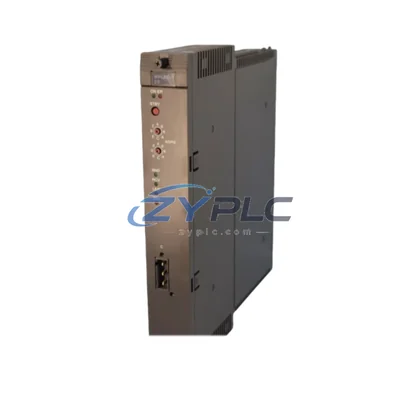
Honeywell SC-UCNN11 Safety Controller for Safety Manager: Control System Coordination and Upstream-Downstream Synergy
The Honeywell SC-UCNN11 is a dedicated safety controller module engineered for deployment within the Honeywell Safety Manager (SM) platform — one of the most widely adopted safety instrumented system (SIS) architectures in process-critical industries worldwide. Rather than functioning as a standalone device, the SC-UCNN11 is designed from the ground up to operate as an integral node within a layered automation hierarchy, coordinating signal flow, redundancy management, and diagnostic communication across every tier of the control system.
In modern industrial automation, the safety layer does not exist in isolation. It must interface seamlessly with the basic process control system (BPCS), the distributed control system (DCS), the human-machine interface (HMI) layer, the field I/O layer, and the plant-wide communication backbone. The SC-UCNN11 fulfills this role by providing a deterministic, SIL 3-capable execution environment that integrates into the broader Safety Manager rack architecture, enabling engineers to build coherent, auditable, and maintainable safety logic across complex process plants.
Product Specification Table
| Parameter |
Specification |
| System Role |
Safety Controller / CPU Module — Safety Manager Platform |
| Model / SKU |
SC-UCNN11 |
| Brand |
Honeywell |
| Series |
Safety Manager (SM) |
| Safety Integrity Level |
SIL 3 (IEC 61508 / IEC 61511) |
| Architecture Type |
1oo2D / 2oo3 configurable redundancy |
| Processor |
Dual-channel redundant CPU with self-diagnostics |
| Memory |
Non-volatile flash program memory with battery-backed RAM |
| Communication Interfaces |
Ethernet (Modbus TCP / OPC-UA), RS-485 serial, proprietary SM backplane bus |
| Scan Cycle |
Configurable; deterministic execution guaranteed |
| Power Supply Compatibility |
24 VDC nominal; compatible with SM-series redundant PSU modules |
| Operating Temperature |
0°C to +60°C |
| Humidity |
5% to 95% RH, non-condensing |
| Mounting |
DIN rail / Safety Manager rack backplane |
| Certifications |
TÜV SIL 3, CE, UL, FM (application-dependent) |
| Warranty |
warranty terms confirmed during quotation — covers manufacturing defects and functional failures under normal operating conditions |
| system integration |
Full system integration support with Honeywell Experion PKS, Safety Builder, and third-party DCS via standard protocols |
System Compatibility Notes
The SC-UCNN11 achieves its full potential when deployed as part of a coordinated Safety Manager rack assembly. At the control layer, it operates alongside the SC-MCMN02 communication module, which manages Modbus TCP and OPC-UA data exchange between the safety layer and the plant DCS or SCADA system. This pairing ensures that safety state data — trip conditions, bypass status, diagnostic alarms — is continuously available to operators at the HMI layer without introducing latency or data integrity risks.
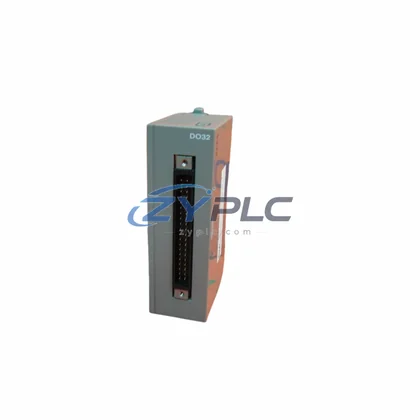
At the I/O layer, the SC-UCNN11 interfaces with dedicated Safety Manager I/O modules such as the SC-XAIM11 analog input module and the SC-XDOB11 digital output module, both of which are designed to maintain SIL 3 integrity across the signal chain from field transmitter to final element. The backplane architecture of the Safety Manager chassis — typically the SC-RBRC11 redundant backplane — allows the SC-UCNN11 to communicate with I/O modules at high speed without relying on external wiring, reducing both installation complexity and potential failure points.
For power integrity, the SC-UCNN11 is designed to operate with the SC-PSSU11 redundant power supply module, which provides hot-swap capability and automatic failover in the event of a primary PSU fault. This power redundancy is critical in continuous process environments — refineries, chemical plants, LNG terminals — where a safety system power interruption could trigger a spurious trip or, worse, leave the process unprotected.
At the network layer, the SC-UCNN11 supports integration with plant-wide Ethernet infrastructure, enabling connectivity to Honeywell Experion PKS stations and third-party historian systems. When deployed alongside the SC-MCMN11 network interface module, the safety controller can participate in high-availability network topologies with ring redundancy, ensuring that a single cable or switch failure does not isolate the safety system from the control room.
For human-machine interface requirements, the SC-UCNN11’s diagnostic and status data can be surfaced on Honeywell Experion HMI stations or third-party SCADA platforms via OPC-UA, providing operators with real-time visibility into safety system health, I/O channel diagnostics, and logic execution status. This system integration capability is a key differentiator of the Safety Manager platform, enabling maintenance engineers to correlate safety events with process data without switching between disparate systems.
In redundant controller configurations, a secondary SC-UCNN11 unit can be installed in a hot-standby arrangement, with automatic bumpless transfer ensuring that a controller fault does not interrupt safety logic execution. This architecture is particularly valuable in applications where proof test intervals must be extended to minimize process downtime, as the redundant controller can be tested online without taking the safety function out of service.
Industrial Application Notes
Oil & Gas and Petrochemical: In upstream and downstream hydrocarbon processing, the SC-UCNN11 is deployed as the primary safety logic solver for emergency shutdown (ESD) and fire and gas (F&G) systems. Its SIL 3 rating and 1oo2D architecture make it suitable for high-demand safety functions such as high-pressure trip, burner management, and compressor protection. Integration with the plant DCS via Modbus TCP allows the BPCS to monitor safety system status without compromising the independence of the safety layer.
Power Generation and Utilities: In thermal power plants and combined-cycle facilities, the SC-UCNN11 provides turbine protection, boiler safety, and auxiliary system interlocking. Its deterministic scan cycle and redundant CPU architecture ensure that safety response times remain within the required demand rate, even under high I/O load conditions. The module’s compatibility with standard Ethernet infrastructure simplifies integration with plant-wide maintenance planning systems.
Water and Wastewater Treatment: Municipal and industrial water treatment facilities use the SC-UCNN11 to manage chemical dosing interlocks, pump protection, and overflow prevention logic. The module’s wide operating temperature range and robust diagnostic capabilities make it suitable for both indoor control room installations and outdoor field enclosures in harsh environments.
Mining and Metallurgy: In mineral processing and smelting operations, the SC-UCNN11 is applied to conveyor protection, crusher interlock, and furnace safety systems. Its ability to interface with both analog and digital I/O modules across the Safety Manager backplane allows engineers to consolidate multiple safety functions within a single rack, reducing panel space and simplifying maintenance.
Pharmaceutical and Fine Chemical Manufacturing: Batch process safety in pharmaceutical production demands precise, auditable safety logic with full traceability. The SC-UCNN11’s non-volatile memory and diagnostic logging capabilities support compliance with IEC 61511 functional safety management requirements, while its system integration with Experion PKS enables seamless batch record integration.
Product Compatibility FAQ
Q1: Is the SC-UCNN11 compatible with existing Safety Manager racks and I/O modules from earlier generations?
The SC-UCNN11 is designed for compatibility within the Honeywell Safety Manager platform ecosystem. It is recommended to verify backplane revision and firmware compatibility with your specific rack assembly — typically the SC-RBRC11 or equivalent — before installation. In most cases, the module can be integrated into existing Safety Manager installations with a firmware update and configuration review using Honeywell Safety Builder software. Our technical team can assist with compatibility assessment prior to shipment.
Q2: Can the SC-UCNN11 be used in a hot-standby redundant configuration, and what is the failover behavior?
Yes. The SC-UCNN11 supports hot-standby redundancy when paired with a second SC-UCNN11 unit in the same rack or an adjacent rack connected via the redundancy synchronization bus. In the event of a primary controller fault, the standby unit assumes control with bumpless transfer, maintaining all output states and logic execution without interruption. Failover time is deterministic and within the safety system’s required response time. This configuration is strongly recommended for high-availability applications where spurious trips carry significant operational cost.
Q3: What does the warranty terms confirmed during quotation cover, and what support is available for long-term maintenance?
All SC-UCNN11 units supplied by ZYPLC are covered by a warranty terms confirmed during quotation against manufacturing defects and functional failures under normal operating conditions. The warranty covers module replacement or repair at no additional cost. For long-term maintenance planning, we recommend maintaining at least one spare SC-UCNN11 in your site inventory to minimize mean time to repair (MTTR) in the event of an unplanned failure. ZYPLC supports RFQ sourcing for SC-UCNN11 and related Safety Manager components to support rapid dispatch globally. For technical support, spare parts planning, or warranty claims, contact our engineering team directly.