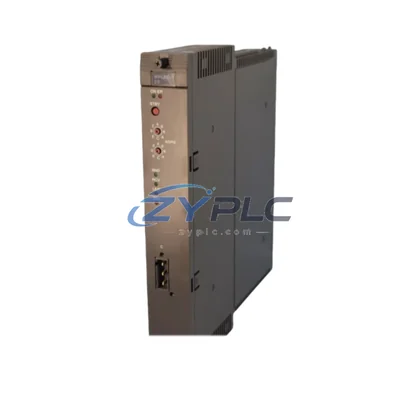
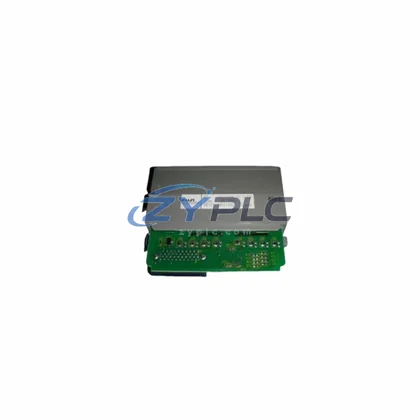
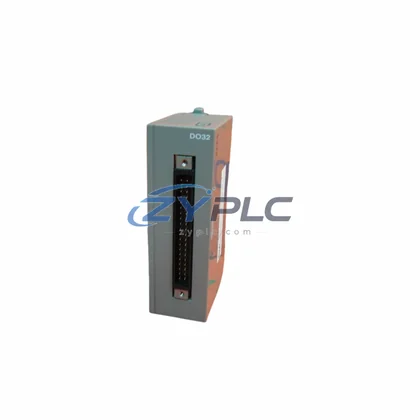
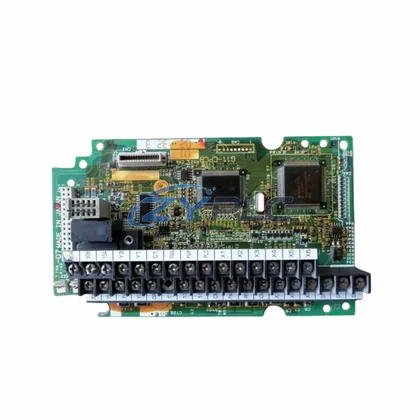
Honeywell SP-EBLDR1 Safety Builder for Safety Manager
The Honeywell SP-EBLDR1 Safety Builder Module is a purpose-engineered component within the Honeywell Safety Manager platform, designed to serve as the configuration and logic-building backbone of safety instrumented systems (SIS) deployed across high-hazard industrial environments. Rather than functioning as a standalone device, the SP-EBLDR1 is most accurately understood as a critical node within a layered, redundant safety control architecture — one that spans the control layer, I/O layer, communications network, power distribution, human-machine interface, and field execution layer simultaneously.
In modern process safety design, the integrity of a safety instrumented function (SIF) depends not only on the logic solver itself, but on the coherence of every upstream and downstream component it interfaces with. The SP-EBLDR1 addresses this requirement by providing a structured, IEC 61511-compliant environment for safety logic configuration, enabling engineers to define, validate, and deploy safety functions with full traceability across the Safety Manager system architecture. Its role in system integration — linking safety logic to process variables, alarm management systems, and distributed control systems — makes it indispensable in architectures where the boundary between safety and basic process control must be clearly defined yet operationally coordinated.
When deployed within a complete Safety Manager cabinet, the SP-EBLDR1 works in close coordination with components such as the SM-SCM Safety Communication Module for peer-to-peer safety network communication, the SP-PSCAA Power Supply Module for redundant 24VDC rail distribution, and the SM-SDO Safety Digital Output Module for driving final control elements such as solenoid valves and motor starters. On the input side, it interfaces with the SM-SDI Safety Digital Input Module and SM-SAI Safety Analog Input Module to receive field signals from pressure transmitters, temperature sensors, and gas detectors. The SM-SCU Safety Controller Unit serves as the central processing node, executing the safety logic configured through the SP-EBLDR1 environment and managing the overall SIL 2 or SIL 3 rated safety loop.
From a network architecture perspective, the SP-EBLDR1 supports integration with Honeywell’s Experion PKS DCS platform via the SM-SIM Safety Integration Module, enabling bidirectional data exchange between the safety layer and the supervisory control layer without compromising safety system independence. This system integration capability is essential in facilities where operators require real-time visibility into safety system states, bypass conditions, and diagnostic data through a unified operator interface. The SM-SRM Safety Redundancy Module further extends system availability by enabling hot-standby redundancy at the controller level, ensuring that a single point of failure in the logic solver does not result in spurious trips or loss of safety function.
For engineering teams managing large-scale safety architectures across multiple process units, the SP-EBLDR1 provides a consistent configuration methodology that reduces commissioning time, simplifies Factory Acceptance Testing (FAT), and supports structured documentation for functional safety audits. Its compatibility with the Safety Manager’s modular backplane architecture means that I/O expansion, controller redundancy, and communication gateway additions can be implemented without disrupting existing safety logic — a critical advantage in brownfield retrofit projects where production continuity is a primary constraint.
Long-term maintenance efficiency is another core value proposition of the SP-EBLDR1 within a Safety Manager architecture. Because safety logic is centrally managed and version-controlled through the builder environment, maintenance engineers can perform proof tests, bypass management, and partial stroke testing with full audit trail support. This reduces the administrative burden of IEC 61511 lifecycle compliance and supports the periodic revalidation requirements mandated by functional safety management systems. All units supplied by ZYPLC are covered by a warranty terms confirmed during quotation, ensuring that replacement and support logistics do not become a bottleneck in safety system maintenance planning.
Product Specification Table
| System Role |
Safety Logic Builder & Configuration Module for Safety Manager SIS Platform |
| Part Number / SKU |
SP-EBLDR1 |
| Brand |
Honeywell |
| Series / Platform |
Safety Manager (SM Series) |
| Safety Integrity Level |
SIL 2 / SIL 3 Capable (IEC 61508 / IEC 61511) |
| Electrical Supply |
24 VDC (via Safety Manager backplane power rail) |
| Communication Capability |
Safety network integration via SM-SCM; DCS integration via SM-SIM (Experion PKS) |
| Redundancy Support |
Hot-standby controller redundancy via SM-SRM |
| Installation Environment |
Control cabinet / DIN-rail backplane; IP20 rated enclosure environment |
| Operating Temperature |
0°C to +60°C (standard industrial range) |
| Compliance Standards |
IEC 61508, IEC 61511, TÜV-certified Safety Manager platform |
| Country of Origin |
United States |
| Warranty |
warranty terms confirmed during quotation (supplied by ZYPLC) |
| system integration |
Supported — DCS/SIS boundary management via Experion PKS integration layer |
System Compatibility Notes
A fully realized Safety Manager architecture built around the SP-EBLDR1 typically encompasses the following coordinated layers and components:
At the control layer, the SM-SCU Safety Controller Unit executes the compiled safety logic and manages all SIF loop timing, diagnostics, and fault response. The SP-EBLDR1 provides the engineering environment through which this logic is authored, validated, and downloaded. Redundancy at this layer is achieved through the SM-SRM Safety Redundancy Module, which maintains a synchronized hot-standby controller ready to assume control within milliseconds of a primary controller fault — a design requirement in SIL 3 architectures where mean time to dangerous failure (MTTFd) targets demand hardware fault tolerance of HFT=1.
At the I/O layer, the SM-SDI Safety Digital Input Module collects discrete field signals from emergency shutdown pushbuttons, position switches, and flame detectors, while the SM-SAI Safety Analog Input Module processes 4–20 mA signals from pressure, flow, and level transmitters. Output execution is handled by the SM-SDO Safety Digital Output Module, which drives solenoid valves, motor contactors, and audible/visual alarm devices in response to safety function activation commands from the SM-SCU.
At the network and communications layer, the SM-SCM Safety Communication Module enables peer-to-peer safety messaging between multiple Safety Manager nodes across a facility, supporting voted architectures and geographically distributed safety systems. The SM-SIM Safety Integration Module bridges the safety network to the Honeywell Experion PKS DCS, providing operators with real-time safety system status, bypass indication, and diagnostic data without creating a safety-critical dependency on the DCS infrastructure.
At the power layer, the SP-PSCAA Power Supply Module delivers regulated 24 VDC to the Safety Manager backplane, with redundant power supply configurations available to eliminate single points of failure in the power distribution architecture. At the HMI layer, Experion PKS operator stations provide the supervisory interface, while at the field execution layer, final elements including control valves, blowdown valves, and deluge system actuators receive commands from the SM-SDO modules under the governance of safety logic authored in the SP-EBLDR1 environment.
Industrial Application Notes
The SP-EBLDR1 and the broader Safety Manager platform find application across a wide spectrum of high-hazard process industries. In oil and gas processing and petrochemical facilities, Safety Manager systems are deployed as Emergency Shutdown Systems (ESD) and High Integrity Pressure Protection Systems (HIPPS), where the SP-EBLDR1 enables engineers to configure complex cause-and-effect matrices, voting logic, and partial stroke test routines for critical isolation valves. In power generation — including thermal, combined cycle, and nuclear auxiliary systems — the platform supports turbine protection, boiler safety, and electrical switchgear interlock logic with the deterministic response times required by functional safety standards.
In chemical and specialty chemical manufacturing, the SP-EBLDR1 supports reactor runaway prevention, toxic gas detection response, and pressure relief system management. In water and wastewater treatment, it enables chlorine dosing safety interlocks and pump protection systems. In mining and mineral processing, Safety Manager architectures protect conveyor systems, crusher interlocks, and ventilation safety functions. In metals and metallurgical processing, the platform manages furnace safety, ladle transfer interlocks, and fume extraction system controls. Across all these applications, the SP-EBLDR1’s role as the configuration and logic management interface ensures that safety functions are consistently defined, documented, and maintainable throughout the full IEC 61511 safety lifecycle.
Product Compatibility FAQ
Q1: Is the SP-EBLDR1 compatible with both new Safety Manager installations and existing legacy Safety Manager systems in brownfield facilities?
The SP-EBLDR1 is designed for use within the Honeywell Safety Manager platform and is compatible with the modular backplane architecture used across Safety Manager system generations. In brownfield applications, it supports logic migration and reconfiguration without requiring full system replacement, provided the target hardware revision and firmware version are confirmed during the engineering assessment phase. ZYPLC recommends verifying the specific Safety Manager hardware revision in your facility before procurement to ensure full compatibility.
Q2: How does the SP-EBLDR1 support redundancy and high-availability architecture requirements for SIL 3 applications?
The SP-EBLDR1 operates within a Safety Manager architecture that supports hardware fault tolerance (HFT=1) through the SM-SRM Safety Redundancy Module, enabling hot-standby controller configurations. Safety logic authored in the SP-EBLDR1 environment is compiled and downloaded to both the primary and standby SM-SCU controllers simultaneously, ensuring that redundancy is maintained at the logic level as well as the hardware level. This architecture supports the MTTFd and PFDavg targets required for SIL 3 safety instrumented functions under IEC 61511.
Q3: What does the warranty terms confirmed during quotation cover, and how does ZYPLC support long-term maintenance and spare parts availability for Safety Manager components?
All SP-EBLDR1 units supplied by ZYPLC are covered by a warranty terms confirmed during quotation against manufacturing defects and functional failures under normal operating conditions. ZYPLC maintains inventory of Safety Manager platform components — including SM-SCU, SM-SDI, SM-SDO, SM-SAI, SM-SCM, and SM-SRM modules — to support spare parts programs and emergency replacement requirements. For long-term maintenance planning, ZYPLC can assist with lifecycle assessments, obsolescence management, and the identification of compatible replacement modules for aging Safety Manager installations. Contact our technical team at plc.sales@zyplc.com or +86 19859288691 for project-specific support.