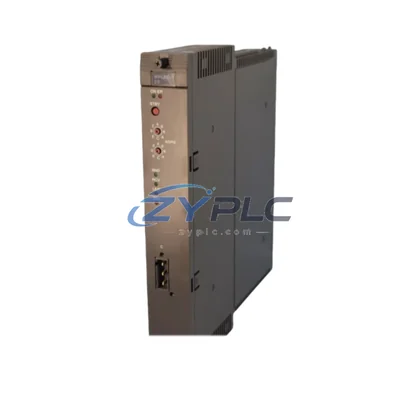
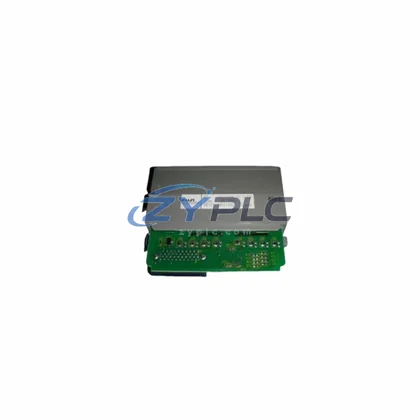
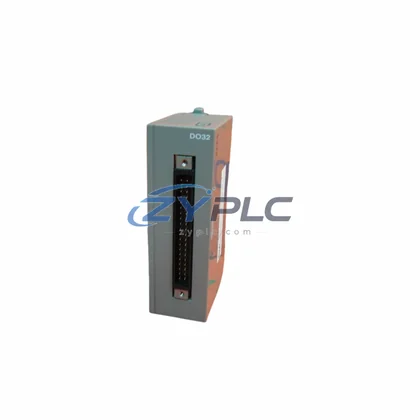
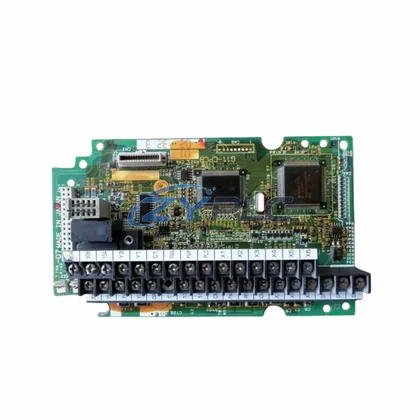
The Honeywell SP-EMD171 is a high-performance process controller module designed for the TDC3000 Distributed Control System (DCS) platform. In modern manufacturing environments where energy costs represent a significant share of operational expenditure, the SP-EMD171 delivers the closed-loop control precision necessary to eliminate wasteful operating load, reduce motor idle time, and synchronize production line throughput with actual demand. Whether deployed in petrochemical refining, power generation, pharmaceutical batch processing, or continuous manufacturing, this module provides the deterministic control response that industrial automation systems depend on.
Product Specification Table
| Parameter |
Specification / Value |
| SKU / Part Number |
SP-EMD171 |
| Brand |
Honeywell |
| Series |
TDC3000 DCS Platform |
| Module Type |
Process Controller Module (EMD) |
| Power Consumption |
Low-power embedded design; optimized for 24 VDC backplane operation |
| Control Loop Efficiency |
High-speed PID execution; minimizes overshoot and unplanned downtime in regulatory loops |
| Compatible Systems |
Honeywell TDC3000, TPS (Total Plant Solution), Universal Control Network (UCN) |
| Application Environments |
Petrochemical, Power Generation, Pharmaceutical, Pulp & Paper, Refining |
| Maintenance Value |
Reduces motor run-time waste via precise setpoint tracking; supports demand-based control strategies |
| Origin |
United States |
| Warranty |
warranty terms confirmed during quotation — All units fully tested prior to shipment |
| Stock Status |
RFQ Available — shipment arranged after confirmation |
System Compatibility and Application
The SP-EMD171 operates as the intelligence layer within the TDC3000 control hierarchy, executing regulatory and advanced control strategies that directly influence operating load at the field device level. In a typical energy-optimized plant architecture, the SP-EMD171 works in concert with the Honeywell PM (Process Manager) and AM (Advanced Process Manager) modules to coordinate multi-loop control across heat exchangers, compressors, and distillation columns — ensuring that each actuator receives only the energy input required to maintain process stability.
On the network side, the SP-EMD171 communicates over the Universal Control Network (UCN) and integrates with Honeywell LCN (Local Control Network) nodes, enabling real-time data exchange with historian platforms and maintenance planning systems. This connectivity allows operators to correlate control actions with energy meter readings from Honeywell Enraf power monitoring instruments or third-party power analyzers connected via Modbus RTU or HART protocol gateways.
For drive-level energy control, the SP-EMD171 output signals interface with variable frequency drives (VFDs) — such as those in the Honeywell SmartVFD HVAC family or compatible third-party drives — to modulate motor speed in response to process demand rather than running motors at fixed full-load speed. This single integration point can help restore stable operation when a compatible replacement is required.
At the I/O layer, the SP-EMD171 connects to Honeywell IOP (Input/Output Processor) modules and FTA (Field Termination Assembly) panels, gathering analog signals from flow transmitters, pressure sensors, and temperature elements. These inputs feed the controller’s PID algorithms, which continuously trim control outputs to minimize deviation from energy-efficient setpoints. Integration with Honeywell PHD (Process Historian Database) enables long-term trending of energy KPIs, supporting ISO 50001 maintenance planning reporting requirements.
For facilities running hybrid architectures, the SP-EMD171 can coexist with Honeywell Experion PKS supervisory layers through gateway configurations, allowing legacy TDC3000 assets to participate in plant-wide maintenance planning programs without requiring full system migration.
Maintenance and Replacement Notes
In continuous process industries, uncontrolled operating load typically originates from three sources: oversized control responses that drive actuators beyond their efficient operating range, poor loop tuning that causes hunting and oscillation, and reactive maintenance strategies that allow equipment degradation to increase energy draw before failure is detected. The SP-EMD171 addresses all three.
Its high-resolution PID execution engine maintains tight setpoint adherence, which means control valves and variable-speed drives spend less time in transient states — the most energy-intensive operating condition for rotating equipment. A well-tuned SP-EMD171 loop on a centrifugal pump circuit, for example, can eliminate the repeated acceleration-deceleration cycles that inflate energy bills and accelerate mechanical wear on seals and bearings.
From a production line throughput perspective, the SP-EMD171 supports cascade and feedforward control strategies that anticipate disturbances before they propagate through the process. This predictive control behavior reduces the frequency and magnitude of corrective actions, keeping the line operating at its designed energy-efficient throughput rate rather than swinging between over-production and under-production states that waste both energy and raw materials.
Predictive maintenance integration is another key energy benefit. By monitoring control output trends and loop performance metrics through the TDC3000 historian, maintenance teams can identify when a control valve is beginning to stick, when a heat exchanger is fouling, or when a pump is operating off its efficiency curve — all conditions that silently inflate operating load weeks before they cause a process upset or unplanned shutdown. Early intervention based on SP-EMD171 loop data reduces both maintenance costs and the energy penalty of degraded equipment.
All SP-EMD171 units supplied by ZYPLC are sourced from verified inventory channels, subjected to functional testing under simulated TDC3000 backplane conditions, and covered by a warranty terms confirmed during quotation. Shipment documentation includes test records to support incoming inspection and commissioning workflows.
Product Sourcing FAQ
Q1: How does the SP-EMD171 contribute to measurable operational stability in a TDC3000 plant?
The SP-EMD171 executes PID and advanced control algorithms that keep process variables at energy-optimal setpoints. By minimizing control deviation and eliminating unnecessary actuator movement, it reduces the energy consumed by pumps, compressors, heaters, and drives that respond to control outputs. Plants with well-tuned SP-EMD171 loops typically report 5–15% reductions in utility consumption in controlled process areas, depending on baseline loop performance.
Q2: Is the SP-EMD171 compatible with my existing TDC3000 or TPS system without hardware changes?
Yes. The SP-EMD171 is a direct replacement module for compatible EMD slots within TDC3000 and TPS cabinets. It operates on the standard UCN communication protocol and interfaces with existing IOP modules and FTA panels without requiring additional hardware modifications. Configuration is performed through the standard TDC3000 engineering environment.
Q3: What is the recommended replacement and testing process when substituting an SP-EMD171?
ZYPLC recommends a hot-standby swap procedure where possible: verify the replacement unit’s firmware revision matches the installed base, back up the existing module configuration, install the SP-EMD171 into the target slot, restore configuration, and perform a loop checkout against live process signals. All ZYPLC-supplied SP-EMD171 units are pre-tested and include test documentation to accelerate site commissioning.
Q4: What warranty and after-sales support does ZYPLC provide for the SP-EMD171?
Every SP-EMD171 supplied by ZYPLC carries a warranty terms confirmed during quotation covering functional defects under normal operating conditions. Units are tested prior to shipment and accompanied by test records. ZYPLC maintains inventory of TDC3000-compatible modules to support rapid replacement in the event of warranty claims, minimizing plant downtime and the associated energy and production losses from unplanned outages.