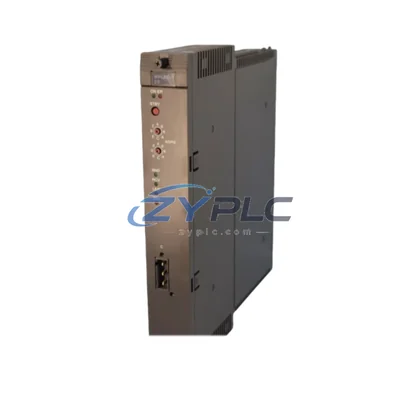
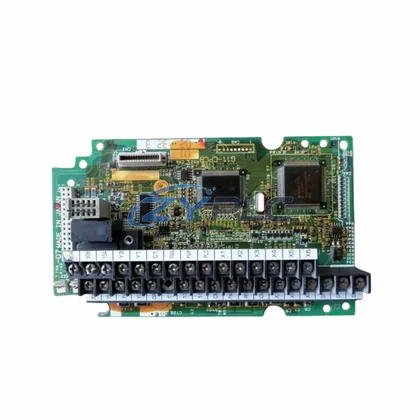
Honeywell SP-EMD174 Safety Controller for FSC
The Honeywell SP-EMD174 is a non-redundant execution module designed for deployment within the Honeywell FSC (Fail-Safe Controller) Safety Manager platform — one of the most widely adopted safety instrumented system (SIS) architectures in global process industries. Rather than functioning as a standalone device, the SP-EMD174 occupies a critical position within a layered control system hierarchy, serving as the primary execution engine that coordinates safety logic across the control layer, I/O layer, communication layer, and field device layer. Its integration into a complete FSC architecture enables engineers to achieve IEC 61511-compliant safety instrumented functions (SIFs) with high diagnostic coverage, deterministic scan cycles, and long-term maintainability across the full system lifecycle.
In a typical FSC Safety Manager deployment, the SP-EMD174 works in close coordination with the SP-EMD174R redundant controller module for hot-standby configurations, the SP-SDO111 digital output module for final element actuation, and the SP-SDI111 digital input module for field sensor acquisition. The controller communicates upstream to the engineering workstation via the FSC Highway backplane bus, while downstream I/O modules are mounted on the same rack chassis — typically the SP-CHS02S or SP-CHS06S rack — ensuring deterministic data exchange with sub-millisecond latency. Power distribution to the controller and I/O modules is managed through the SP-PSU24VDC power supply unit, which provides regulated 24 VDC with built-in diagnostics and load monitoring.
For operator interface and alarm management, the SP-EMD174 integrates with Honeywell’s Safety Manager SC engineering environment, enabling full configuration, online monitoring, and cause-and-effect matrix management from a centralized HMI workstation. Communication to the DCS layer — often a Honeywell Experion PKS or third-party SCADA system — is facilitated through the SP-COM111 Modbus/TCP or PROFIBUS gateway module, ensuring seamless system integration between the safety layer and the process control layer. This architecture supports both independent SIS operation and integrated safety-process control topologies as defined in IEC 61511 Part 1.
Product Specification Table
| Parameter |
Specification |
| System Role |
Non-Redundant Safety Execution Controller (FSC Safety Manager) |
| Platform Compatibility |
Honeywell FSC / Safety Manager SC |
| Safety Integrity Level |
SIL 1 / SIL 2 (IEC 61508 / IEC 61511) |
| Operating Voltage |
24 VDC (via backplane power bus) |
| Scan Cycle |
Deterministic, configurable (typical 10–100 ms) |
| Communication Interface |
FSC Highway Backplane Bus; Modbus/TCP via gateway |
| I/O Capacity |
Expandable via SP-SDI/SDO/SAI/SAO series modules |
| Redundancy Support |
Non-redundant (pair with SP-EMD174R for hot-standby) |
| Diagnostic Coverage |
High DC; internal self-test on power-up and runtime |
| Operating Temperature |
0°C to +60°C |
| Relative Humidity |
5% to 95% non-condensing |
| Mounting |
FSC rack chassis (SP-CHS02S / SP-CHS06S) |
| Certifications |
TÜV-certified, CE marked, ATEX compatible (zone 2 with barrier) |
| Warranty |
warranty terms confirmed during quotation — all units tested and verified prior to shipment |
System Compatibility Notes
The SP-EMD174 achieves its full operational value only when integrated within a coherent FSC system architecture. A complete safety instrumented system built around this controller typically includes the following coordinated components:
At the control layer, the SP-EMD174 executes the safety application program compiled in the FSC Safety Manager engineering tool. For applications requiring higher availability, engineers pair it with the SP-EMD174R redundant controller in a 1oo2 or 2oo2D voting configuration, ensuring continued safe operation during single-module failure events. The two controllers share a common backplane and synchronize application state via the FSC Highway bus.
At the I/O layer, the controller interfaces with the SP-SDI111 (16-channel digital input), SP-SDO111 (16-channel digital output), SP-SAI111 (analog input for 4–20 mA HART signals), and SP-SAO111 (analog output) modules. These modules are mounted on the same rack chassis and communicate with the SP-EMD174 via the internal backplane bus, eliminating the need for external field wiring between the controller and I/O subsystem. Each I/O module performs independent channel diagnostics, reporting fault status directly to the controller’s diagnostic register.
At the network and communication layer, the SP-COM111 gateway module bridges the FSC safety bus to Modbus/TCP or PROFIBUS DP, enabling the SP-EMD174 to exchange process values, alarm states, and diagnostic data with the plant DCS or SCADA system. This system integration ensures that safety system status is visible to operators at the control room HMI without compromising the independence of the safety layer.
At the power layer, the SP-PSU24VDC power supply module provides conditioned 24 VDC to the entire rack, with redundant power input capability for critical applications. The power module includes load monitoring and under-voltage detection, feeding fault signals directly to the controller’s system status register.
At the terminal and field wiring layer, marshalling cabinets equipped with SP-TBM series terminal base modules provide the physical interface between field instruments and the I/O modules, simplifying cable management and enabling module hot-swap without disturbing field wiring — a critical advantage during planned maintenance windows in live process plants.
Industrial Application Notes
The SP-EMD174 is deployed across a wide range of safety-critical industries where IEC 61511-compliant SIS architecture is mandated by regulation or engineering best practice.
In oil and gas processing and petrochemical plants, the SP-EMD174 is commonly used in emergency shutdown (ESD) systems, high-integrity pressure protection systems (HIPPS), and burner management systems (BMS). Its deterministic scan cycle and high diagnostic coverage make it suitable for SIL 2 applications where process uptime and personnel safety must be simultaneously guaranteed.
In power generation — including thermal, combined-cycle, and nuclear auxiliary systems — the controller manages turbine trip logic, boiler protection sequences, and generator protection interlocks. Its ability to interface with both digital and analog field devices via the SP-SDI/SDO/SAI/SAO I/O family makes it adaptable to legacy and modern instrumentation alike.
In water and wastewater treatment facilities, the SP-EMD174 governs chemical dosing interlocks, pump protection logic, and overflow prevention systems. Its low power consumption and wide operating temperature range make it suitable for remote pump stations and outdoor control enclosures.
In mining and metallurgy, the controller is applied in conveyor protection systems, crusher interlock logic, and smelter safety shutdown sequences. The FSC platform’s modular I/O expansion capability allows engineers to scale the safety system as production capacity grows, without replacing the core controller.
In pharmaceutical and fine chemical manufacturing, the SP-EMD174 supports reactor protection systems and solvent handling interlocks, where precise scan timing and audit-trail logging are required for regulatory compliance. Integration with the plant DCS via the SP-COM111 gateway enables unified alarm management and batch record generation.
Product Compatibility FAQ
Q1: Can the SP-EMD174 be upgraded to a redundant configuration without replacing the entire rack?
Yes. The FSC Safety Manager platform is designed to support both non-redundant and redundant controller configurations within the same rack chassis. Adding the SP-EMD174R redundant controller module alongside the SP-EMD174 enables a hot-standby configuration with automatic bumpless switchover. The I/O modules, power supply, and field wiring remain unchanged, minimizing retrofit cost and system downtime. This upgrade path is a key advantage of the FSC modular architecture for plants that anticipate increasing availability requirements over the system lifecycle.
Q2: Is the SP-EMD174 compatible with third-party DCS platforms for system integration?
Yes. system integration between the SP-EMD174 and third-party DCS platforms — including ABB System 800xA, Emerson DeltaV, Yokogawa CENTUM VP, and Siemens PCS 7 — is achieved via the SP-COM111 Modbus/TCP or PROFIBUS DP gateway module. The gateway maps FSC internal variables to standard process data objects accessible by the DCS OPC server, enabling unified operator displays, alarm rationalization, and safety system status monitoring without compromising the independence of the SIS layer as required by IEC 61511 Part 1 Clause 11.
Q3: What does the warranty terms confirmed during quotation cover, and what support is available for long-term maintenance?
All SP-EMD174 units supplied by ZYPLC are covered by a warranty terms confirmed during quotation from the date of shipment, covering manufacturing defects, component failures, and functional non-conformance under normal operating conditions. Each unit undergoes functional testing and burn-in verification prior to dispatch. For long-term maintenance, ZYPLC supports RFQ sourcing for SP-EMD174 and associated FSC system components — including I/O modules, power supplies, and communication gateways — to support planned maintenance cycles, emergency replacements, and system expansions. Technical pre-sales support is available to assist with architecture compatibility verification, spare parts planning, and installation commissioning guidance.