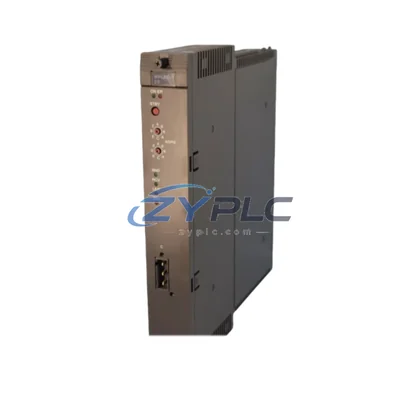
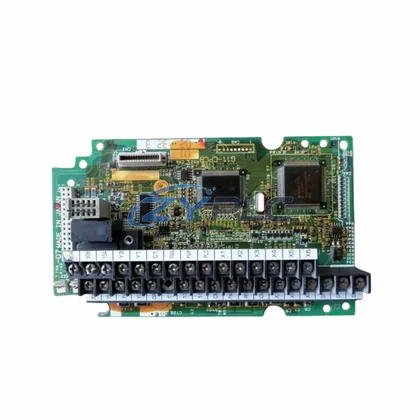
Honeywell T921D-1008: Industrial Data Link for Smart Building & Factory HVAC Networks
The Honeywell T921D-1008 is a precision modulating thermostat controller engineered for seamless integration into industrial HVAC systems, Building Management Systems (BMS), and smart factory environments. Designed to operate within the T921D Series platform, this controller bridges the gap between field-level sensing devices and upper-layer supervisory control systems, enabling real-time data flow across the full automation chain — from temperature sensors and actuators through to SCADA platforms and cloud-based energy management systems.
In modern industrial facilities, thermal management is no longer a standalone function. The T921D-1008 acts as a critical node in the building automation network, receiving analog and digital signals from room temperature sensors, duct sensors, and outdoor air quality probes, then transmitting processed control commands to modulating valves, variable air volume (VAV) boxes, and fan coil unit (FCU) actuators. This bidirectional data flow ensures that every zone in the facility maintains optimal thermal conditions while minimizing operating load.
Compatibility & Integration Notes
| Parameter |
Specification |
| Communication Protocol |
BACnet MS/TP, Modbus RTU, LON (optional) |
| Interface Type |
RS-485 (2-wire), Analog Input/Output |
| Transmission Speed |
9600 – 76800 bps (configurable) |
| Network Compatibility |
BACnet/IP Gateway, Modbus TCP/IP via converter |
| System Application |
BMS, SCADA, HVAC, Smart Factory Energy Management |
| Control Mode |
Modulating (0–10V / 4–20mA) |
| Input Signal |
NTC/PT1000 Temperature Sensor, Digital Input |
| Output Signal |
Analog 0–10V, Relay Output |
| Power Supply |
24VAC/DC |
| Operating Temperature |
0°C to +50°C |
| Warranty |
warranty terms confirmed during quotation |
Connected Automation Data Flow
The T921D-1008 sits at the heart of a layered industrial communication architecture. At the field level, it collects real-time temperature data from Honeywell C7189U1005 duct sensors and Honeywell T7560 room temperature sensors, converting analog signals into structured data packets for transmission over the RS-485 bus. These packets are then routed through a Honeywell WEBs-AX controller — a powerful BACnet/IP building controller — which aggregates data from multiple T921D-1008 nodes across different zones and floors.
At the network layer, a Honeywell PUB6438S BACnet router or compatible Modbus-to-BACnet/IP gateway bridges the RS-485 segment to the Ethernet backbone, enabling the T921D-1008’s data to reach the plant-wide SCADA system. Operators using Honeywell EBI (Enterprise Buildings Integrator) or third-party SCADA platforms such as Ignition or Wonderware can monitor zone temperatures, setpoints, valve positions, and alarm states in real time from a centralized dashboard.
For facilities running mixed automation environments, the T921D-1008 integrates alongside Honeywell Spyder programmable controllers and Honeywell Excel 800 series controllers, sharing the same BACnet MS/TP segment and participating in coordinated demand-response strategies. Variable frequency drives (VFDs) controlling supply air fans receive speed reference signals derived from the T921D-1008’s modulating output, creating a closed-loop maintenance planning chain from sensor to drive.
In smart factory deployments, the T921D-1008 connects to edge gateways such as the Honeywell JACE 8000, which aggregates data from HVAC, lighting, and power metering subsystems and pushes normalized data streams to cloud analytics platforms. This enables predictive maintenance algorithms to detect anomalies in thermal performance — such as a drifting valve actuator or a failing sensor — before they escalate into production-impacting failures.
Solving Data Isolation in Industrial Sites
One of the most persistent challenges in industrial facility management is protocol fragmentation. Legacy HVAC systems often rely on proprietary communication standards that cannot natively exchange data with modern BACnet or Modbus-based automation infrastructure. The Honeywell T921D-1008 addresses this directly by supporting both BACnet MS/TP and Modbus RTU on a single RS-485 physical layer, allowing it to coexist with legacy controllers and new-generation building automation systems without requiring a full infrastructure overhaul.
Data silos — where thermal data is trapped within a standalone thermostat with no upstream visibility — are eliminated through the T921D-1008’s network-native design. Every setpoint change, alarm event, and sensor reading is logged and transmitted to the supervisory layer, giving facility managers complete production-floor transparency. This is particularly valuable in pharmaceutical manufacturing, food processing, and semiconductor fabrication environments where temperature deviations must be documented for regulatory compliance.
Remote monitoring and diagnostics are fully supported. Maintenance engineers can access the T921D-1008’s operational parameters — including current temperature, setpoint, output percentage, and fault codes — from any SCADA terminal or mobile HMI without physically visiting the field device. This capability dramatically reduces mean time to repair (MTTR) and supports predictive maintenance programs that keep production lines running at peak efficiency.
System scalability is another key advantage. As production capacity expands, additional T921D-1008 units can be added to the RS-485 network (up to 32 nodes per segment without repeaters) without disrupting existing operations. Combined with a BACnet/IP gateway, the network can scale to hundreds of nodes across multiple buildings, all managed from a single SCADA or BMS platform.
Every unit shipped by ZYPLC undergoes pre-shipment functional testing, including communication protocol verification, analog I/O calibration, and network address configuration checks. Stock is maintained for shipment arranged after confirmation, and all units are covered by a warranty terms confirmed during quotation from the date of shipment.
Industrial Connectivity FAQ
Q1: What is the communication latency of the T921D-1008 on a BACnet MS/TP network?
A: At a baud rate of 38400 bps with standard BACnet MS/TP token-passing, the T921D-1008 achieves typical poll cycle times of 100–500ms per node, depending on network load and the number of devices on the segment. For time-critical HVAC control loops, this latency is well within acceptable limits for modulating valve and FCU control applications.
Q2: Is the T921D-1008 compatible with third-party SCADA and BMS platforms?
A: Yes. The T921D-1008 supports open BACnet MS/TP and Modbus RTU protocols, making it compatible with all major SCADA and BMS platforms including Siemens Desigo CC, Schneider Electric EcoStruxure, Johnson Controls Metasys, Ignition by Inductive Automation, and Wonderware System Platform. No proprietary drivers or licenses are required.
Q3: How does the T921D-1008 maintain network stability in electrically noisy industrial environments?
A: The RS-485 interface of the T921D-1008 is designed with differential signaling and built-in surge protection, providing high immunity to electromagnetic interference (EMI) common in industrial environments with VFDs, motors, and high-current switching equipment. Proper cable shielding and termination resistors (120Ω at each end of the RS-485 segment) are recommended for optimal signal integrity over cable runs up to 1200 meters.
Q4: What warranty and after-sales support does ZYPLC provide for the T921D-1008?
A: All Honeywell T921D-1008 units supplied by ZYPLC are covered by a warranty terms confirmed during quotation from the date of shipment. Each unit undergoes pre-shipment testing including protocol communication verification and analog I/O calibration. Our technical team provides post-sale support for network configuration, BACnet object mapping, and SCADA integration. Contact us at plc.sales@zyplc.com or +86 19859288691 for technical assistance or to request a quotation.