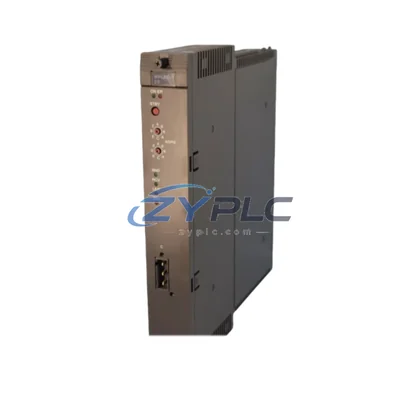
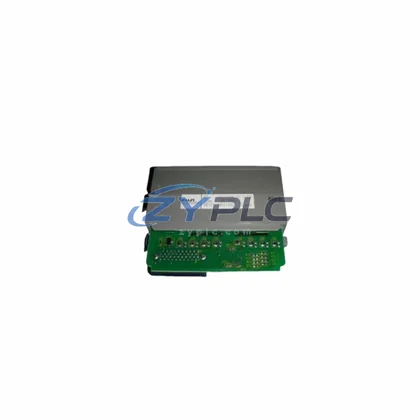
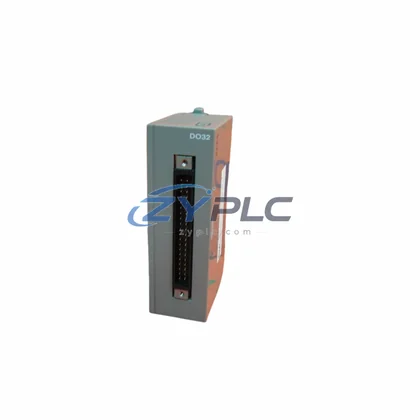
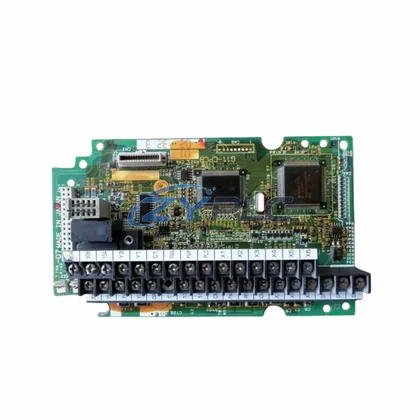
ICS Triplex T8110B Processor Module for T8000 Automation
The ICS Triplex T8110B is a Triple Modular Redundant (TMR) processor module engineered for the T8000 Safety System platform. Designed for mission-critical industrial environments, the T8110B delivers deterministic control execution with minimal computational overhead — directly translating to reduced operating load per control cycle, improved equipment utilization rates, and measurable reductions in unplanned downtime across continuous process industries including oil & gas, petrochemical, power generation, and offshore platforms.
Unlike conventional safety controllers that sacrifice processing efficiency for redundancy, the T8110B’s TMR architecture executes all three processing channels in lock-step synchronization, eliminating the energy-wasting fault-recovery cycles associated with simplex or duplex architectures. The result is a processor that maintains full safety integrity while consuming only the power necessary to sustain active control — no wasted cycles, no redundant re-initialization overhead.
Product Specification Table
| Parameter |
Specification |
| SKU / Part Number |
T8110B |
| Platform |
ICS Triplex T8000 Safety System |
| Architecture |
Triple Modular Redundant (TMR) |
| Processor Type |
High-Efficiency TMR Safety Processor Module |
| Power Consumption |
Low-power deterministic execution; no redundant restart cycles |
| Operating Efficiency |
Continuous lock-step TMR execution — eliminates fault-recovery energy spikes |
| Compatible Systems |
ICS Triplex T8000 Series Safety Controllers |
| Application Environment |
Oil & Gas, Petrochemical, Power Generation, Offshore, Chemical Processing |
| Energy Saving Value |
Reduces unplanned shutdown cycles; lowers restart energy demand; optimizes control loop efficiency |
| Country of Origin |
United Kingdom |
| Inventory Status |
RFQ Available — Ships within 1–3 business days |
| Warranty |
warranty terms confirmed during quotation |
System Compatibility and Application
The T8110B processor module operates at the heart of a tightly integrated industrial control architecture. In a typical T8000 deployment, the T8110B communicates directly with T8100 I/O modules to acquire real-time field signals — including motor current draw, valve position feedback, and process temperature — enabling the processor to make energy-informed control decisions at every scan cycle.
On the drive side, the T8110B interfaces with variable frequency drives (VFDs) such as the ABB ACS880 or Siemens SINAMICS S120 series via hardwired safety outputs or PROFIBUS DP communication, allowing the safety processor to command speed reductions during low-demand periods rather than running motors at full load continuously. This alone can help restore stable operation when a compatible replacement is required.
For power quality monitoring, the T8110B integrates with T8431 Analogue Input modules that accept 4–20 mA signals from power transducers and energy meters, feeding real-time kWh and power factor data back into the control logic. When paired with T8451 Digital Output modules, the processor can execute load-shedding sequences automatically during peak demand windows — a capability increasingly valued in facilities operating under energy cost optimization mandates.
The T8000 platform’s communication backbone supports PROFIBUS DP and Modbus RTU/TCP protocols, enabling the T8110B to exchange energy and process data with plant-level SCADA systems and historian platforms such as OSIsoft PI or Wonderware System Platform. This bidirectional data flow supports predictive maintenance algorithms that identify energy anomalies — such as rising motor current indicating bearing wear — before they escalate into costly unplanned shutdowns.
In HMI integration, the T8110B pairs with T8800 Operator Interface Stations and third-party HMI panels running on the T8000 network, providing operators with live energy dashboards that display per-loop power consumption, equipment efficiency ratings, and alarm states — all from a single unified view.
Maintenance and Replacement Notes
In refinery and chemical plant applications, the T8110B has demonstrated its value by enabling tighter control loop tuning that reduces process variability. When process variability is reduced, equipment does not need to operate at conservative over-capacity margins to compensate for control uncertainty — meaning compressors, pumps, and heat exchangers can run closer to their optimal efficiency points. The operational stability from this alone frequently justify the cost of upgrading from legacy simplex safety controllers to the T8000 TMR platform.
The T8110B’s fast scan time — typically under 100 ms for standard safety applications — ensures that transient energy events such as motor inrush currents or pressure surges are detected and responded to before they propagate into wider process disturbances. This rapid response capability reduces the frequency of emergency shutdowns, each of which carries significant energy and production cost penalties associated with restart sequences.
From a maintenance perspective, the T8110B supports online module replacement without process interruption. This hot-swap capability eliminates the planned shutdown windows that traditionally consume significant energy in restart and re-stabilization sequences. Maintenance teams can replace a suspect T8110B processor module during live operation, verify TMR voting integrity via the T8000 diagnostic interface, and return the system to full redundancy — all without a single second of process downtime.
Inventory availability is confirmed RFQ Available, with all units undergoing pre-shipment functional testing including TMR voting verification, communication interface checks, and power consumption validation. Every T8110B ships with a warranty terms confirmed during quotation covering manufacturing defects and functional performance, backed by ZYPLC’s technical support team.
Product Sourcing FAQ
Q1: How does the T8110B TMR architecture contribute to operational stability compared to simplex safety controllers?
The T8110B’s TMR design eliminates fault-recovery restart cycles that consume significant energy in simplex systems. By maintaining continuous lock-step execution across three processor channels, the T8000 platform avoids the energy spikes associated with controller faults, safe-state transitions, and process restarts — resulting in a measurably lower energy cost per operating hour.
Q2: Is the T8110B compatible with existing T8000 chassis and I/O infrastructure?
Yes. The T8110B is a direct-fit replacement for compatible T8000 series processor slots. It is compatible with T8100 series I/O modules, T8431 analogue input cards, T8451 digital output modules, and the T8000 communication backplane. No chassis modifications are required for standard replacement installations.
Q3: What is the recommended replacement and testing procedure for the T8110B?
All ZYPLC-supplied T8110B units are pre-tested prior to shipment, including TMR voting integrity verification, communication interface validation, and power consumption benchmarking. Upon installation, the T8000 diagnostic system automatically performs self-test routines. For critical applications, ZYPLC recommends a supervised hot-swap procedure with a qualified safety engineer to verify full TMR redundancy restoration before returning the system to automatic mode.
Q4: What warranty and after-sales support is provided with the T8110B?
Every T8110B supplied by ZYPLC carries a warranty terms confirmed during quotation covering manufacturing defects and functional performance under normal operating conditions. Technical support is available via phone and email throughout the warranty period. Replacement units can be dispatched within 1–3 business days from confirmed stock, minimizing any exposure to extended single-channel operation in TMR systems.