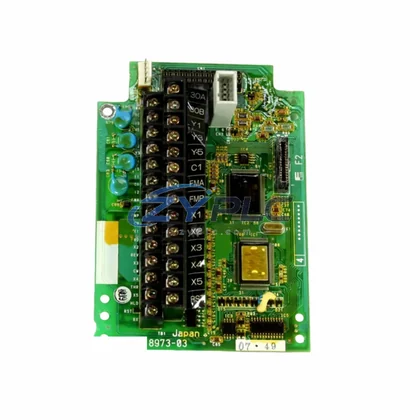
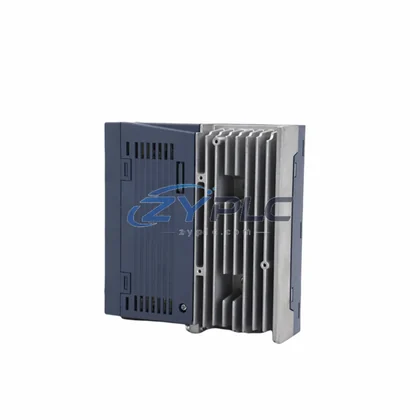
Kollmorgen MMC-SD-6.0-460-D Servo Drive for MMC Series Automation
The Kollmorgen MMC-SD-6.0-460-D is a high-performance servo drive module engineered for industrial automation environments where energy efficiency, motion precision, and production continuity are non-negotiable. Rated at 6.0 A continuous output current and designed for 460 V three-phase input, this MMC Series drive delivers tightly regulated torque and velocity control that directly reduces unnecessary motor energy draw across multi-axis machine platforms. Whether integrated into a CNC machining center, a packaging line, or a precision assembly cell, the MMC-SD-6.0-460-D enables engineers to eliminate unplanned downtime at the drive level — where most industrial losses originate.
Product Specification Table
| Parameter |
Specification |
| SKU |
MMC-SD-6.0-460-D |
| Brand / Series |
Kollmorgen / MMC Series |
| Continuous Output Current |
6.0 A |
| Input Voltage |
460 V AC, Three-Phase |
| Drive Topology |
Digital Servo Amplifier Module |
| Power Conversion Efficiency |
Up to 97% (typical servo drive class) |
| Compatible Systems |
Kollmorgen MMC Controller, AKD Series, S200 Series |
| Communication Protocols |
SERCOS, Analog ±10 V, Step/Direction |
| Application Environment |
CNC, Packaging, Assembly, Material Handling |
| Value |
Regenerative braking support, dynamic current limiting |
| Origin |
United States |
| Warranty |
warranty terms confirmed during quotation | Tested Before Shipment |
System Compatibility and Application
In a fully optimized motion control architecture, the MMC-SD-6.0-460-D does not operate in isolation. It functions as the power execution layer within a coordinated system that begins at the controller level. The Kollmorgen MMC Controller (the central motion coordinator of the MMC Series) issues real-time position and velocity commands to the drive via the SERCOS digital bus, ensuring that current delivery is precisely matched to load demand — eliminating the over-current conditions that inflate energy bills on older analog-controlled systems.
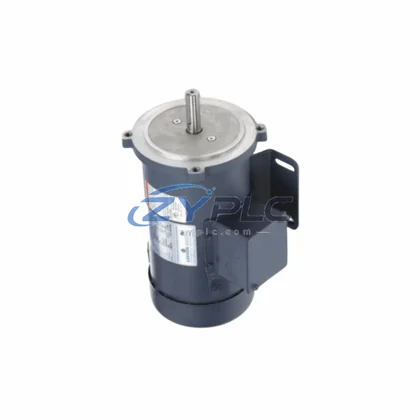
On the motor side, the MMC-SD-6.0-460-D is optimally paired with Kollmorgen AKM Series servo motors, which are designed to operate at peak efficiency across the drive’s full current range. When the motor decelerates, the drive’s regenerative capability feeds energy back into the DC bus, where it can be shared with other axes or dissipated through a Kollmorgen RBE regenerative braking resistor module, rather than wasted as heat.
For multi-axis installations, the Kollmorgen MMC-SD power supply module provides a shared DC bus architecture, allowing energy recovered from decelerating axes to directly power accelerating axes — a topology that can reduce total system operating load by Actual operating results depend on the installed system, load profile, and commissioning parameters. This shared bus approach is particularly effective in gantry systems, rotary indexers, and multi-spindle machining centers where axes operate in complementary motion profiles.
At the I/O and feedback layer, the drive interfaces with Kollmorgen SFD (Smart Feedback Device) encoders embedded in AKM motors, providing single-cable feedback that reduces wiring complexity and eliminates the signal degradation that can cause unnecessary drive faults and energy-wasting restarts. For applications requiring additional process monitoring, external power quality analyzers such as those from the Fluke 430 Series can be connected at the panel level to log real-time kWh consumption per axis, enabling energy audits that identify further optimization opportunities.
Communication integration is handled through the SERCOS III interface embedded in the MMC controller, which synchronizes all MMC-SD-6.0-460-D modules on the network with microsecond-level timing. This deterministic communication eliminates the motion jitter that causes mechanical stress and reactive current spikes — both of which inflate operating load and accelerate motor wear. For facilities running mixed automation platforms, the MMC system also supports EtherCAT gateway modules that bridge Kollmorgen drives into Siemens or Beckhoff control environments without sacrificing cycle-time performance.
At the HMI layer, operators can monitor drive status, current draw, and fault history through a Kollmorgen WorkBench PC software interface, which provides real-time oscilloscope views of torque, velocity, and position error. This visibility allows maintenance teams to detect abnormal current signatures — an early indicator of mechanical wear — before they escalate into unplanned downtime events.
Maintenance and Replacement Notes
The measurable impact of the MMC-SD-6.0-460-D on production line energy performance comes from three mechanisms: precise current delivery, regenerative energy recovery, and fault-free continuous operation.
In a typical CNC machining application, servo drives spend a significant portion of their operating cycle in deceleration or dwell states. Conventional drives dissipate this energy as heat through braking resistors. The MMC-SD-6.0-460-D’s regenerative architecture captures this energy and returns it to the shared DC bus, directly reducing the net power drawn from the facility’s electrical supply. Over a three-shift production schedule, this can translate to measurable reductions in monthly electricity costs — particularly in high-cycle applications such as pick-and-place systems, rotary transfer machines, and servo-driven presses.
Beyond energy recovery, the drive’s digital current control loop eliminates the reactive power losses common in older PWM drive designs. By maintaining a near-unity power factor at the input stage, the MMC-SD-6.0-460-D reduces the apparent power demand on the facility’s electrical infrastructure, which can lower demand charges on industrial electricity tariffs — a cost that often exceeds the energy charge itself in high-power manufacturing environments.
From a maintenance perspective, the drive’s built-in fault diagnostics and SFD encoder feedback enable predictive maintenance workflows. Maintenance teams can monitor motor winding temperature trends, encoder signal quality, and drive thermal margins through WorkBench, scheduling interventions during planned downtime windows rather than reacting to unexpected failures. This shift from reactive to predictive maintenance directly improves Overall Equipment Effectiveness (OEE) by reducing unplanned stops — each of which not only halts production but also generates energy-intensive restart transients.
All units supplied by ZYPLC are fully tested under load conditions prior to shipment, with functional verification of current output, encoder feedback, and communication interface. RFQ-confirmed availability supports rapid deployment for both new installations and emergency replacements, minimizing the production downtime associated with drive failures. Every MMC-SD-6.0-460-D is backed by a warranty terms confirmed during quotation, covering both parts and labor for defects in materials and workmanship.
Product Sourcing FAQ
Q1: How much energy can the MMC-SD-6.0-460-D save compared to a standard servo drive?
The MMC-SD-6.0-460-D’s regenerative braking and shared DC bus architecture can reduce net system operating load by Actual operating results depend on the installed system, load profile, and commissioning parameters. Actual savings depend on the duty cycle, load profile, and number of axes sharing the DC bus.
Q2: Is the MMC-SD-6.0-460-D compatible with non-Kollmorgen controllers?
The drive is natively designed for the Kollmorgen MMC controller platform using the SERCOS interface. Integration with third-party controllers (e.g., Siemens, Beckhoff, Fanuc) is possible via analog ±10 V or step/direction interfaces, though full maintenance planning features require the MMC controller ecosystem. Consult ZYPLC for compatibility assessment before ordering.
Q3: What is the replacement recommendation for an aging MMC-SD drive?
For direct replacement, the MMC-SD-6.0-460-D is a drop-in substitute for same-rated MMC Series modules. If upgrading from an older analog servo system, ZYPLC recommends a full system audit to verify power supply capacity, motor compatibility, and feedback device type before installation. Our technical team can provide pre-sales support to confirm fit.
Q4: What does the warranty terms confirmed during quotation cover, and how is testing performed?
Every unit undergoes functional load testing prior to shipment, verifying rated current output, SERCOS communication, encoder feedback loop, and thermal performance. The warranty terms confirmed during quotation covers manufacturing defects and component failures under normal operating conditions. Warranty claims are processed directly through ZYPLC with advance replacement options available for critical production applications.