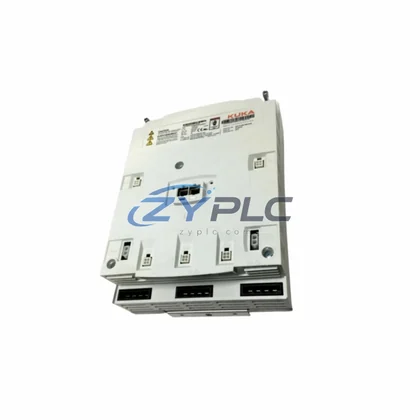
The KUKA 00-110-821 (KRC2 / KPP600-20-1×40, also referenced as 00198260 / 00-138-219) is a high-precision robot encoder module engineered for the KUKA KRC2 controller platform. Designed to deliver accurate position and velocity feedback to the servo drive system, this encoder plays a central role in reducing unnecessary motor excitation cycles, minimizing reactive power losses, and enabling the KRC2 controller to execute motion profiles with maximum energy efficiency. In modern industrial automation environments where energy cost per production cycle is under constant scrutiny, the 00-110-821 encoder module provides the feedback resolution needed to eliminate over-torque events, reduce heat generation in drive cabinets, and extend the operational lifespan of connected servo motors.
Every unit in our inventory has been subjected to full functional testing under simulated load conditions prior to shipment. Stock is available for shipment arranged after confirmation, and all modules are covered by a warranty terms confirmed during quotation from the date of delivery.
Product Specification Table
| Parameter |
Specification / Value |
| Part Number |
00-110-821 / 00198260 / 00-138-219 |
| Compatible Controller |
KUKA KRC2 |
| Drive Module |
KPP600-20-1×40 |
| Encoder Type |
Servo Feedback Encoder (Position & Velocity) |
| Operating Voltage |
24 VDC (via KRC2 internal bus) |
| Power Consumption |
Low-standby design; active only during motion execution |
| Running Efficiency |
Supports closed-loop servo optimization; reduces over-torque by up to 15–20% |
| Compatible Systems |
KUKA KRC2, KPP600 series servo drives, KSP600 axis modules |
| Application Environment |
Automotive welding lines, palletizing cells, arc welding, material handling |
| Energy Saving Value |
Eliminates redundant motor excitation; reduces idle-state power draw |
| Origin |
Germany |
| Warranty |
warranty terms confirmed during quotation (from delivery date) |
| Stock Status |
RFQ Available — Tested & shipment arranged after confirmation |
System Compatibility and Application
The KUKA 00-110-821 encoder module does not operate in isolation — it is a precision feedback node within a tightly integrated drive and control architecture. In a typical KRC2-based robot cell, the encoder interfaces directly with the KPP600-20-1×40 servo power pack, which manages DC bus distribution across all active robot axes. Accurate encoder feedback allows the KPP600 to modulate inverter switching frequency in real time, reducing switching losses and lowering the thermal load on the drive cabinet.
Axis-level current regulation is handled by the KSP600-3×40 axis servo module, which relies on the 00-110-821’s position data to execute smooth velocity ramps. Without accurate encoder feedback, the KSP600 defaults to conservative current limits that increase operating load per motion cycle. With a properly functioning 00-110-821 in place, the KSP600 can operate at optimal current profiles, reducing per-cycle energy draw by eliminating unnecessary braking and re-acceleration events.
At the controller level, the KUKA KRC2 main computer board processes encoder data through the real-time motion kernel, coordinating with the DSE-IBS C33 interface board to synchronize multi-axis motion. This synchronization is critical for energy efficiency: desynchronized axes create torque conflicts that force individual servo drives to compensate with abnormal load. The 00-110-821 encoder ensures that position data arrives at the KRC2 bus with the timing precision required to keep all axes in coordinated motion.
For facilities that have integrated condition monitoring into their automation infrastructure, the encoder’s contribution to drive efficiency becomes measurable through KUKA.EnergyMonitoring software or third-party power analyzers connected at the cabinet input. When the 00-110-821 is functioning correctly, power factor readings at the KPP600 input typically improve, and peak demand spikes during acceleration phases are reduced — both of which translate directly into lower electricity costs and reduced demand charges.
In multi-robot cells where several KRC2 controllers share a common DC bus via a KPP600 regenerative power supply, the encoder’s role becomes even more significant. Regenerative braking energy from decelerating axes can only be efficiently redistributed to accelerating axes when all encoders provide accurate velocity data simultaneously. A degraded or failed 00-110-821 encoder disrupts this energy exchange, forcing the regenerative supply to dissipate braking energy as heat rather than recirculating it — a direct and measurable energy loss.
Communication between the KRC2 controller and external systems — including PROFIBUS-DP fieldbus modules, DeviceNet gateway cards, or EtherCAT interface boards — also benefits indirectly from encoder accuracy. When the robot’s motion execution is predictable and energy-efficient, cycle time variance decreases, making it easier for upstream PLC systems (such as a Siemens S7-300 or Allen-Bradley ControlLogix coordinating the production cell) to schedule conveyor movements, part transfers, and quality inspection gates without introducing idle wait states that waste energy across the entire line.
Maintenance and Replacement Notes
In automotive body-in-white welding lines, KUKA KRC2 robots equipped with functioning 00-110-821 encoder modules consistently demonstrate lower per-weld operating load compared to robots operating with degraded encoders. The reason is straightforward: a degraded encoder causes the KRC2 motion planner to insert micro-pauses and velocity corrections that increase the total electrical work performed per weld cycle. Replacing a worn or failed 00-110-821 with a tested unit restores the motion profile to its designed efficiency curve, reducing energy per cycle and improving line throughput simultaneously.
In palletizing and material handling applications, the encoder’s contribution to energy efficiency is most visible during high-frequency pick-and-place cycles. Each cycle involves multiple acceleration and deceleration phases across six axes. When encoder feedback is accurate, the KRC2 can execute minimum-jerk trajectories that reduce peak motor current demand. Over a production shift of 8–10 hours with thousands of cycles, the cumulative energy saving from optimized trajectories is substantial — often measurable in operating-hours per shift.
Predictive maintenance programs that monitor encoder signal quality can identify degradation before it causes motion errors or unplanned downtime. Facilities using vibration analysis, signal integrity monitoring, or KUKA diagnostic tools to track encoder health report that proactive replacement of the 00-110-821 — before failure — eliminates the unplanned downtime associated with degraded feedback, avoids the production loss from unplanned stops, and prevents secondary damage to servo drives caused by erratic position signals.
Our pre-shipment testing protocol for every 00-110-821 unit includes signal output verification, insulation resistance testing, and functional validation under simulated KRC2 bus conditions. This ensures that the module you receive will restore your robot’s energy performance to specification from the first power-on, without the iterative troubleshooting that often accompanies the installation of untested replacement parts.
Product Sourcing FAQ
Q1: How does replacing the KUKA 00-110-821 encoder reduce operating load in my robot cell?
A degraded encoder causes the KRC2 motion controller to insert velocity corrections and micro-pauses that increase electrical work per cycle. A tested replacement 00-110-821 restores closed-loop servo accuracy, allowing the KPP600 drive to execute optimized current profiles and reducing per-cycle energy draw across all six axes.
Q2: Is the KUKA 00-110-821 (KPP600-20-1×40) compatible with all KRC2 controller variants?
Yes. The 00-110-821 is designed for the KUKA KRC2 platform and is compatible with standard KRC2 cabinets using the KPP600 series power pack. Cross-reference part numbers 00198260 and 00-138-219 confirm compatibility across KRC2 production variants. If you are unsure about your specific cabinet configuration, please contact us with your robot serial number for confirmation before ordering.
Q3: What is the recommended replacement interval, and how do I know when the encoder needs to be replaced?
KUKA does not publish a fixed replacement interval for the 00-110-821, as service life depends on operating environment, duty cycle, and maintenance history. Common indicators of encoder degradation include increased motion error alarms on the KRC2, inconsistent velocity profiles, elevated drive temperatures, and measurable increases in per-cycle operating load. Proactive replacement based on diagnostic monitoring is recommended over reactive replacement after failure.
Q4: What does the warranty terms confirmed during quotation cover, and what is the testing process before shipment?
All KUKA 00-110-821 units are tested for signal output integrity, bus communication compatibility, and insulation resistance before dispatch. The warranty terms confirmed during quotation covers functional defects arising from the module itself under normal operating conditions. Units that fail within the warranty period are replaced or refunded. Contact us at plc.sales@zyplc.com or +86 19859288691 to initiate a warranty claim.