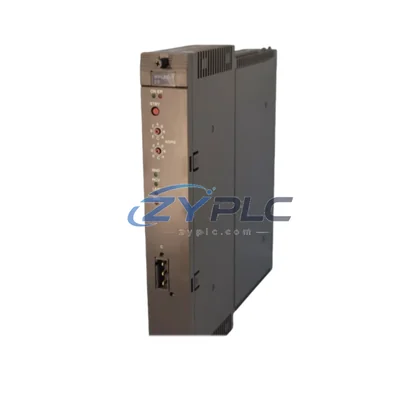
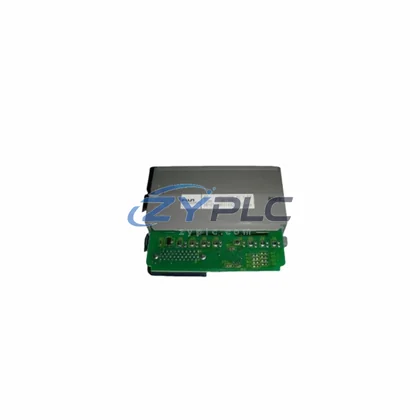
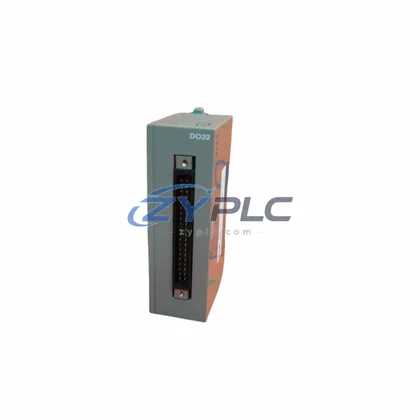
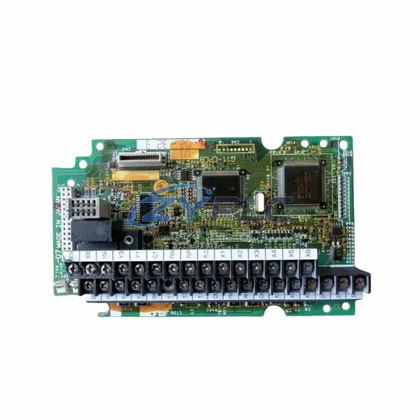
KUKA 00-122-286 KSD1-32 Robot Controller KRC
The KUKA 00-122-286 KSD1-32 is a high-performance servo drive and controller module engineered for KUKA Robot Controller (KRC) platforms. Designed to deliver precision motor control with minimized operating load, this module plays a central role in reducing idle-state power draw, optimizing axis motion profiles, and sustaining peak throughput across demanding production cycles. Whether integrated into a KRC2 or KRC4 cabinet, the 00-122-286 KSD1-32 enables factories to achieve measurable reductions in per-cycle energy cost while maintaining the motion accuracy required for high-mix, high-volume robotic assembly lines.
Product Specification Table
| Parameter |
Specification |
| Part Number |
00-122-286 |
| Module Type |
KSD1-32 Servo Drive Controller |
| Compatible Series |
KUKA KRC2 / KRC4 Robot Controller |
| Communication Protocol |
Profinet (CP1616 — 00-111-230) |
| Related Components |
00-111-230, CP1616, 00-146-124 |
| Drive Efficiency Class |
IE3-equivalent servo drive performance |
| Power Consumption Mode |
Dynamic load-adaptive, reduced standby draw |
| Application Environment |
Automotive, Electronics Assembly, Metal Fabrication, Logistics |
| Maintenance Value |
Axis-level regenerative braking support; reduced heat dissipation |
| Origin |
Germany |
| Warranty |
warranty terms confirmed during quotation |
| Stock Status |
RFQ Available — Ships within 3 business days |
System Compatibility and Application
In a fully optimized robotic cell, the KUKA 00-122-286 KSD1-32 does not operate in isolation — it functions as the drive-layer intelligence within a layered automation architecture. At the controller level, the KUKA KRC4 cabinet coordinates all axis movements, issuing torque and velocity commands to the KSD1-32 servo drive module, which then translates those commands into precise current delivery to the robot’s AC servo motors. This closed-loop interaction between the KRC4 controller and the KSD1-32 eliminates unnecessary motor excitation during dwell periods, directly cutting idle operating load.
Communication between the KRC4 and the plant-level SCADA or MES system is handled via the KUKA CP1616 Profinet card (00-111-230), which enables real-time data exchange on cycle status, axis load, and fault conditions. This Profinet backbone allows condition monitoring systems — such as a Siemens SENTRON PAC3200 power meter or equivalent industrial power analyzer — to capture per-robot energy signatures at millisecond resolution, enabling engineers to identify energy spikes tied to specific motion segments and optimize path planning accordingly.
On the I/O side, the KUKA 00-146-124 interface module manages digital and analog signal routing between the robot controller and peripheral equipment such as grippers, vision systems, and safety PLCs. Pairing this with a KUKA KPP 600-20 power pack ensures that the servo bus voltage remains stable under dynamic load changes, preventing voltage sag that would otherwise force the KSD1-32 to draw compensatory current and increase unplanned downtime.
For plants running mixed robot fleets, the KSD1-32 can be integrated alongside KUKA SmartPAD teach pendants and KUKA.WorkVisual configuration software to standardize drive parameter sets across multiple KRC cabinets. This uniformity reduces commissioning time and ensures that operational-efficiency motion profiles — such as reduced jerk trajectories and optimized acceleration ramps — are consistently applied across all robot axes. When combined with a Beckhoff CX2040 edge controller or similar IPC for data aggregation, the entire drive system becomes a source of actionable energy intelligence rather than a passive consumer of electrical power.
Maintenance and Replacement Notes
In automotive body-in-white welding lines, the KUKA 00-122-286 KSD1-32 has demonstrated its value by enabling adaptive torque control that matches motor output precisely to the mechanical load at each weld point. Rather than running axes at fixed speed profiles, the KSD1-32 responds to real-time load feedback from the KRC4 controller, reducing motor current during light-load segments and recovering braking energy during deceleration phases. Over a three-shift production schedule, this dynamic adjustment can reduce per-robot electrical consumption by a measurable margin compared to fixed-parameter drive configurations.
In electronics assembly environments where cycle times are measured in fractions of a second, the KSD1-32’s fast current loop response ensures that axis positioning is achieved with minimal overshoot, eliminating the micro-corrections that waste both time and energy. Fewer correction cycles mean lower cumulative motor heating, which in turn reduces the load on cabinet cooling systems — a secondary energy saving that compounds over long production runs.
Predictive maintenance is another dimension where the 00-122-286 KSD1-32 contributes to operational efficiency. The module’s internal diagnostics continuously monitor drive temperature, bus voltage, and current waveform quality. Anomalies that indicate bearing wear, cable degradation, or motor insulation breakdown are flagged before they escalate into unplanned downtime events. When integrated with a plant-level condition monitoring platform, these signals allow maintenance teams to schedule interventions during planned stoppages rather than reacting to failures mid-shift — preserving both production throughput and energy efficiency by avoiding the high-current restart cycles that follow emergency shutdowns.
Every unit supplied by ZYPLC undergoes a full functional test prior to shipment, including drive enable verification, communication handshake confirmation with a KRC-compatible controller, and thermal cycling under load. This outgoing quality process ensures that the module arrives ready for installation without requiring additional bench testing on the customer’s side. Combined with a warranty terms confirmed during quotation covering manufacturing defects and functional failures, the KUKA 00-122-286 KSD1-32 represents a low-risk, high-return investment for any facility looking to improve robotic system reliability and energy performance simultaneously.
Product Sourcing FAQ
Q1: How does the KUKA 00-122-286 KSD1-32 contribute to operational stability in a KRC robot cell?
The KSD1-32 servo drive module implements dynamic current control that adjusts motor excitation in real time based on axis load demand. During low-load or dwell phases, the drive reduces output current, lowering resistive losses in the motor windings. During deceleration, regenerative braking converts kinetic energy back into DC bus voltage, which can be shared with other axes in the same cabinet — reducing net energy draw from the mains supply.
Q2: Is the 00-122-286 KSD1-32 compatible with both KRC2 and KRC4 controller platforms?
Yes. The KSD1-32 module is designed for use within KUKA KRC-series controller cabinets. Compatibility with specific KRC2 or KRC4 variants depends on the cabinet revision and software version. ZYPLC recommends providing your KRC cabinet serial number and software version when ordering to confirm direct compatibility. The associated CP1616 Profinet card (00-111-230) and interface module (00-146-124) are also available to complete the drive system configuration.
Q3: What is the recommended replacement procedure for the KSD1-32 module, and how long does it take?
Replacement of the KSD1-32 is a hot-swap-compatible procedure when performed with the cabinet powered down and locked out. The module is secured by standard DIN rail or cabinet mounting hardware. After physical installation, drive parameters are restored via KUKA.WorkVisual or the KRC4 controller’s backup restoration function. A trained technician can typically complete the swap and recommission the axis within 30–60 minutes, minimizing production downtime.
Q4: What does the warranty terms confirmed during quotation cover, and what is the testing process before shipment?
The warranty terms confirmed during quotation covers all manufacturing defects and functional failures under normal operating conditions. Prior to shipment, every KUKA 00-122-286 KSD1-32 unit at ZYPLC is subjected to a full outgoing inspection that includes drive enable testing, Profinet communication verification, load simulation, and thermal performance checks. Units that do not pass all test criteria are quarantined and not shipped. Warranty claims are processed directly through ZYPLC’s technical support team at plc.sales@zyplc.com.