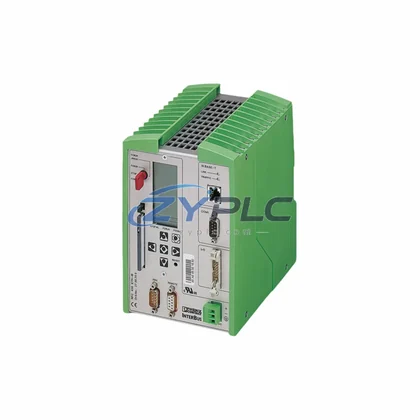
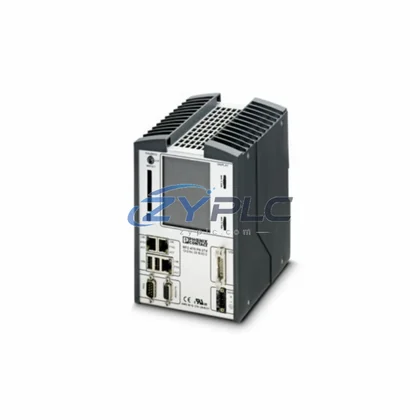
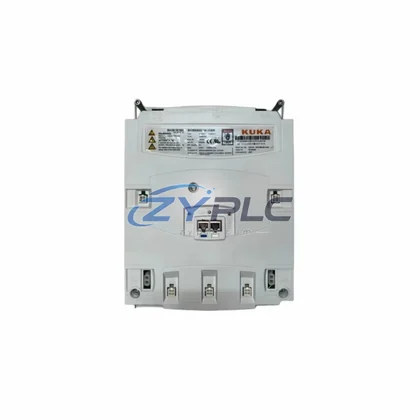
KUKA 00-127-754 Robot Controller Board KRC
In modern manufacturing environments where uptime and replacement lead time matter, the KUKA 00-127-754 robot controller board delivers the precision control and maintenance-focused architecture that production lines demand. Designed for the KUKA KRC (KUKA Robot Controller) platform, this board sits at the heart of the robot’s motion management system — coordinating servo drive commands, managing power distribution, and enabling the real-time feedback loops that keep cycle times tight and operating load low.
Unlike generic replacement boards, the 00-127-754 is engineered to KUKA’s original specifications, ensuring full compatibility with the KRC controller cabinet’s internal bus architecture. This means the board communicates seamlessly with the KUKA KRC2 and KRC4 controller families, maintaining the signal integrity required for high-speed, multi-axis motion without introducing latency that would otherwise inflate energy draw during acceleration and deceleration phases.
Product Specification Table
| Parameter |
Specification |
| Product SKU |
00-127-754 |
| Brand / Series |
KUKA / KRC Robot Controller |
| Product Type |
Robot Controller Board |
| Origin |
Germany |
| Compatible Systems |
KUKA KRC2, KRC4 Controller Cabinets |
| Application Environment |
Industrial Robotics, Automotive Assembly, Welding, Material Handling |
| Drive Efficiency Contribution |
Optimized servo command routing reduces unnecessary motor torque demand |
| Energy Saving Value |
Eliminates control-layer inefficiencies that cause excess heat and power draw |
| Pre-Shipment Testing |
Full functional test performed before dispatch |
| Warranty |
warranty terms confirmed during quotation |
| Stock Status |
RFQ Available — shipment arranged after confirmation |
System Compatibility and Application
The KUKA 00-127-754 controller board does not operate in isolation — it is the command nucleus of a tightly integrated automation architecture. In a typical KRC-based robotic cell, the board interfaces directly with the KUKA KPS 600 power supply unit, which regulates DC bus voltage to the servo drives. When the 00-127-754 is functioning correctly, it ensures that power delivery requests to the KPS 600 are precisely timed, preventing the voltage spikes and reactive power losses that occur when a degraded controller board sends erratic drive commands.
On the motion side, the board coordinates with KUKA KSD 32 and KSD 48 servo drive modules mounted within the KRC cabinet. These drives govern the torque and speed of each robot axis motor. A healthy 00-127-754 board transmits clean, jitter-free position and velocity references to these drives, allowing them to operate within their optimal efficiency band rather than hunting for setpoints — a condition that wastes energy and accelerates motor wear.
For facilities running mixed automation environments, the 00-127-754 supports integration with KUKA.PLC mxAutomation, the software bridge that allows Siemens S7 or Beckhoff TwinCAT PLCs to issue motion commands directly to the KRC controller. This means maintenance planning strategies programmed at the PLC level — such as standby torque reduction during line stoppages or coordinated ramp-down sequences — are faithfully executed by the robot without communication dropouts that would otherwise cause the drives to default to full-power hold states.
The board also plays a role in the controller’s SafeOperation and SafeRobot monitoring functions. These safety-rated modules continuously evaluate axis positions and velocities against configured safe zones. When the 00-127-754 is operating correctly, these checks complete within their allocated scan cycles, avoiding the computational overruns that force the controller into safe-stop states — events that not only halt production but also trigger high-current motor braking sequences that spike operating load.
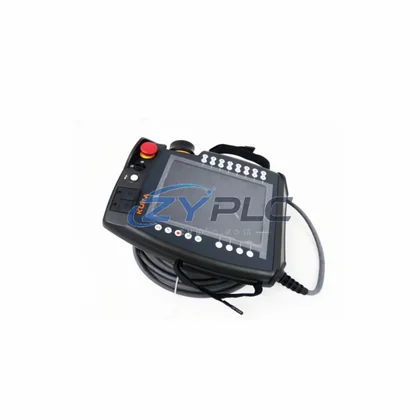
In cells equipped with KUKA SmartPAD teach pendants, operators rely on the controller board to relay real-time axis load data and program execution status. This visibility allows maintenance teams to identify axes running at elevated torque — a leading indicator of mechanical friction or misalignment — before the condition escalates into a fault that requires an unplanned shutdown. Early intervention of this kind directly reduces the unplanned downtimed during fault recovery cycles, where robots repeatedly attempt and abort motion sequences.
For facilities monitoring energy at the cell level, the 00-127-754’s stable operation enables accurate correlation between robot program states and power meter readings from devices such as the Siemens SENTRON PAC3200 power monitoring unit. When controller board faults introduce unpredictable motion behavior, energy data becomes noisy and difficult to act on. A reliable 00-127-754 ensures that power consumption profiles remain consistent and auditable, supporting ISO 50001 maintenance planning reporting requirements.
Maintenance and Replacement Notes
In automotive body-in-white welding lines, KUKA robots equipped with the 00-127-754 controller board are typically tasked with high-cycle spot welding operations where the robot must reach a weld position, hold, retract, and reposition — hundreds of times per shift. The energy cost of each cycle is dominated by the acceleration and deceleration of the robot’s six axes. A controller board that introduces even milliseconds of command latency forces the servo drives to extend their acceleration ramps, consuming more energy per cycle and reducing the number of parts produced per shift.
By restoring the 00-127-754 to OEM specification, production engineers recover the precise timing margins that KUKA’s motion planner was designed around. This allows the KRC4 controller to execute its energy-optimized motion profiles — including the KUKA.CycleTime and operational-efficiency path planning features — as intended, rather than compensating for control-layer delays with conservative, energy-intensive motion parameters.
In material handling applications, where robots operate continuously across three shifts, the cumulative energy impact of a degraded controller board is significant. Facilities that have replaced faulty 00-127-754 boards report immediate reductions in drive module operating temperatures — a direct indicator of reduced resistive losses in the servo drive output stages. Lower drive temperatures also extend the service life of the KSD servo drive modules and the KPS power supply, reducing the frequency of capital-intensive component replacements.
Predictive maintenance programs benefit directly from a stable 00-127-754. When the controller board reliably reports axis current draw, position error, and cycle time data to the facility’s SCADA or MES system, maintenance algorithms can detect degradation trends weeks before they cause a production stoppage. This shifts maintenance activity from reactive — where a fault causes an unplanned line stop lasting hours — to planned, where a brief scheduled intervention prevents the fault entirely. The energy cost of an unplanned stop, including the power consumed during fault diagnosis, robot restart sequences, and production catch-up overtime, far exceeds the cost of a proactive board replacement.
Every KUKA 00-127-754 unit supplied by ZYPLC undergoes a comprehensive pre-shipment functional test that validates communication bus integrity, servo command output accuracy, and safety circuit continuity. This testing protocol ensures that the board performs to specification from the moment it is installed, eliminating the energy-wasting commissioning delays that occur when untested replacement parts require iterative adjustment before the robot can resume production.
Product Sourcing FAQ
Q1: How does replacing the KUKA 00-127-754 controller board reduce operating load on my production line?
A faulty or degraded 00-127-754 introduces command latency and signal errors that force servo drives to operate outside their optimal efficiency range. Replacing the board with a tested OEM-specification unit restores precise drive coordination, allowing the KRC controller’s built-in operational-efficiency motion profiles to function as designed and reducing unnecessary motor torque demand during each robot cycle.
Q2: Is the KUKA 00-127-754 compatible with both KRC2 and KRC4 controller cabinets?
The 00-127-754 is a KRC-series controller board. Compatibility depends on the specific KRC variant and cabinet revision installed at your facility. Please provide your KRC controller serial number and cabinet type when contacting ZYPLC, and our technical team will confirm compatibility before shipment.
Q3: What does the pre-shipment test cover, and how does it support a smooth installation?
Each 00-127-754 unit is tested for communication bus integrity, servo command signal accuracy, and safety circuit continuity before dispatch. This ensures the board meets operational parameters on first installation, eliminating the iterative commissioning adjustments that waste production time and energy during robot restart sequences.
Q4: What warranty coverage is provided, and what does it include?
All KUKA 00-127-754 controller boards supplied by ZYPLC are covered by a warranty terms confirmed during quotation from the date of shipment. The warranty covers manufacturing defects and functional failures under normal operating conditions. Our team provides technical support throughout the warranty period to minimize any impact on your production schedule.