KUKA 00-284-170 CPU Module KRC4: Precision Control for Optimized Automation
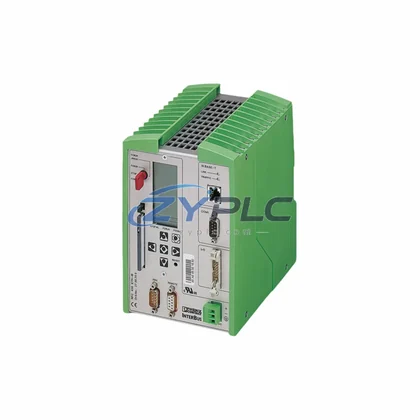
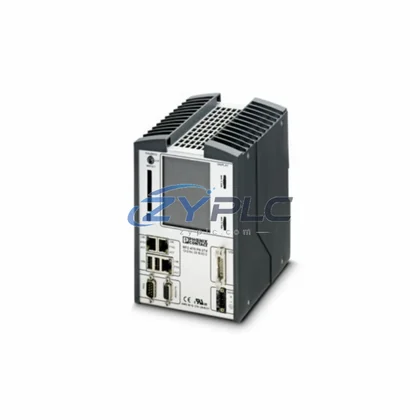
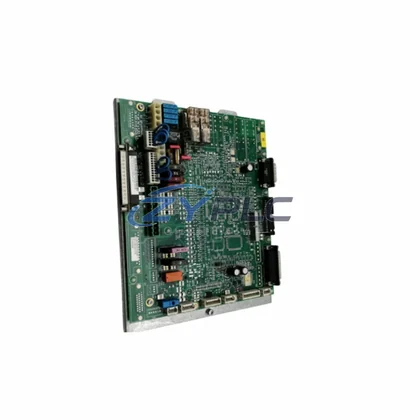
The KUKA 00-284-170 KPC4 CPU Module (also referenced as 00284170, 00-198-269, and 00-198-260) is the computational core of the KUKA KRC4 robot controller platform — one of the most widely deployed industrial robot control architectures in automotive, electronics, and heavy manufacturing environments. Designed to deliver deterministic real-time processing with minimal power overhead, this CPU module enables factories to extract maximum productivity from their robotic cells while actively reducing unplanned downtime risk across the production line.
Unlike generic computing hardware, the 00-284-170 KPC4 is engineered specifically for the KRC4 controller’s integrated safety, motion planning, and fieldbus communication stack. Its tight hardware-software integration means the controller spends fewer CPU cycles on overhead tasks, translating directly into lower idle power draw, faster cycle times, and more predictable thermal output — all of which contribute to measurable operational stability at the cell level.
Product Specification Table
| Parameter |
Specification / Value |
| SKU / Part Number |
00-284-170 KPC4 / 00284170 / 00-198-269 / 00-198-260 |
| Compatible Controller |
KUKA KRC4, KRC4 Compact, KRC4 Smallsize |
| Processing Architecture |
Real-time industrial CPU, multi-core motion & safety co-processing |
| Electrical / System Notes |
Low-idle design; optimized for continuous 24/7 industrial duty cycles |
| Operating Efficiency |
Deterministic cycle execution; minimizes redundant computation overhead |
| Compatible Fieldbus Protocols |
PROFINET, EtherNet/IP, DeviceNet, EtherCAT (via KRC4 option packages) |
| Application Environment |
Automotive welding, material handling, palletizing, assembly, arc welding |
| Maintenance Value |
Reduces idle energy draw; supports KUKA.EnergyMonitoring software integration |
| Operating Temperature |
0°C to +45°C (standard industrial cabinet environment) |
| Warranty |
warranty terms confirmed during quotation — tested and verified before shipment |
System Compatibility and Application
The 00-284-170 KPC4 does not operate in isolation — its energy efficiency impact is amplified when integrated within a well-designed automation architecture. In a typical KRC4-based robotic cell, the CPU module coordinates directly with the KUKA KPS 600 power supply unit, which manages DC bus energy recovery during deceleration phases. When the robot decelerates or enters a hold state, regenerative braking energy is fed back through the KPS 600 rather than dissipated as heat, and the KPC4 CPU governs the timing and sequencing of these energy recovery windows.
On the drive side, the KUKA KSD 48/10 servo drive modules receive motion commands from the KPC4 at sub-millisecond intervals, enabling precise torque and velocity control that eliminates overshoot and unnecessary motor heating. Paired with KUKA KMC 1 motor control units, the system maintains tight current regulation across all six robot axes, ensuring that each joint draws only the power required for the programmed trajectory — no more, no less.
For broader plant-level energy visibility, the KRC4 controller running on the 00-284-170 CPU can be integrated with Siemens SENTRON PAC3200 power monitoring devices via PROFINET, providing real-time kWh consumption data per robot cell. This data feeds into energy dashboards and supports ISO 50001 maintenance planning reporting. Similarly, Phoenix Contact QUINT power supplies are commonly deployed in the same control cabinet to power the KRC4’s 24V I/O infrastructure with high conversion efficiency, reducing cabinet-level heat generation.
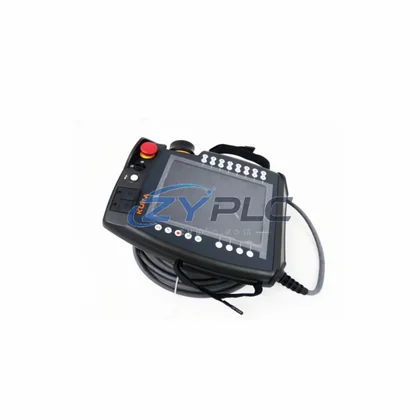
The KPC4 CPU also manages the KUKA smartPAD teach pendant interface, which allows operators to activate KUKA’s built-in operational-efficiency modes — including reduced-speed standby, axis brake engagement during idle periods, and servo power-down sequences — directly from the production floor without requiring engineering intervention. Communication with upstream MES or SCADA systems is handled through the KRC4’s integrated OPC UA server, enabling the CPU module to transmit real-time cycle time, operating load, and fault data to plant-level monitoring platforms.
In multi-robot cells, the 00-284-170 KPC4 supports KUKA.RoboTeam synchronization, allowing multiple KRC4 controllers to coordinate motion and share load across a production sequence — reducing peak power demand spikes that would otherwise stress the facility’s electrical infrastructure. Integration with KUKA.WorkVisual project engineering software allows energy-optimized path planning to be deployed directly to the CPU module, with trajectory smoothing algorithms that reduce unnecessary acceleration events and their associated power peaks.
Maintenance and Replacement Notes
In automotive body-in-white welding lines, the KUKA 00-284-170 KPC4 CPU module has demonstrated measurable impact on overall equipment effectiveness (OEE) by reducing unplanned downtime caused by controller faults. Because the KPC4 manages the KRC4’s integrated safety controller (KSI) and monitors all axis drive health in real time, it can detect early signs of servo degradation — such as increasing current draw on a specific axis — before a fault condition occurs. Maintenance teams receive predictive alerts, allowing them to schedule bearing replacements or drive inspections during planned downtime windows rather than responding to emergency stops that halt the entire line.
From an operating load perspective, a single unplanned robot stop in a high-throughput welding cell can cost more in wasted energy (reheating fixtures, restarting conveyors, purging weld gas lines) than the power savings achieved over an entire shift of optimized operation. The KPC4’s fault-tolerant architecture and robust memory management directly reduce the frequency of these costly interruptions.
In palletizing and material handling applications, the CPU module’s fast cycle time execution allows the robot to complete pick-and-place sequences with shorter dwell times at waypoints, improving line throughput without increasing motor speed — a key lever for energy efficiency since motor power consumption scales with the square of speed. By optimizing path geometry through KUKA.PathPlanning and executing those paths with the deterministic timing of the 00-284-170 KPC4, factories achieve the same throughput at lower peak motor currents.
All units supplied by ZYPLC undergo full functional testing prior to shipment, including controller boot verification, axis communication checks, and safety circuit validation. Each 00-284-170 KPC4 module is covered by a warranty terms confirmed during quotation, with availability confirmed by RFQ availability ensuring rapid dispatch to minimize production downtime. Our inventory is sourced from verified supply channels, and each unit is inspected for firmware compatibility with current KRC4 controller revisions.
Product Sourcing FAQ
Q1: How does the KUKA 00-284-170 KPC4 contribute to operational stability in a KRC4 robot cell?
The KPC4 CPU module enables precise real-time control of all six robot axes, allowing motion profiles to be optimized for minimum operating load. It also manages the KRC4’s operational-efficiency standby modes, coordinates regenerative braking through the KPS 600 power supply, and supports integration with plant-level condition monitoring systems via PROFINET and OPC UA. Together, these capabilities reduce idle power draw and eliminate unplanned downtime from suboptimal motion trajectories.
Q2: Is the 00-284-170 compatible with all KRC4 controller variants?
The 00-284-170 KPC4 is designed for the KUKA KRC4 platform, including the KRC4 standard, KRC4 Compact, and KRC4 Smallsize variants. Cross-compatibility with specific hardware revisions should be verified against your controller’s serial number and software version. Our technical team can assist with compatibility confirmation prior to purchase.
Q3: Can this CPU module be used as a direct replacement for 00-198-269 or 00-198-260?
Yes — the 00-284-170 KPC4 is the updated successor to earlier KRC4 CPU references including 00-198-269 and 00-198-260. It is designed as a functional replacement within the KRC4 controller architecture. We recommend verifying the KRC4 system software version to ensure firmware compatibility before installation.
Q4: What does the warranty terms confirmed during quotation cover, and what is the testing process?
Every 00-284-170 KPC4 module shipped by ZYPLC is tested for full functional operation, including controller initialization, axis drive communication, safety circuit integrity, and fieldbus interface verification. The warranty terms confirmed during quotation covers hardware defects and functional failures under normal industrial operating conditions. Replacement or repair is provided within the warranty period, with priority handling to minimize impact on your production schedule.