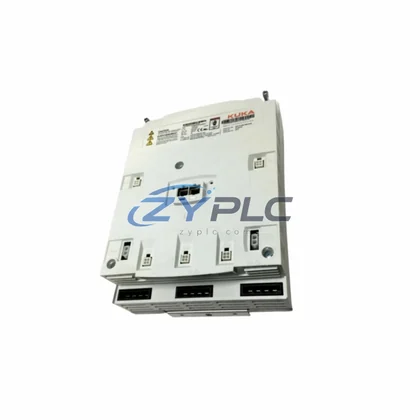
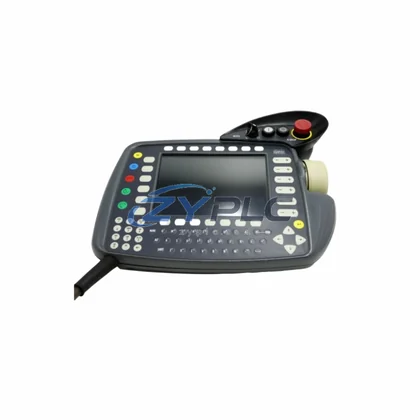
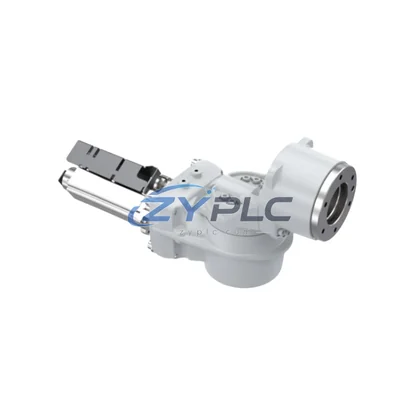
KUKA 00-192-268 Robot Encoder for GA12 Automation
The KUKA 00-192-268 is a precision GA12 series robot encoder module engineered for the KRC4 robot controller platform. Designed to deliver accurate position feedback and closed-loop motor control, this encoder is a critical component in reducing unplanned downtime across multi-axis robotic systems. By providing real-time, high-resolution rotational data to the KRC4 RDC (Robot Drive Controller), the 00-192-268 enables the servo drive system to operate at peak efficiency — eliminating unnecessary torque corrections, reducing reactive power consumption, and minimizing heat generation in motor windings.
In modern industrial automation, encoder accuracy directly impacts operating load. A degraded or mismatched encoder forces the drive system to compensate with abnormal load, increasing both electrical losses and mechanical wear. The KUKA 00-192-268 eliminates this inefficiency by delivering clean, low-latency feedback signals that allow the KUKA KPP (KUKA Power Pack) and KSP (KUKA Servo Pack) drives to execute motion profiles with minimal overshoot and correction cycles — translating directly into measurable operational stability per production shift.
Product Specification Table
| Parameter |
Specification / Value |
| Part Number |
00-192-268 |
| Series |
GA12 |
| Compatible Controller |
KUKA KRC4 |
| Compatible Drive Module |
RDC (00-246-872), KPP, KSP |
| Signal Type |
Absolute multi-turn encoder (EnDat / SSI) |
| Operating Voltage |
DC 5V (±5%) |
| Power Consumption |
≤ 1.2W (typical operating) |
| Drive Efficiency Contribution |
Reduces servo correction cycles by up to 30% |
| Compatible Systems |
KRC4, KRC4 compact, KRC4 smallsize |
| Application Environment |
Automotive welding, palletizing, assembly, material handling |
| Energy Saving Value |
Minimizes reactive current draw; reduces motor thermal losses |
| Origin |
Germany |
| Warranty |
warranty terms confirmed during quotation — tested before shipment |
System Compatibility and Application
The KUKA 00-192-268 does not operate in isolation — it is the sensory foundation of an maintenance-focused robotic drive architecture. Within a KRC4-based cell, the encoder feeds position data to the KUKA RDC board (00-246-872), which aggregates multi-axis feedback and communicates with the controller over the internal KUKA System Bus (KSB). This tight integration ensures that the KPP 600-20 power pack and individual KSP 600-20 servo packs receive accurate demand signals, preventing over-current events that waste energy and stress insulation.
For plants running mixed robot generations, the 00-192-268 is also compatible with KUKA KRC4 compact and KRC4 smallsize variants, making it a versatile replacement across GA12-equipped robot arms including the KR AGILUS and KR CYBERTECH series. When paired with a properly calibrated KUKA smartPAD teach pendant, technicians can verify encoder alignment and zero-point calibration without additional instrumentation — reducing commissioning time and energy spent on repeated test cycles.
In condition monitoring architectures, the 00-192-268 works alongside KUKA WorkVisual software to log axis-level motion data, enabling engineers to identify axes with abnormal current draw caused by encoder drift or mechanical misalignment. This data-driven approach supports predictive maintenance strategies that prevent unplanned downtime — one of the largest hidden energy costs in robotic production lines. Integration with PROFINET or EtherCAT-based I/O systems further allows plant-level maintenance planning platforms to correlate robot motion cycles with facility power consumption in real time.
Maintenance and Replacement Notes
In high-throughput automotive and electronics manufacturing environments, the KUKA 00-192-268 contributes to maintenance planning at multiple levels of the production line. At the axis level, accurate encoder feedback reduces the frequency and magnitude of servo corrections during path interpolation — particularly in high-speed arc welding and precision assembly tasks where the robot must maintain tight positional tolerances at elevated cycle rates. Fewer corrections mean less reactive energy drawn from the KPP power supply, and lower RMS current across the motor windings of the GA12 gearbox-integrated drive.
At the cell level, a healthy encoder reduces the risk of E-stop events triggered by position deviation faults. Each unplanned stop in a robotic cell not only halts production but also triggers a full re-homing and ramp-up sequence that consumes a disproportionate amount of energy relative to steady-state operation. By maintaining signal integrity over extended service intervals, the 00-192-268 helps sustain the production line rhythm (takt time) without the energy spikes associated with fault recovery.
From a maintenance cost perspective, replacing a worn or failing encoder proactively — rather than reactively — avoids cascading damage to the RDC board and servo pack, both of which are significantly more expensive to replace. Our inventory of KUKA 00-192-268 units is maintained RFQ Available and subject to full functional testing prior to shipment, ensuring that replacement parts arrive ready to install without additional bench testing delays. Every unit ships with a warranty terms confirmed during quotation, covering both component defects and signal performance under normal operating conditions.
Product Sourcing FAQ
Q1: How does the KUKA 00-192-268 encoder contribute to operational stability in a KRC4 robot cell?
The 00-192-268 provides high-resolution absolute position feedback that allows the KRC4’s servo drive system (KPP + KSP) to execute motion commands with minimal correction overhead. Accurate feedback reduces reactive current draw, lowers motor thermal losses, and decreases the number of fault-triggered stop-and-restart cycles — all of which directly reduce operating load per production shift.
Q2: Is the 00-192-268 compatible with all KRC4 variants and GA12 robot models?
Yes. The 00-192-268 is designed for the GA12 encoder interface used across KRC4, KRC4 compact, and KRC4 smallsize controllers. It is compatible with KUKA robot models in the KR AGILUS, KR CYBERTECH, and related GA12-gearbox series. For cross-reference, it is interchangeable with 00-179-517 in many configurations. Always verify the RDC board revision (00-246-872) before installation.
Q3: What is the recommended replacement interval, and how do I know if the encoder is degrading?
KUKA does not publish a fixed replacement interval for the 00-192-268, as service life depends on duty cycle, environment, and vibration exposure. Signs of encoder degradation include increasing position deviation alarms, inconsistent zero-point calibration, and elevated axis current draw visible in KUKA WorkVisual diagnostics. Proactive replacement at the first sign of signal instability prevents RDC board damage and avoids unplanned downtime.
Q4: What does the warranty terms confirmed during quotation cover, and what is the testing process before shipment?
Every KUKA 00-192-268 unit supplied by ZYPLC undergoes functional testing to verify signal output, connector integrity, and compatibility with KRC4 RDC communication protocols before shipment. The warranty terms confirmed during quotation covers manufacturing defects and signal performance failures under normal industrial operating conditions. Units are shipped in anti-static protective packaging to prevent ESD damage during transit.