KUKA 00-198-260 KPP600-20-1×40: Industrial Data Link and Smart Factory Power Connectivity
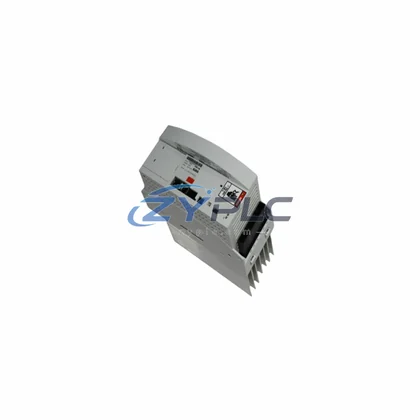
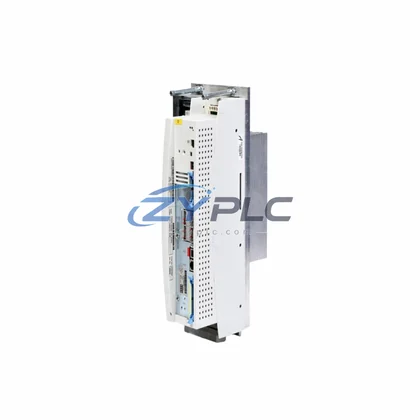
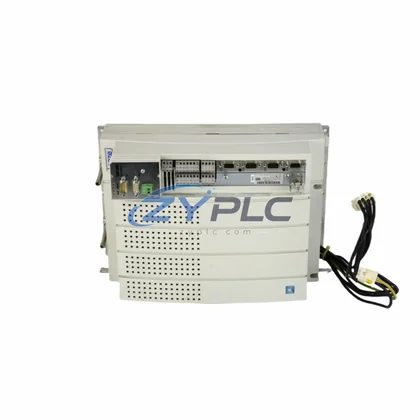
The KUKA 00-198-260 KPP600-20-1×40 is a high-performance industrial power supply unit engineered specifically for KUKA KR C4 robot controller platforms. In modern smart factory environments, the power supply is not merely a passive component — it is a critical node in the industrial data chain, directly influencing the stability of real-time communication between robot drives, servo axes, field devices, and upper-level control systems. The KPP600-20-1×40 delivers regulated DC bus power to KUKA servo drives and axis modules, ensuring that every motion command transmitted from the KR C4 controller reaches the mechanical arm with zero power interruption and full signal integrity.
As industrial sites evolve toward fully networked automation architectures, the demand for reliable power infrastructure has grown in parallel with the expansion of industrial Ethernet protocols. The KPP600-20-1×40 is designed to operate seamlessly within EtherCAT and PROFINET-based control topologies, where the KUKA KR C4 controller acts as the EtherCAT master, coordinating real-time data exchange with servo drives, remote I/O modules, safety controllers, and vision systems at cycle times below 1 ms. Any instability in the DC bus — caused by an aging or incompatible power supply — directly degrades the quality of this data flow, introducing jitter, axis faults, and unplanned downtime.
Compatibility & Integration Notes
| Parameter |
Specification |
| SKU / Part Number |
00-198-260 / KPP600-20-1×40 |
| Brand |
KUKA |
| Compatible Controller |
KUKA KR C4, KR C4 compact, KR C4 smallsize |
| Communication Protocol |
EtherCAT (primary), PROFINET I/O, DeviceNet (via gateway) |
| Interface Type |
DC Bus Interface, KPP Drive Bus, RJ45 Ethernet Service Port |
| Transmission Capability |
Real-time servo power and drive bus synchronization |
| Network Compatibility |
KUKA KR C4 EtherCAT topology, Industrial Ethernet backbone |
| System Application |
Robot welding cells, palletizing lines, assembly automation, SCADA-integrated robot workcells |
| Product Type |
Industrial Power Supply Unit (KPP Series) |
| Origin |
Germany |
| Warranty |
warranty terms confirmed during quotation — Tested before shipment |
Connected Automation Data Flow
In a fully integrated robot workcell, the KPP600-20-1×40 sits at the heart of the power and communication chain. The KUKA KR C4 controller — running KUKA System Software (KSS) — issues motion and I/O commands over the internal EtherCAT bus to the KPP600 power supply and connected KUKA KSP600 servo drive modules. These axis controllers receive both power and real-time position feedback simultaneously, enabling sub-millisecond synchronization across all robot joints.
Upstream, the KR C4 controller connects to the plant PROFINET network, where a Siemens S7-1500 PLC or Siemens S7-300 PLC acts as the line controller, coordinating the robot with conveyor systems, vision inspection units, and safety PLCs. The PROFINET interface on the KR C4 allows the robot to receive workpiece data, trigger signals, and production recipes directly from the MES layer, while feeding back real-time status, fault codes, and cycle time data to the WinCC SCADA system or TIA Portal HMI panels.
At the field level, Beckhoff EK1100 EtherCAT couplers and remote I/O terminals distribute digital and analog signals from proximity sensors, photoelectric barriers, and torque sensors to the KR C4 over the EtherCAT backbone. Gripper control signals, weld current feedback, and force-torque sensor data from devices such as the ATI Mini45 force-torque sensor are all routed through this same high-speed network, with the KPP600-20-1×40 ensuring that the servo power bus remains stable throughout every data exchange cycle.
For facilities integrating collaborative robot cells alongside traditional industrial robots, KUKA SmartPAD teach pendants connect to the KR C4 via the internal KLI (KUKA Line Interface), providing operators with real-time diagnostics, program management, and manual override capability — all while the KPP600 maintains uninterrupted power delivery to the drive system. Edge gateway devices such as the Moxa MGate MB3270 protocol gateway can further bridge legacy Modbus RTU devices — such as older variable frequency drives or energy meters — into the PROFINET/EtherCAT network, ensuring that no field device remains isolated from the plant data infrastructure.
Solving Data Isolation in Industrial Sites
One of the most persistent challenges in industrial automation is the coexistence of multiple communication protocols across different generations of equipment. A typical manufacturing site may operate KUKA robots on EtherCAT, legacy conveyor drives on Modbus RTU, safety systems on PROFIsafe, and energy monitoring devices on BACnet — creating data silos that prevent unified visibility and remote diagnostics.
The KUKA 00-198-260 KPP600-20-1×40 addresses this challenge at the power infrastructure level. By maintaining a stable, noise-free DC bus, it eliminates the most common source of communication errors in robot drive systems: voltage ripple and transient spikes that corrupt EtherCAT frame timing. When the power supply is degraded or incompatible, EtherCAT topology errors cascade through the entire drive bus, causing axis faults that appear as communication failures rather than power issues — making root-cause diagnosis extremely difficult without the correct replacement unit.
With the KPP600-20-1×40 restored to specification, the KR C4 controller can re-establish full EtherCAT synchronization, allowing SCADA systems to resume real-time data collection from all robot axes. Production line transparency is restored: OEE dashboards receive accurate cycle time data, predictive maintenance algorithms regain access to motor temperature and load current trends, and remote diagnostic tools can once again connect to the robot controller over the plant Ethernet backbone without communication timeouts.
For multi-robot lines where several KR C4 controllers share a common PROFINET segment, a single faulty KPP600 unit can introduce ground noise that affects neighboring controllers. Replacing the unit with a genuine KUKA 00-198-260 KPP600-20-1×40 — tested and verified before shipment — eliminates this cross-contamination risk and restores network stability across the entire production cell. All units supplied by ZYPLC are covered by a warranty terms confirmed during quotation and undergo functional testing prior to dispatch, ensuring that the replacement unit performs to KUKA factory specification from the moment it is installed.
Industrial Connectivity FAQ
Q1: Does the KUKA KPP600-20-1×40 support EtherCAT real-time communication?
Yes. The KPP600-20-1×40 is designed for use within the KUKA KR C4 EtherCAT drive bus topology. It provides the regulated DC bus power that enables the KR C4 controller to maintain sub-millisecond EtherCAT cycle times across all connected servo drive modules. Stable power delivery is a prerequisite for deterministic EtherCAT communication.
Q2: Is the KPP600-20-1×40 compatible with PROFINET-integrated robot workcells?
Yes. While the KPP600 operates on the internal EtherCAT drive bus, the KR C4 controller it supports is fully compatible with PROFINET I/O networks. The controller can simultaneously maintain EtherCAT communication with the drive system and PROFINET communication with upstream PLCs, SCADA systems, and HMI panels without any protocol conflict.
Q3: How is network stability ensured after replacing the KPP600-20-1×40?
Every KPP600-20-1×40 unit supplied by ZYPLC undergoes functional testing before shipment to verify DC bus output voltage, ripple levels, and drive bus interface integrity. This pre-shipment testing ensures that the replacement unit will not introduce new communication errors into the EtherCAT topology. The warranty terms confirmed during quotation covers any performance deviation from KUKA factory specification discovered after installation.
Q4: Can the KPP600-20-1×40 be used in expanded multi-axis robot configurations?
Yes. The KPP600 series is designed to support scalable axis configurations within the KR C4 platform. Additional KUKA KSP servo drive modules can be added to the drive bus as the robot system is expanded, and the KPP600-20-1×40 provides the power infrastructure to support these expanded configurations within its rated capacity. For systems requiring higher power capacity, KUKA offers complementary KPP series variants that can be evaluated alongside the KPP600-20-1×40.