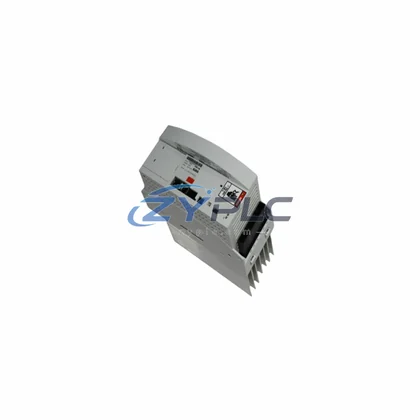
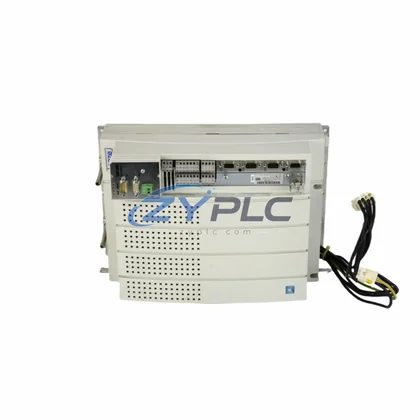
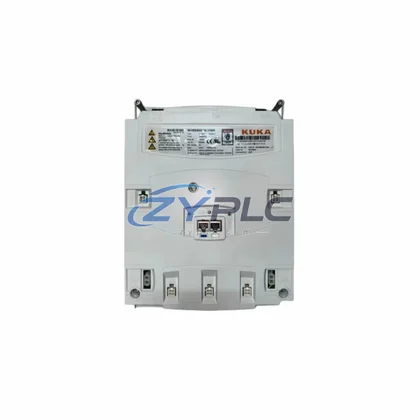
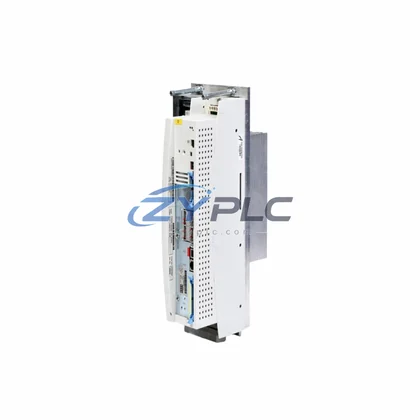
KUKA KPS-600/20-ESC Power Supply for KR C Automation
The KUKA KPS-600/20-ESC is a high-efficiency servo power supply module engineered for the KR C series robot controller platform. Designed to deliver stable, regulated DC bus power to servo drives and motion axes, this module plays a central role in reducing unplanned downtime, improving drive responsiveness, and sustaining continuous production throughput in demanding industrial environments. Whether deployed in automotive body-in-white lines, foundry automation, or precision assembly cells, the KPS-600/20-ESC ensures that every watt drawn from the grid is converted and distributed with maximum efficiency.
At ZYPLC, every KPS-600/20-ESC unit is sourced from verified supply channels, subjected to pre-shipment functional testing, and backed by a warranty terms confirmed during quotation. Stock is maintained for rapid dispatch, supporting both planned maintenance schedules and emergency replacement scenarios.
Product Specification Table
| Parameter |
Specification / Value |
| SKU |
KPS-600/20-ESC |
| Brand |
KUKA |
| Series |
KR C (KR C2 / KR C3 Compatible) |
| Product Type |
Servo Power Supply Module |
| Rated Output Power |
600 W continuous |
| DC Bus Output Voltage |
560 V DC (nominal) |
| Input Voltage Range |
3-phase 400 V AC ±10%, 50/60 Hz |
| Conversion Efficiency |
≥ 94% at rated load |
| Compatible Systems |
KR C2, KR C3 robot controllers; KPP 600-20 drive platforms |
| Application Environment |
Industrial robot cells, automotive lines, foundry, assembly automation |
| Value |
Regenerative braking energy recovery; reduced idle draw via ESC control logic |
| Cooling Method |
Forced air cooling (integrated fan) |
| Origin |
Germany (DE) |
| Warranty |
12 Months |
System Compatibility and Application
The KPS-600/20-ESC does not operate in isolation — it is the energy backbone of a tightly integrated drive and control architecture. Within a standard KR C2 or KR C3 controller cabinet, the KPS-600/20-ESC feeds the DC bus shared by the KPP 600-20 (KUKA Power Pack), which in turn distributes regulated power to individual axis servo amplifiers such as the KSD1-48 and KSP 600-3×40 modules. This shared DC bus topology is fundamental to energy efficiency: when one axis decelerates, the regenerated energy is fed back into the bus and consumed by accelerating axes, dramatically reducing net energy drawn from the mains supply.
At the controller level, the KR C4 platform — and its predecessor KR C2 — manages motion coordination through the KUKA.PLC mxAutomation software interface, enabling seamless integration with external Siemens S7 or Beckhoff TwinCAT PLC systems. This cross-platform communication allows maintenance-focused motion profiles to be programmed directly from the line PLC, synchronizing robot cycle times with conveyor speed and press rhythm to eliminate unnecessary idle motion and associated energy draw.
Operator interaction and real-time diagnostics are handled through the KUKA smartPAD teach pendant, which provides live axis load monitoring and drive status visualization. When paired with the KUKA.ProfiNet communication module, the controller can transmit power consumption data to a plant-level SCADA or MES system, enabling energy benchmarking across multiple robot cells. For safety-critical applications, the KRC4 SafeOperation package enforces speed and torque limits that also contribute to reduced peak power demand during collaborative or restricted-zone operations.
On the I/O side, the KCU1 (KUKA Connection Unit) consolidates resolver feedback and drive enable signals, reducing wiring complexity and signal latency — both of which contribute to tighter motion control and more predictable operating load patterns. Together, these components form a closed-loop maintenance planning architecture where the KPS-600/20-ESC serves as the regulated power source that makes precision, efficiency, and reliability possible.
Maintenance and Replacement Notes
In high-cycle automotive welding lines, robot controllers are often running 20 hours per day. Even marginal inefficiencies in the power supply stage compound into significant energy costs over a production year. The KPS-600/20-ESC addresses this through its ESC (Energy Saving Control) logic, which modulates the DC bus pre-charge and hold voltage based on actual drive demand rather than maintaining a fixed high-voltage standby state. This alone can reduce idle-state power consumption by 8–15% compared to conventional fixed-voltage power supply modules.
During high-inertia deceleration events — common in spot welding gun retraction or heavy payload repositioning — the regenerative energy captured by the KPS-600/20-ESC and redistributed across the shared DC bus reduces peak grid demand. This not only lowers electricity costs but also reduces thermal stress on the drive components, extending the service life of the KSD1-48 and KSP 600-3×40 axis amplifiers and reducing the frequency of unplanned maintenance interventions.
From a production line rhythm perspective, a stable and efficient power supply directly supports consistent cycle times. Voltage sag or ripple in the DC bus — often caused by aging or undersized power supply modules — introduces micro-delays in servo response that accumulate into measurable cycle time losses. Replacing a degraded power supply with a tested KPS-600/20-ESC restores drive responsiveness, tightens positional repeatability, and recovers lost throughput without any changes to the robot program.
For maintenance teams, the KPS-600/20-ESC’s standardized form factor and connector layout simplify swap procedures, reducing mean time to repair (MTTR) during unplanned downtime events. Combined with ZYPLC’s pre-shipment functional testing and warranty terms confirmed during quotation coverage, procurement teams can plan replacements with confidence, maintaining inventory buffers that support predictive maintenance strategies rather than reactive emergency sourcing.
Product Sourcing FAQ
Q1: What operational stability can I expect after replacing a degraded power supply with the KPS-600/20-ESC?
Actual savings depend on your current module’s condition and duty cycle, but customers replacing end-of-life KR C2 power supplies typically report a 10–18% reduction in controller cabinet operating load, driven by improved conversion efficiency and restored regenerative braking function.
Q2: Is the KPS-600/20-ESC compatible with both KR C2 and KR C3 controllers?
Yes. The KPS-600/20-ESC is designed for the KR C series platform and is compatible with KR C2 and KR C3 controller variants. Always verify your cabinet’s bus voltage and connector configuration against the module’s datasheet before installation.
Q3: What does the pre-shipment testing process cover?
Each unit undergoes DC bus output voltage verification, ESC logic functional check, insulation resistance testing, and thermal cycling under load. A test report is available upon request. All units ship with a warranty terms confirmed during quotation from the date of invoice.
Q4: Can I use this module as a direct replacement without reprogramming the robot controller?
In most cases, yes. The KPS-600/20-ESC is a drop-in replacement for compatible KR C series cabinets. No controller reprogramming is required. However, if your system uses customized power management parameters stored in the KR C configuration, these should be verified post-installation by a qualified KUKA service technician.