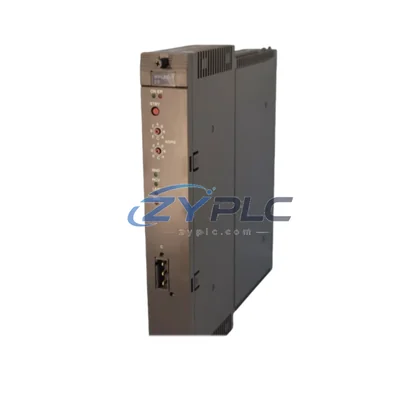
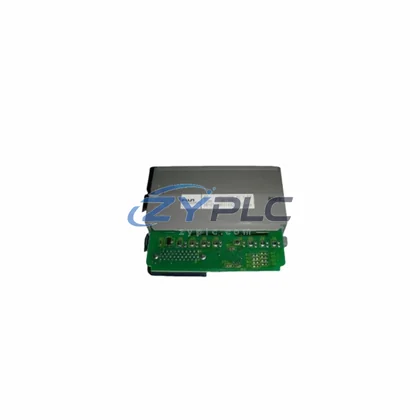
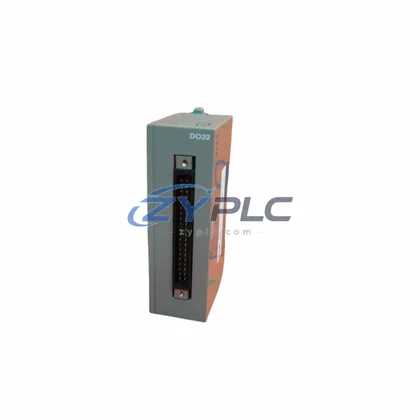
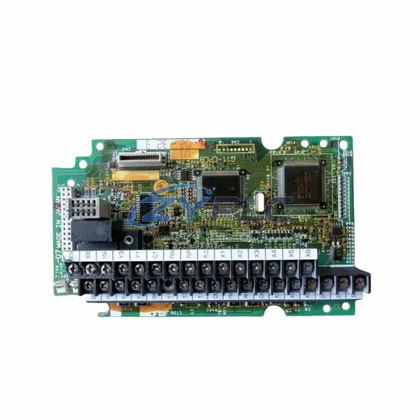
The KUKA 00-211-996 (compatible SKUs: KRC400-195-245 / KPC400-255-229) is the core controller module of the KUKA KRC4 platform — engineered not only for precise six-axis motion control, but for intelligent maintenance planning across continuous industrial production environments. In automotive welding lines, electronics assembly cells, and palletizing systems where robots run across multiple shifts, the energy overhead of poorly managed servo drives and idle-state power draw accumulates into significant operational cost. The 00-211-996 addresses this directly through dynamic load-adaptive control logic that continuously adjusts power delivery to match actual servo demand — eliminating the fixed-gain inefficiencies common in legacy controller architectures.
ZYPLC maintains ready stock of the KUKA 00-211-996 for prompt dispatch, with every unit undergoing full functional testing — including power-on verification, communication bus integrity checks, and servo command response validation — prior to shipment. All units are covered by a warranty terms confirmed during quotation from the date of delivery.
Product Specification Table
| Parameter |
Specification |
| Part Number |
00-211-996 |
| Compatible SKUs |
KRC400-195-245 / KPC400-255-229 |
| Controller Platform |
KUKA KRC4 / KRC4 compact / KRC4 smallsize |
| Logic Supply Voltage |
24 VDC (internal) |
| Drive Efficiency Mode |
Dynamic load-adaptive servo power control |
| Energy Recovery |
Regenerative braking feedback via KPS-600 DC bus |
| Compatible Systems |
KRC4, KRC4 compact, KRC4 smallsize |
| Communication Protocols |
PROFINET, EtherCAT, DeviceNet (optional) |
| Application Environment |
Automotive welding, electronics assembly, palletizing, material handling |
| Maintenance Value |
Reduces servo standby draw; supports regenerative braking energy recovery |
| Origin |
Germany |
| Warranty |
12 Months (ZYPLC) |
System Compatibility and Application
The energy efficiency of the KUKA 00-211-996 is fully realized when it operates as the coordinating intelligence within a complete KRC4 automation architecture. At the power supply level, the KUKA KPS-600 servo power supply manages the DC bus and enables regenerative energy recovery: when robot axes decelerate from high-speed transfer moves, kinetic energy is fed back into the shared DC bus rather than dissipated as heat through braking resistors. The 00-211-996 orchestrates this recovery cycle in real time, ensuring that deceleration events across all six axes contribute to net energy reduction rather than thermal waste.
On the drive side, the KUKA KSD1-48 servo drive receives torque and velocity commands from the 00-211-996 and executes them with sub-millisecond precision. The tight coupling between the controller module and the servo drives eliminates the communication latency that causes motion overshoot, wasted travel, and unnecessary current draw in loosely integrated systems. For coordinated multi-axis applications such as arc welding or laser cutting, this synchronization is critical — both for energy efficiency and for process quality.
Operator-level energy visibility is provided through the KUKA smartPAD teach pendant, which surfaces real-time data on cycle times, axis load distribution, and program-level energy consumption. When paired with the KUKA.WorkVisual engineering suite, maintenance engineers can analyze historical energy profiles, identify axes operating above nominal load thresholds, and schedule predictive maintenance interventions before developing faults escalate into unplanned downtime events.
In mixed-automation environments, the 00-211-996 supports integration with third-party control platforms via PROFINET and EtherCAT fieldbus protocols. This enables the KRC4 controller to receive production scheduling signals from upstream systems — such as a Siemens S7-1500 PLC or an Allen-Bradley ControlLogix controller — and enter low-power standby mode during line stoppages rather than maintaining full servo torque unnecessarily. In high-mix, low-volume environments where robots frequently wait between jobs, this capability delivers measurable reductions in non-productive energy consumption.
For facilities where power quality monitoring is a priority, the KRC4 cabinet equipped with the 00-211-996 can be paired with a Siemens SENTRON PAC3200 power monitoring device at the cabinet feed. This provides granular data on active power, reactive power, and power factor — enabling energy managers to correlate robot program execution with demand spikes and optimize production scheduling accordingly. Path optimization using KUKA.OfficeLite offline simulation software further reduces energy consumption at the programming stage, shortening travel distances and smoothing acceleration profiles before programs are deployed to the production floor.
Maintenance and Replacement Notes
In automotive body-in-white welding lines — where dozens of KRC4-equipped robots operate in tightly choreographed sequences — the maintenance planning capabilities of the 00-211-996 contribute directly to line-level power demand reduction. Coordinated standby scheduling, where robots not actively welding reduce servo torque to a minimum hold level, reduces peak demand charges that accumulate across a production shift. The controller module enables this scheduling to be implemented at the program level, without requiring external maintenance planning hardware.
In electronics assembly applications, where cycle times are short and robot utilization rates are high, the dynamic load-adaptive control logic ensures that servo drives are never over-powered for the actual payload being moved. A robot handling a lightweight PCB assembly does not draw the same current as one handling a heavy engine component — and the 00-211-996 adjusts drive power accordingly, preventing the unplanned downtime inherent in fixed-gain configurations. This payload-proportional power management also reduces thermal stress on the KSD1-48 servo drives, extending their service life and reducing replacement frequency.
For palletizing and material handling lines operating continuously across three shifts, the regenerative braking feedback capability becomes particularly valuable. High-inertia loads decelerating from full speed generate substantial recoverable energy, and the KPS-600 working in coordination with the 00-211-996 ensures this energy is returned to the DC bus rather than burned off as heat. Over a 24-hour production period, this recovery represents a meaningful reduction in total energy consumption — and a corresponding reduction in cooling load for the production facility.
Predictive maintenance is another key dimension of the 00-211-996’s contribution to production efficiency. The module continuously monitors internal temperatures, bus voltages, and communication integrity. When parameters drift outside nominal ranges, diagnostic codes are generated and surfaced through the smartPAD and logged in the KRC4 system journal. This early warning capability allows maintenance teams to address developing faults during planned downtime windows rather than responding to emergency breakdowns — reducing both repair costs and the unplanned downtime associated with restarting cold production lines after unplanned stops.
Every KUKA 00-211-996 unit supplied by ZYPLC is tested prior to shipment for power-on function, bus communication integrity, and servo command response. Units ship with test documentation and are covered by a warranty terms confirmed during quotation from the date of delivery. Stock is maintained for prompt dispatch, supporting both planned maintenance schedules and urgent breakdown replacement requirements.
Product Sourcing FAQ
Q1: How does the KUKA 00-211-996 reduce energy consumption in a KRC4 robot cell?
The 00-211-996 manages servo drive power delivery dynamically, reducing current draw during low-load and standby phases. Combined with the KPS-600 regenerative power supply, it enables recovery of braking energy back into the DC bus — reducing net energy consumption per production cycle without any change to robot programming or production throughput.
Q2: Which KRC4 variants and communication protocols does the 00-211-996 support?
The module is compatible with the standard KRC4, KRC4 compact, and KRC4 smallsize controller cabinets. It supports PROFINET and EtherCAT communication natively, with DeviceNet available as an option — making it suitable for integration with Siemens, Allen-Bradley, Beckhoff, and most other PLC and SCADA platforms used in industrial automation.
Q3: What is the replacement procedure, and how quickly can production resume?
Replacement requires powering down the KRC4 cabinet, removing the existing module, installing the 00-211-996, and performing a system restart with configuration restore from backup. Experienced maintenance technicians typically complete this procedure within 30–60 minutes. ZYPLC recommends maintaining one spare unit in inventory to minimize downtime exposure — stock is available for same-day or next-day dispatch depending on location.
Q4: What testing and warranty coverage does ZYPLC provide?
All units undergo pre-shipment testing covering power-on function, bus communication integrity, and servo command response validation. A warranty terms confirmed during quotation is provided from the date of delivery, covering manufacturing defects and functional failures under normal operating conditions. Contact our technical team for warranty claims, compatibility verification, or volume pricing inquiries.