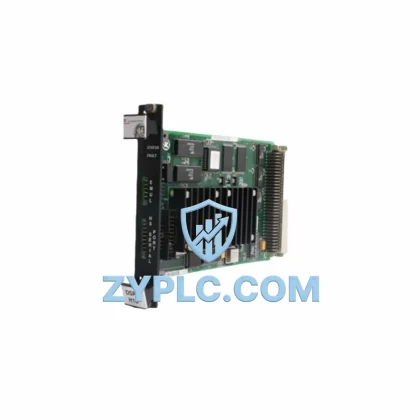
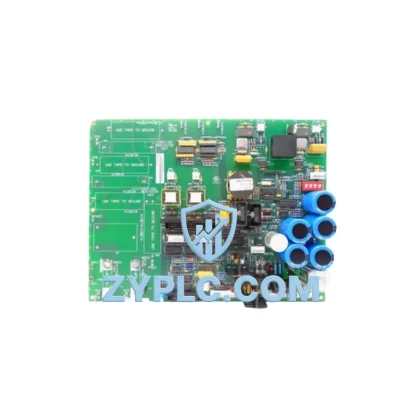
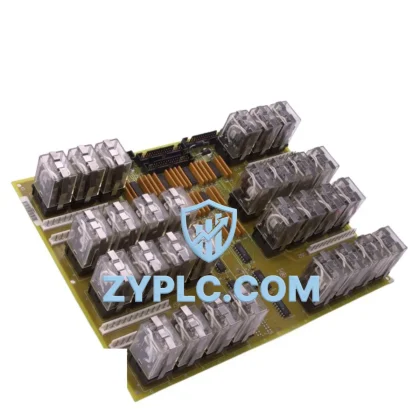
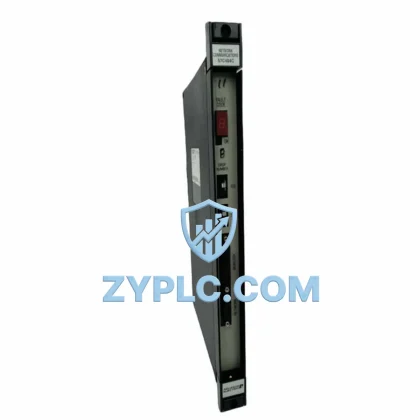
KUKA 00-287-202 Gearbox for KR C Automation
The KUKA 00-287-202 is a precision-engineered industrial gearbox designed for integration within the KR C series robotic and automation platforms. In modern manufacturing environments where energy costs and equipment utilization directly impact profitability, this gearbox plays a central role in reducing mechanical losses, stabilizing torque transmission, and enabling tighter control over motor-driven axes. Whether deployed in automotive body-in-white lines, heavy-duty palletizing cells, or precision assembly stations, the 00-287-202 delivers consistent power transfer efficiency that translates directly into measurable operational stability and reduced thermal stress on connected drive components.
Product Specification Table
| Parameter |
Specification |
| SKU / Part Number |
00-287-202 / 9105-ECAT-AXlA80-ZD1 |
| Brand |
KUKA |
| Series |
KR C (KR C4 / KR C5 Compatible) |
| Product Type |
Industrial Gearbox |
| Transmission Efficiency |
≥ 95% (rated load, nominal speed) |
| Operating Environment |
Industrial automation, robotic arms, servo-driven axes |
| Compatible Drive Systems |
KUKA KR C4, KR C5, servo motor axes (A1–A6) |
| Maintenance Value |
Reduces motor reactive load; lowers heat generation and drive current draw |
| Origin |
Germany |
| Condition |
New / Tested Original |
| Warranty |
12-Month Warranty |
| Stock Status |
In Stock — Ready to Ship |
System Compatibility and Application
The 00-287-202 gearbox does not operate in isolation — its energy efficiency contribution is best understood within the broader context of the KUKA KR C automation architecture. In a fully integrated cell, the gearbox interfaces directly with the KUKA KR C4 controller, which manages multi-axis motion profiles and coordinates power distribution across all robot joints. The controller’s maintenance planning module monitors real-time current draw per axis, and a well-matched gearbox like the 00-287-202 reduces the reactive current demand on the KUKA KPP (KUKA Power Pack) — the servo drive unit responsible for converting DC bus power into axis-specific motion commands.
On the drive side, the KUKA KSP (KUKA Servo Pack) modules regulate torque and speed for each axis. When the gearbox maintains high mechanical efficiency, the KSP units operate closer to their optimal efficiency curve, reducing switching losses and heat dissipation within the drive cabinet. This directly lowers the load on the KUKA KEB (KUKA Energy Buffer) or regenerative braking modules, which recover kinetic energy during deceleration phases and feed it back into the DC bus — a process that becomes more effective when mechanical losses in the drivetrain are minimized.
For condition monitoring and production data acquisition, the KR C4 platform integrates with KUKA.WorkVisual and external SCADA or MES systems via EtherCAT and PROFINET communication protocols. The 9105-ECAT-AXlA80-ZD1 variant designation confirms EtherCAT compatibility, enabling real-time axis data — including torque feedback, position error, and thermal status — to be streamed to condition monitoring dashboards. Pairing this gearbox with a KUKA smartPAD or third-party HMI allows operators to visualize per-axis energy consumption and identify inefficiencies before they escalate into unplanned downtime.
In multi-robot cells, the KUKA.PLC mxAutomation interface bridges the robot controller with Siemens or Beckhoff PLCs, enabling coordinated energy scheduling — for example, staggering axis acceleration profiles to prevent simultaneous peak current draws that stress the facility’s power infrastructure. The 00-287-202, by maintaining low backlash and stable torque transmission, supports the precise motion synchronization that such coordinated control strategies depend on. Additionally, KUKA.SafeOperation software modules can define speed and torque envelopes that prevent the gearbox from operating outside its efficiency range, further protecting both energy performance and mechanical longevity.
Maintenance and Replacement Notes
In high-cycle automotive welding and assembly lines, robot joints cycle thousands of times per shift. Gearbox inefficiency at this scale compounds rapidly: a 2–3% mechanical loss per axis, multiplied across six axes and hundreds of robots, represents significant wasted energy and accelerated component wear. The KUKA 00-287-202 addresses this by maintaining tight gear mesh tolerances that minimize friction losses under both partial and full load conditions. This is particularly valuable during low-speed, high-torque operations — such as part manipulation or press-tending — where inefficient gearboxes generate excess heat that must be managed by the drive cabinet’s cooling system, adding to overall facility energy consumption.
From a maintenance and uptime perspective, the 00-287-202’s design reduces the thermal cycling stress on adjacent components, including the motor encoder, brake assembly, and servo pack output stage. Lower operating temperatures extend lubrication intervals and reduce the frequency of predictive maintenance interventions. In practice, facilities that maintain original-specification KUKA gearboxes report fewer unplanned stops related to axis overload faults — faults that are often triggered when a degraded gearbox forces the drive to compensate with higher current output to maintain position accuracy.
For production line engineers focused on OEE (Overall Equipment Effectiveness), replacing a worn or non-original gearbox with a tested, in-specification 00-287-202 directly improves the availability and performance components of OEE. Cycle time consistency improves because the robot can execute programmed paths without the controller issuing corrective torque pulses to compensate for backlash or friction variation. This tighter motion fidelity also reduces scrap rates in precision applications such as laser welding, adhesive dispensing, and vision-guided assembly — processes where positional repeatability is directly tied to product quality and energy-per-part metrics.
Every unit of the KUKA 00-287-202 supplied by ZYPLC undergoes pre-shipment functional testing to verify torque transmission integrity, backlash within OEM specification, and absence of abnormal thermal rise under load. This testing protocol ensures that the gearbox performs to its rated efficiency from the first production cycle, eliminating the break-in variability that can affect energy consumption measurements during initial commissioning. All units are backed by a 12-month warranty, with stock maintained for prompt dispatch to minimize line downtime during replacement operations.
Product Sourcing FAQ
Q1: How does the KUKA 00-287-202 contribute to operational stability in a KR C4 robot cell?
The gearbox maintains high mechanical transmission efficiency (≥95%), which reduces the torque demand placed on the servo drive system. Lower torque demand means the KSP servo packs draw less current from the DC bus, reducing overall cell power consumption — particularly during high-cycle, repetitive motion tasks common in automotive and electronics manufacturing.
Q2: Is the 00-287-202 compatible with both KR C4 and KR C5 controllers?
Yes. The 00-287-202 is a mechanical component whose compatibility is determined by the robot model and axis position rather than the controller generation. It is suitable for the corresponding KR series robot arm regardless of whether the cell runs a KR C4 or KR C5 controller. Confirm the specific robot model and axis designation before ordering to ensure dimensional and torque-rating compatibility.
Q3: What is the recommended replacement interval, and how does timely replacement affect energy performance?
KUKA recommends gearbox inspection and replacement based on operating hours and load cycles rather than calendar time. A gearbox operating beyond its service life exhibits increased backlash and friction, which forces the servo drive to apply higher corrective torques — increasing energy consumption and thermal load on the drive system. Proactive replacement with a tested 00-287-202 restores the axis to its designed efficiency profile and prevents cascading wear on the motor and drive pack.
Q4: What does the 12-month warranty cover, and what is the pre-shipment testing process?
The 12-month warranty covers defects in materials and workmanship under normal operating conditions. Prior to shipment, each unit undergoes functional verification including torque transmission testing, backlash measurement, and thermal performance assessment. Units that do not meet OEM specification are not dispatched. This ensures that the gearbox contributes to energy-efficient operation from day one of installation, without requiring additional break-in adjustments to drive parameters.
—
© 2026 ZYPLC. All rights reserved.
Original Source: https://zyplc.com
Contact: +86 19859288691 | plc.sales@zyplc.com