KUKA KR 500 R2830 Heavy-Load Robot for KR Series
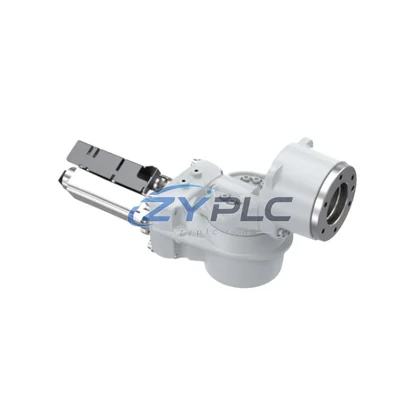
In modern industrial automation, no single component operates in isolation. The KUKA KR 500 R2830 — a high-payload, long-reach articulated robot engineered for the KR Series platform — is designed from the ground up to function as a deeply integrated node within a layered control system architecture. With a rated payload capacity of 500 kg and a maximum reach of 2830 mm, this robot addresses the most demanding heavy-load manipulation tasks across manufacturing, metallurgy, press tending, palletizing, and structural assembly lines. Its value, however, extends far beyond raw mechanical performance: the KR 500 R2830 is built to participate in a coherent, scalable, and redundancy-capable automation ecosystem.
Understanding the KR 500 R2830 requires understanding the architecture it inhabits. In a fully realized KR Series control environment, the robot operates under the direction of the KUKA KR C5 robot controller — a high-performance computing platform that manages motion planning, safety logic, fieldbus communication, and real-time process coordination. The KR C5 connects upstream to plant-level SCADA or MES systems via standard industrial Ethernet protocols including PROFINET, EtherNet/IP, and OPC UA, ensuring that the robot’s operational state is always visible and commandable from the supervisory layer. This bidirectional data flow is essential for system integration: the robot does not simply execute motion programs, it participates in the broader production intelligence of the facility.
Product Specification Table
| Parameter |
Specification |
| SKU |
KR500-R2830-FA200-170-720 / KR500-R2830-FA400-170-462 |
| Brand |
KUKA |
| Series |
KR Series (QUANTEC Ultra) |
| Product Type |
Industrial Articulated Robot |
| System Role |
Heavy-Load Execution Layer — Robotic Actuator Node |
| Payload Capacity |
500 kg |
| Maximum Reach |
2830 mm |
| Degrees of Freedom |
6-Axis |
| Repeatability |
±0.06 mm |
| Robot Controller |
KUKA KR C5 (compatible) |
| Communication Protocols |
PROFINET, EtherNet/IP, DeviceNet, OPC UA |
| Mounting Options |
Floor, Ceiling, Wall (FA200 / FA400 variants) |
| Protection Rating |
IP65 (standard); IP67 (wrist) |
| Operating Temperature |
+10°C to +55°C |
| Power Supply |
3-phase AC, 400 V / 480 V ±10% |
| Origin |
Germany |
| Warranty |
(parts and functional integrity) |
| system integration |
Supported — KUKA.WorkVisual, KUKA.OfficeLite, KUKA Connect |
System Compatibility Notes
The KR 500 R2830 achieves its full potential only when properly embedded within a coordinated control system. At the controller layer, the KUKA KR C5 serves as the primary motion and safety controller, executing KRL (KUKA Robot Language) programs while managing real-time communication with peripheral devices. For applications requiring synchronized multi-robot operation — such as tandem press lines or coordinated heavy assembly — the KR C5 supports KUKA.RoboTeam functionality, enabling multiple KR 500 R2830 units to operate in a master-slave or peer-coordinated topology without latency-induced positional errors.
At the I/O and signal layer, the robot integrates with KUKA.ProfiSafe-compliant safety I/O modules and external safety PLCs such as the SIEMENS SIMATIC S7-1500F or Pilz PNOZmulti 2 series, enabling category 3 / PLd or PLe safety architectures as required by ISO 13849. Digital and analog I/O expansion is handled through the KR C5’s internal I/O interface or via external PROFINET I/O devices mounted in the control cabinet, allowing process signals — gripper status, torque feedback, vision trigger, conveyor synchronization — to be routed cleanly through the control hierarchy.
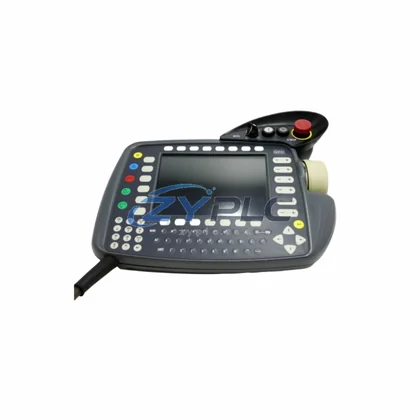
For human-machine interface, the KUKA smartPAD teach pendant provides on-robot programming and diagnostic access, while plant-level visualization is typically handled by SIEMENS SIMATIC HMI TP1500 or equivalent SCADA panels connected via PROFINET. The KR 500 R2830’s operational data — cycle counts, axis load, temperature, error codes — can be streamed to the KUKA Connect cloud platform or to on-premise OPC UA servers for predictive maintenance and OEE analysis. This data transparency is a cornerstone of system integration: the robot becomes a data-producing asset, not merely a motion device.
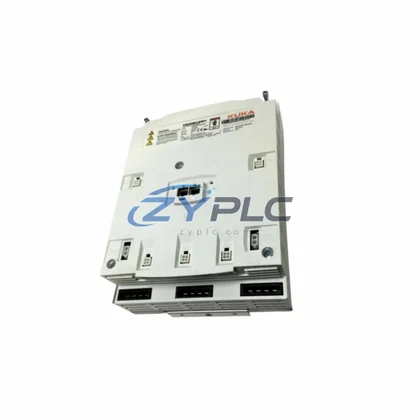
Power distribution to the KR C5 controller and the robot’s servo drives is managed through a dedicated KUKA KPS 600 power supply module, which provides regulated DC bus voltage to all six axis servo amplifiers simultaneously. In high-availability installations, an uninterruptible power supply (UPS) module can be integrated into the control cabinet to maintain controller state and safe-stop capability during brief power interruptions — a critical feature in continuous-process industries such as automotive body-in-white or steel coil handling.
Cable management between the robot base and the KR C5 controller is handled via the KUKA KR C5 connection cable set, available in standard lengths of 7 m, 15 m, 25 m, and 35 m, with drag-chain-rated variants for dynamic cable routing in floor-mounted or overhead gantry configurations. Proper cable routing is not merely a mechanical consideration — it directly affects signal integrity, EMC compliance, and long-term maintenance accessibility, all of which contribute to the system’s overall reliability and uptime.
Industrial Application Notes
The KUKA KR 500 R2830 is deployed across a wide spectrum of heavy-industry automation scenarios, each of which demands a different configuration of the surrounding control architecture.
In automotive manufacturing — particularly body-in-white stamping and press tending — the KR 500 R2830 operates as a press-to-press transfer robot, handling blanks and formed panels weighing up to 500 kg with the precision required for consistent die alignment. The robot’s PROFINET interface synchronizes with the press line PLC, receiving stroke-complete signals and issuing gripper-open/close commands within milliseconds. Redundant safety zones defined in the KR C5’s SafeOperation package ensure that human maintenance access can be granted without full system shutdown, reducing changeover downtime significantly.
In steel and metallurgy applications, the KR 500 R2830 handles hot billets, ingots, and rolled coils in environments where ambient temperatures, electromagnetic interference, and airborne particulates challenge standard automation equipment. The robot’s IP65/IP67 protection rating and high-temperature grease lubrication make it suitable for these conditions, while the KR C5’s EMC-shielded cabinet design maintains communication integrity on the plant floor. Integration with pyrometer feedback systems via analog I/O allows the robot to adjust grip force and transfer speed based on real-time material temperature data.
In petrochemical and process industries, the KR 500 R2830 is used for valve manipulation, heavy pipe handling, and catalyst loading in areas where human access is restricted. The robot’s OPC UA interface allows direct integration with DCS platforms such as Honeywell Experion or ABB System 800xA, enabling the robot to receive setpoints and report status within the plant’s unified process control namespace. This level of system integration eliminates the need for separate robot supervisory systems and reduces the overall complexity of the control architecture.
In palletizing and logistics for heavy goods — bagged cement, steel drums, industrial machinery components — the KR 500 R2830 works in conjunction with conveyor PLC systems, barcode scanners, and warehouse management system (WMS) interfaces to build mixed-SKU pallets at rates and weights that exceed human ergonomic limits. The robot’s long reach of 2830 mm allows it to serve multiple conveyor lanes from a single base position, maximizing floor space utilization and minimizing the number of robot cells required.
Product Compatibility FAQ
Q1: Is the KUKA KR 500 R2830 compatible with third-party safety PLCs and existing PROFINET networks?
Yes. The KR 500 R2830, when paired with the KUKA KR C5 controller, supports PROFINET IRT and RT communication profiles, making it fully compatible with safety PLCs from Siemens, Pilz, Sick, and other major vendors. The KR C5’s ProfiSafe interface allows safety-rated I/O exchange with external safety controllers without requiring proprietary KUKA safety hardware. For existing PROFINET networks, the robot controller is assigned a standard PROFINET device name and IP address, and its GSDML device description file is imported into the engineering tool (e.g., SIMATIC STEP 7 or TIA Portal) for seamless network integration. No special licensing is required for basic PROFINET connectivity.
Q2: What are the architectural requirements for deploying multiple KR 500 R2830 units in a synchronized multi-robot cell?
Multi-robot synchronization using KUKA.RoboTeam requires each KR 500 R2830 to be equipped with its own KR C5 controller, with all controllers connected via a dedicated Gigabit Ethernet synchronization network (separate from the plant PROFINET). One controller is designated as the team master, and the others operate as team slaves, sharing a common coordinate system and time base. The team master communicates motion targets and synchronization signals to slave controllers with cycle times as low as 4 ms, enabling coordinated tandem lifting, synchronized welding, or parallel assembly operations. The plant-level PLC communicates only with the team master, simplifying the supervisory interface while maintaining full multi-robot coordination at the controller layer.
Q3: What does the cover, and how does it support long-term maintenance planning?
The provided with the KUKA KR 500 R2830 covers functional integrity of all mechanical, electrical, and electronic components under normal operating conditions as specified in the KUKA technical documentation. This includes the robot’s six-axis gearboxes, servo motors, encoders, wrist assembly, and base structure. In the event of a component failure within the warranty period, replacement parts are supplied and, where applicable, field service support is coordinated to minimize production downtime. For long-term maintenance planning, the warranty period serves as the baseline for establishing a preventive maintenance schedule: axis lubrication intervals, cable inspection cycles, and encoder calibration checks should be documented and initiated during the warranty period so that maintenance teams are fully trained and equipped before the post-warranty phase begins. Customers are encouraged to maintain a recommended spare parts inventory — including axis gearbox oil, cable sets, and encoder batteries — to support rapid response to any unplanned maintenance events after the warranty period expires.