KUKA MFC2 00-125-236: Industrial Data Link and Smart Factory Connectivity for KRC2 Systems
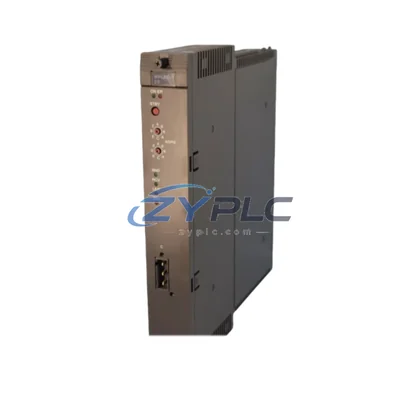
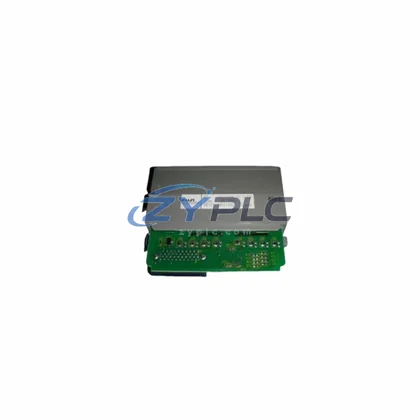
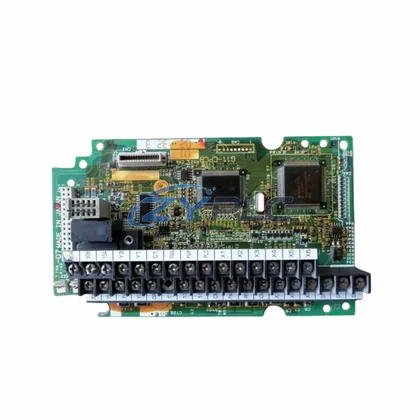
The KUKA MFC2 00-125-236 (also referenced as MFC2-IC3, alternate P/N 00-108-766) is a high-performance motion and fieldbus communication board engineered for the KUKA KRC2 robot controller platform. As the central network interface within the KRC2 cabinet, this board governs real-time data exchange between the robot’s servo drives, the KCP teach pendant, safety circuits, and upstream automation systems including PLC controllers, SCADA platforms, and HMI terminals. In modern smart factory deployments, where every millisecond of latency and every byte of process data matters, the MFC2 00-125-236 serves as the critical communication backbone that keeps robotic cells synchronized with the broader production network.
Designed for demanding industrial environments, the MFC2 board manages the KRC2 internal data bus, coordinating motion commands, I/O status signals, and diagnostic feedback across the controller’s internal architecture. Its robust design supports continuous 24/7 operation in automotive, electronics, metal fabrication, and logistics automation environments — precisely the conditions where data integrity and network stability are non-negotiable.
Compatibility & Integration Notes
| Parameter |
Specification |
| SKU / Part Number |
MFC2 / MFC2-IC3 / 00-125-236 / 00-108-766 |
| Compatible Platform |
KUKA KRC2 Robot Controller |
| Communication Protocol |
KRC2 Internal Data Bus, DeviceNet (optional), Interbus, Profibus DP |
| Interface Type |
Motion & Fieldbus Communication Board (MFC) |
| Data Transmission |
Real-time servo command, I/O status, safety signal, diagnostic data |
| Network Compatibility |
KRC2 cabinet internal bus; integrates with Profibus, DeviceNet, EtherNet/IP gateway modules |
| System Application |
Robotic cell control, PLC integration, SCADA/HMI connectivity, servo drive coordination |
| Operating Environment |
Industrial 24/7 continuous duty; automotive, electronics, logistics automation |
| Origin |
Germany |
| Warranty |
Warranty and support terms confirmed before quote |
| Availability |
Confirmed via RFQ before quotation |
Connected Automation Data Flow
Understanding the MFC2 00-125-236 requires tracing the full data flow it enables within a KRC2-based robotic cell. At the field device level, signals originate from KUKA servo drives (KSD series) mounted within the KRC2 cabinet — these drives receive motion trajectory commands from the MFC2 board in real time, translating digital control data into precise axis movement. Simultaneously, the board interfaces with the KUKA KCP2 teach pendant, relaying operator inputs, program selections, and safety acknowledgments back into the controller’s execution engine.
Moving up the automation hierarchy, the KRC2 controller — with the MFC2 board as its communication core — connects to Siemens S7-300 or S7-400 PLC systems via Profibus DP, enabling coordinated cell sequencing where the PLC manages conveyor timing, part presence detection, and interlock logic while the robot handles precision manipulation tasks. In facilities running DeviceNet networks, the MFC2 supports optional gateway modules that bridge the KRC2 into Allen-Bradley ControlLogix or CompactLogix environments, allowing seamless integration without protocol conversion middleware.
At the monitoring layer, process data collected by the MFC2 — including axis torque values, cycle times, fault codes, and I/O states — is forwarded to SCADA platforms such as Wonderware InTouch or Siemens WinCC via OPC server interfaces running on the KRC2’s embedded PC. This data stream feeds real-time dashboards, enabling production managers to monitor robot utilization, detect anomalies, and trigger maintenance workflows without interrupting production. HMI panels installed at cell entry points display live robot status, active program names, and alarm histories sourced directly from the MFC2’s diagnostic registers.
For remote I/O expansion, the KRC2 system can be paired with Beckhoff EtherCAT I/O terminals or Phoenix Contact Inline I/O modules, with the MFC2 coordinating signal routing between distributed field devices and the robot’s internal logic. In multi-robot cells, a KUKA KR C2 sr (small robot) controller running an identical MFC2 board architecture can be networked alongside larger KR 6, KR 16, or KR 210 systems, all sharing a common Profibus segment managed by the line PLC. Edge gateway devices — such as Moxa industrial Ethernet gateways — can aggregate data from multiple KRC2 controllers and push structured JSON payloads to cloud MES or ERP platforms, completing the data chain from servo drive to enterprise system.
Solving Data Isolation in Industrial Sites
One of the most persistent challenges in legacy robotic installations is protocol fragmentation — KRC2 controllers running proprietary internal bus architectures that cannot natively communicate with newer EtherNet/IP or PROFINET-based infrastructure. The MFC2 00-125-236 addresses this by serving as the protocol gateway layer within the KRC2, providing a stable, well-documented interface point where external communication modules (Profibus, DeviceNet, Interbus) can be attached without modifying the robot’s core motion software.
Data island elimination is another key value proposition. In facilities where robot controllers operate as isolated production islands — generating fault logs and cycle data that never reach the plant historian — the MFC2’s diagnostic data bus enables integration with OPC-DA/UA servers, breaking down information silos and feeding production intelligence into centralized SCADA or MES databases. This transparency is foundational to lean manufacturing initiatives, where real-time OEE (Overall Equipment Effectiveness) calculations depend on accurate, low-latency data from every machine on the floor.
For remote monitoring and diagnostics, the MFC2 board’s architecture supports KUKA’s remote service tools, allowing authorized technicians to access controller diagnostics, review error logs, and perform software updates without dispatching field engineers — reducing mean time to repair (MTTR) and minimizing unplanned downtime. In geographically distributed manufacturing networks, this capability is essential for maintaining consistent uptime across multiple sites.
Production line transparency is achieved through the MFC2’s ability to expose granular robot state data — including program pointer position, active motion block, axis load percentages, and safety zone status — to upstream visualization systems. This level of visibility enables predictive maintenance models to identify bearing wear, gear backlash, or cable fatigue before failures occur, shifting maintenance strategy from reactive to condition-based. As production lines scale and new robot models are added, the standardized MFC2 communication architecture ensures that new KRC2 units integrate into existing network topologies without requiring infrastructure redesign.
Industrial Connectivity FAQ
Q1: What communication protocols does the KUKA MFC2 00-125-236 support, and is it compatible with modern PROFINET networks?
The MFC2 00-125-236 natively supports the KRC2 internal data bus and, depending on the installed option boards, Profibus DP, DeviceNet, and Interbus. For PROFINET or EtherNet/IP integration, an external protocol gateway or a KUKA-compatible communication module is required. This approach allows the KRC2 to participate in modern industrial Ethernet networks without replacing the controller hardware.
Q2: How does the MFC2 board affect communication latency in real-time robotic control applications?
The MFC2 board is designed for deterministic, real-time communication within the KRC2 controller. Internal bus cycle times are synchronized with the robot’s interpolation cycle (typically 12ms for KRC2), ensuring that motion commands, I/O updates, and safety signals are processed within defined latency bounds. This determinism is critical for applications requiring tight coordination between the robot and external PLC or conveyor systems.
Q3: Can the KUKA MFC2 00-125-236 be used in a multi-robot SCADA integration project, and what network stability considerations apply?
Yes. Multiple KRC2 controllers, each equipped with an MFC2 board, can be connected to a shared Profibus DP segment managed by a line PLC, with all controllers simultaneously reporting status data to a SCADA system via OPC server. Network stability depends on correct Profibus termination, address assignment, and cable shielding — standard industrial network best practices that apply to any multi-node fieldbus installation.
Q4: What does the warranty and support terms confirmed before quote cover, and how is pre-shipment testing conducted?
Every KUKA MFC2 00-125-236 unit supplied by ZYPLC is Warranty terms are confirmed during quotation. Prior to shipment, each board undergoes functional verification testing to confirm communication bus integrity, connector condition, and firmware compatibility with KRC2 controller software versions. Units are packaged in anti-static ESD-safe materials and shipped with full traceability documentation. For RFQ, lead time confirmation, or technical pre-sales support, contact ZYPLC directly.