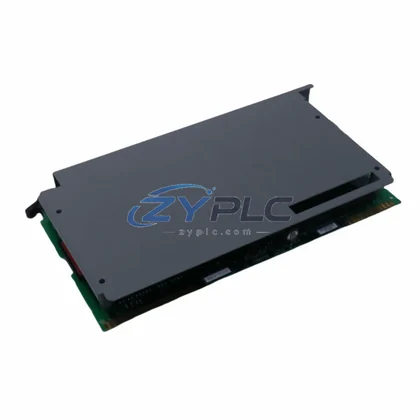
LINTEC cPCI-6920/S408/M4G: Industrial Data Link for CompactPCI Smart Factory Systems
The LINTEC cPCI-6920/S408/M4G is a high-performance CompactPCI DCS Control I/O Module engineered for mission-critical industrial automation environments. Designed to serve as a reliable data bridge between field-level devices and upper-layer control systems, this module enables seamless signal acquisition, protocol conversion, and real-time data transmission across complex plant networks. Whether deployed in distributed control systems (DCS), SCADA architectures, or advanced smart factory platforms, the cPCI-6920/S408/M4G delivers the connectivity precision and network stability that modern industrial operations demand.
In today’s intelligent manufacturing landscape, the ability to move data reliably from sensors and actuators through PLCs, remote I/O nodes, HMI panels, and into SCADA or MES platforms is the backbone of operational transparency. The LINTEC cPCI-6920/S408/M4G is purpose-built for this role. Its CompactPCI form factor ensures mechanical robustness and hot-swap compatibility in rack-mounted industrial enclosures, while its multi-channel I/O architecture supports high-density signal integration from diverse field instruments — including 4–20 mA analog transmitters, RTD temperature sensors, discrete digital I/O, and pulse-count inputs from flow meters and encoders.
The module integrates directly into LINTEC’s broader CompactPCI ecosystem, working in concert with companion modules such as the LINTEC cPCI-6910 CPU controller board and the LINTEC cPCI-6930 communication interface module to form a complete, scalable DCS node. Within a typical plant architecture, the cPCI-6920/S408/M4G sits at the I/O layer, collecting process variables from field transmitters and passing structured data packets upstream to the LINTEC DCS Engineering Station via the CompactPCI backplane bus. This tightly coupled data path eliminates the latency and packet loss risks associated with loosely integrated third-party I/O solutions.
Compatibility & Integration Notes
| Parameter |
Specification |
| Module Type |
CompactPCI DCS Control I/O Module |
| Form Factor |
CompactPCI (cPCI) 3U / 6U Compatible |
| Communication Protocol |
CompactPCI Bus, DCS Proprietary Protocol, Modbus RTU (via gateway) |
| Interface Type |
Multi-channel Analog & Digital I/O, CompactPCI Backplane |
| Transmission Capability |
High-speed real-time I/O scan, deterministic cycle time |
| Network Compatibility |
LINTEC DCS, SCADA Integration, OPC-DA / OPC-UA (via host) |
| System Application |
DCS, PLC I/O Expansion, Remote I/O, SCADA, Smart Factory |
| Operating Environment |
Industrial Grade, Wide Temperature Range |
| Origin |
Japan |
| Warranty |
Warranty and support terms confirmed before quote, Pre-shipment Functional Test Included |
Connected Automation Data Flow
The LINTEC cPCI-6920/S408/M4G operates at the heart of a layered industrial data flow. At the field level, process signals originate from instruments such as Yokogawa EJA-series differential pressure transmitters, Endress+Hauser Promag electromagnetic flow meters, and discrete proximity sensors wired into the module’s analog and digital input channels. The cPCI-6920/S408/M4G performs signal conditioning and A/D conversion, packaging raw field data into structured process values that are passed across the CompactPCI backplane to the LINTEC cPCI-6910 CPU module for real-time control execution.
At the control layer, the CPU module executes DCS control logic — PID loops, cascade control, feedforward compensation — and issues output commands back through the cPCI-6920/S408/M4G to field actuators such as Azbil (Yamatake) control valves and Fuji Electric FRENIC variable frequency drives. This closed-loop data path operates with deterministic cycle times, ensuring that process upsets trigger immediate corrective action without communication delay.
For network-level integration, the LINTEC cPCI-6930 communication module bridges the CompactPCI DCS node to plant-wide Ethernet networks, enabling data exchange with Wonderware InTouch SCADA or Yokogawa CENTUM VP historian servers via OPC-DA or OPC-UA. Operators monitoring the process from Siemens WinCC HMI workstations receive live tag updates sourced directly from the cPCI-6920/S408/M4G’s I/O scan cycle, with alarm states propagated in real time to the SCADA alarm management console. At the edge, Moxa industrial Ethernet switches provide the network backbone that carries this data reliably across the plant floor, while Phoenix Contact QUINT-series industrial power supplies ensure uninterrupted power to the CompactPCI rack under all load conditions.
Solving Data Isolation in Industrial Sites
One of the most persistent challenges in legacy industrial plants is data isolation — islands of automation where field devices, PLCs, DCS nodes, and SCADA systems operate in silos, unable to share process data in real time. The LINTEC cPCI-6920/S408/M4G directly addresses this problem by providing a standardized, high-density I/O interface that consolidates signals from heterogeneous field devices into a single, unified data stream accessible to the plant’s control and monitoring infrastructure.
In facilities where older 4–20 mA analog loops coexist with newer HART-enabled smart transmitters, the cPCI-6920/S408/M4G’s multi-channel architecture accommodates both signal types without requiring separate I/O hardware for each protocol variant. This reduces panel wiring complexity, lowers installation costs, and accelerates commissioning timelines. For plants undergoing digital transformation — migrating from standalone PLCs to integrated DCS architectures — the module’s CompactPCI form factor allows it to be inserted into existing rack infrastructure without mechanical redesign, protecting prior capital investment while enabling new connectivity capabilities.
Remote diagnostics represent another critical value dimension. Through the LINTEC DCS engineering environment, maintenance engineers can interrogate the cPCI-6920/S408/M4G’s channel-level diagnostics remotely — identifying open-circuit faults, out-of-range signal conditions, or A/D conversion errors without dispatching technicians to the field panel. This capability is particularly valuable in hazardous area installations — offshore platforms, chemical reactors, and high-voltage substations — where physical access is restricted or time-consuming. Combined with SCADA-level alarm forwarding and historian trending, the module enables a complete remote monitoring and predictive maintenance workflow that reduces downtime and extends equipment service life.
For system integrators planning capacity expansion, the CompactPCI architecture’s modular slot design means additional cPCI-6920/S408/M4G modules can be added to the rack as process I/O requirements grow, without disrupting existing control logic or network configuration. This scalability makes the module a long-term platform investment rather than a point solution.
Industrial Connectivity FAQ
Q1: What communication protocols does the LINTEC cPCI-6920/S408/M4G support, and can it integrate with third-party SCADA systems?
The cPCI-6920/S408/M4G communicates natively over the CompactPCI backplane bus within the LINTEC DCS architecture. When paired with the LINTEC cPCI-6930 communication module, the system supports OPC-DA and OPC-UA connectivity, enabling integration with third-party SCADA platforms including Wonderware, Yokogawa CENTUM VP, and Siemens WinCC. Modbus RTU gateway functionality is also achievable through the host CPU module’s software configuration.
Q2: How does the module ensure network stability and deterministic data transmission in high-noise industrial environments?
The CompactPCI backplane architecture provides a shielded, electrically isolated communication path between I/O modules and the CPU, eliminating the susceptibility to EMI and ground loop interference that affects external fieldbus wiring. The module’s deterministic I/O scan cycle guarantees consistent data update rates regardless of network load, ensuring that time-critical control loops and alarm detection functions operate with predictable latency.
Q3: What pre-shipment testing is performed, and what does the warranty and support terms confirmed before quote cover?
Every LINTEC cPCI-6920/S408/M4G unit supplied by ZYPLC undergoes functional verification testing prior to shipment, confirming channel-level I/O accuracy, backplane communication integrity, and power consumption within specification. The warranty and support terms confirmed before quote covers manufacturing defects and functional failures under normal operating conditions, with replacement or repair support coordinated through ZYPLC’s technical team. Expedited replacement stock is maintained to minimize customer downtime.
Q4: Can the cPCI-6920/S408/M4G be expanded as plant I/O requirements grow?
Yes. The CompactPCI platform’s modular architecture allows additional I/O modules to be installed in available rack slots without modifying existing control logic or network topology. For larger expansions requiring additional racks, the LINTEC cPCI-6930 communication module supports multi-rack configurations, enabling the DCS system to scale from small process units to plant-wide distributed control architectures while maintaining a unified engineering and monitoring environment.