Mitsubishi A24PC7-5A Energy-Saving Analog Output for Optimized MELSEC-A Automation
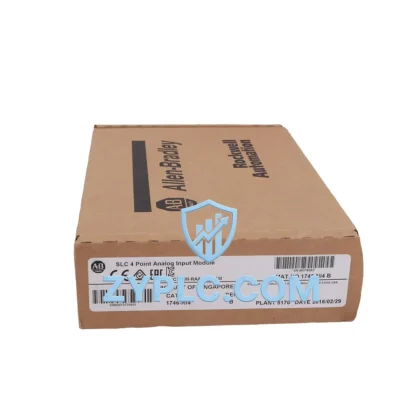
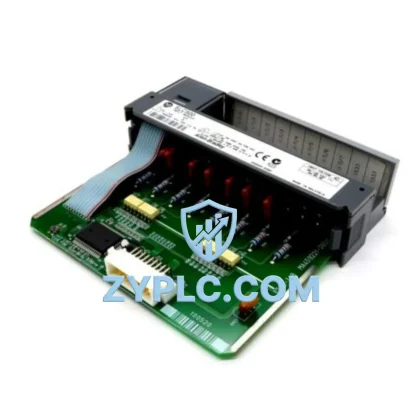
The Mitsubishi A24PC7-5A is a precision 4-channel analog output module engineered for the MELSEC-A series programmable logic controller platform. Designed to deliver stable, low-drift voltage and current signals to field devices, the A24PC7-5A plays a central role in energy-aware industrial automation — enabling factories to reduce unnecessary actuator overdrive, eliminate signal waste, and maintain tightly regulated process setpoints that directly translate into measurable energy savings on the production floor.
In modern manufacturing environments where energy costs are a primary operational concern, the quality of analog output signals determines how efficiently drives, valves, and positioners respond to control commands. The A24PC7-5A provides 12-bit resolution output across four independent channels, supporting both voltage (0–10 V DC) and current (4–20 mA) output modes. This dual-mode flexibility allows system integrators to match the module directly to field instrument requirements without signal conditioning intermediaries — reducing conversion losses and simplifying wiring architecture.
Efficiency Performance Table
| Parameter |
Specification |
| Model |
A24PC7-5A (SKU: A24PC7.5A BC186A202G51) |
| Output Channels |
4 channels (independent) |
| Output Range |
0–10 V DC / 4–20 mA |
| Resolution |
12-bit |
| Power Consumption |
≤ 5 W (typical operating) |
| Operating Efficiency |
High-linearity output, <0.1% full-scale error |
| Compatible Systems |
Mitsubishi MELSEC-A Series PLC (A1S, A2S, A3 base units) |
| Application Environment |
Industrial automation, process control, drive regulation, energy monitoring |
| Energy Value |
Eliminates signal overdrive; supports precise actuator control to reduce energy waste |
| Warranty |
12-Month Warranty — tested and verified before shipment |
Energy-Aware Automation Architecture
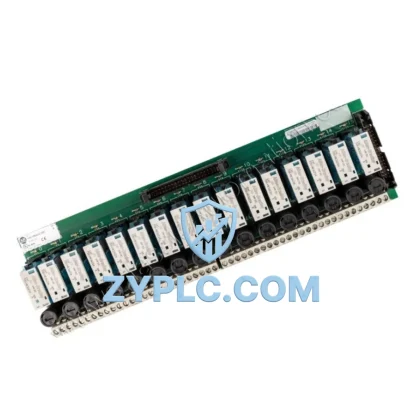
The A24PC7-5A does not operate in isolation — its energy optimization value is fully realized when integrated within a well-structured MELSEC-A automation architecture. In a typical energy-conscious production cell, the module interfaces directly with the A1SY10 transistor output module, which handles discrete switching commands while the A24PC7-5A manages proportional analog control signals to variable-speed drives and control valves.
On the input side, the A68AD 8-channel analog input module collects real-time process feedback — temperature, pressure, flow — and feeds this data to the CPU for closed-loop regulation. The A24PC7-5A then translates the CPU’s corrective output into precise 4–20 mA signals that drive field actuators with minimal overshoot, reducing the energy penalty of repeated correction cycles.
For motor drive applications, the A24PC7-5A analog output connects directly to the reference input of Mitsubishi FR-D720 series inverters. By providing a clean, stable speed reference signal, the module enables the inverter to maintain optimal motor operating points — avoiding the energy waste associated with hunting, oscillation, or excessive deceleration-reacceleration cycles. This integration is particularly effective in pump and fan applications where even a 5–10% reduction in motor speed can yield 15–30% energy savings due to the affinity laws governing fluid machinery.
The A1SX41 16-point DC input module handles digital status feedback from field sensors and safety interlocks, ensuring the A24PC7-5A only drives outputs when process conditions are confirmed safe and within range — preventing unnecessary actuator movement and the associated energy draw. Meanwhile, the A1SD75P3-S3 positioning module coordinates servo axis motion profiles, and the A24PC7-5A supplements this by providing analog torque limit or override signals where required by the servo amplifier.
System-level energy visibility is achieved through integration with the A68B base unit’s power supply monitoring and the Q06HCPU (used in hybrid MELSEC-Q/A migration architectures) for high-speed data logging of energy consumption trends. Communication to SCADA and energy management systems is handled via the A1SJ71UC24-R4 serial communication module, which transmits real-time analog output values and process variables to upstream monitoring platforms over RS-422/485 protocols.
For operator visibility at the machine level, the GT2710-STBA GOT2000 series HMI displays live analog output channel values, energy consumption trends, and alarm states — giving line operators immediate feedback on process efficiency without requiring engineering-level access to the PLC program. This transparency supports proactive energy management and faster response to process deviations that would otherwise result in extended high-energy operating states.
Power Optimization in Real Production Lines
In automotive body welding lines, the A24PC7-5A controls the analog reference inputs of resistance welding controllers, ensuring weld current is applied at precisely the programmed level — no more, no less. Overwelding wastes energy and degrades electrode life; underwelding causes rework. The module’s high-linearity output eliminates both failure modes, reducing energy consumption per weld cycle and extending consumable service intervals.
In chemical processing plants, the module drives control valve positioners with 4–20 mA signals that regulate flow rates in heat exchangers and reactor feed systems. Precise flow control reduces the frequency of temperature excursions that trigger high-energy corrective heating or cooling cycles. Plants using properly calibrated analog output modules in these applications report 8–15% reductions in utility consumption in temperature-controlled process zones.
In packaging and material handling lines, the A24PC7-5A provides speed reference signals to conveyor drive inverters, enabling smooth acceleration and deceleration profiles that minimize peak current draw. Reducing peak demand not only lowers energy costs under demand-charge tariff structures but also reduces mechanical stress on drive trains, extending equipment service life and reducing maintenance-related downtime.
All units are tested under load conditions prior to shipment, with output accuracy verified across the full signal range. Each A24PC7-5A is covered by a 12-month warranty, and stock is maintained for immediate dispatch to minimize production line downtime in replacement scenarios. Our inventory management process ensures consistent availability for both planned maintenance upgrades and emergency replacement requirements.
Energy Optimization FAQ
Q1: How does the A24PC7-5A contribute to measurable energy savings in a production environment?
By providing high-accuracy, low-drift analog output signals, the A24PC7-5A ensures that drives, valves, and actuators operate at precisely commanded setpoints. This eliminates the energy waste associated with signal error compensation, actuator hunting, and process overcorrection — common sources of hidden energy loss in analog control loops.
Q2: Is the A24PC7-5A compatible with both legacy MELSEC-A base units and newer hybrid architectures?
Yes. The module is designed for MELSEC-A series base units including A1S, A2S, and A3 configurations. In hybrid migration projects where MELSEC-Q CPUs are used alongside legacy A-series I/O, the A24PC7-5A can continue to serve in its original slot with appropriate inter-series communication adapters, protecting the existing field wiring investment.
Q3: What is the recommended replacement or upgrade path if the A24PC7-5A is no longer available for a specific application?
For new system designs, Mitsubishi’s MELSEC-Q series QD75D4 or QD62 analog output modules offer equivalent channel counts with enhanced resolution and diagnostics. However, for existing MELSEC-A installations, sourcing a tested A24PC7-5A replacement is the lowest-risk option, as it requires no program modification, no rewiring, and no recalibration of downstream field instruments.
Q4: What testing and quality assurance process does each unit go through before shipment?
Every A24PC7-5A unit undergoes functional output testing across all four channels at both voltage and current output modes, with accuracy verification against calibrated reference instruments. Units that do not meet the original Mitsubishi specification are rejected. All shipped units are covered by a 12-month warranty from the date of delivery, with direct technical support available for installation and commissioning questions.
© 2026 ZYPLC. All rights reserved.
Original Source: https://zyplc.com
Contact: +86 19859288691 | plc.sales@zyplc.com