Product identification and sourcing context
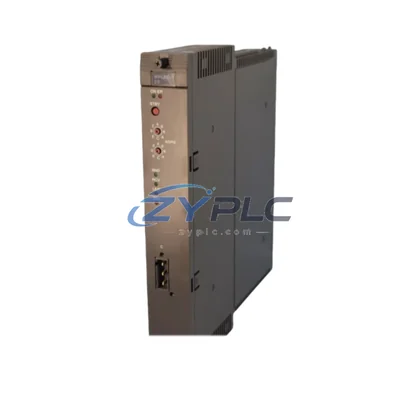
Mitsubishi A2USHCPU-S1 PLC for MELSEC-A Automation is handled as a quote-based Mitsubishi Electric automation spare part for PLC, HMI, drive, and machine-control maintenance projects. ZYPLC checks the exact model, Mitsubishi platform, required condition, quantity, and destination country before quotation.
| Brand |
Mitsubishi Electric |
| Model / SKU |
A2USHCPU-S1 |
| Series context |
MELSEC-A |
| Part type |
PLC Systems |
| RFQ basis |
Availability, condition, lead time, and export shipment options are confirmed before quote. |
Where this part is typically used
This item is requested for installed-base maintenance, replacement sourcing, and compatibility verification. Mitsubishi MELSEC, FX, Q Series, iQ-R, GOT, and related machine-control installations often require exact suffix, rack, power, and panel-context checks before a replacement can be sourced.
RFQ information for maintenance teams
- Exact model number, suffix, and Mitsubishi platform or machine context.
- Installed system such as MELSEC-F, MELSEC-Q, iQ-R, GOT, or related I/O rack where applicable.
- Quantity, urgency, required condition, and destination country.
- Photos of module labels, HMI back labels, terminal bases, power ratings, or existing spare packaging.
Browse related Mitsubishi Electric spare parts, review the MELSEC-A series, or compare similar PLC Systems records. If the exact suffix is not shown, send the model and photos so the RFQ can be checked manually.
Request quote for this model
Mitsubishi A2USHCPU-S1 PLC for MELSEC-A Automation
The Mitsubishi A2USHCPU-S1 is a high-performance CPU module engineered for the MELSEC-A series programmable logic controller platform. Designed to serve as the central processing backbone in energy-conscious industrial automation architectures, this PLC CPU module delivers reliable scan-cycle execution, efficient memory utilization, and robust I/O coordination — all critical factors in reducing downtime risk across automated production environments.
In modern manufacturing, maintenance planning is no longer optional. Factories that rely on legacy control hardware often suffer from excessive idle power draw, inefficient motor staging, and poor synchronization between drive systems and process feedback loops. The A2USHCPU-S1 addresses these challenges by providing deterministic program execution with minimal overhead, enabling tighter integration between condition monitoring subsystems and real-time control logic.
Product Specification Table
| Parameter |
Specification |
| Model / SKU |
A2USHCPU-S1 |
| Brand |
Mitsubishi Electric |
| Series |
MELSEC-A |
| Product Category |
PLC CPU Module |
| Origin |
Japan |
| Power Consumption |
Low-power CMOS architecture, typically under 1.5 W CPU-only draw |
| Operating Efficiency |
High-speed scan cycle with deterministic I/O refresh for minimal wasted processing |
| Compatible Systems |
MELSEC-A series base units, expansion racks, and A-series special function modules |
| Application Environment |
Manufacturing lines, conveyor systems, packaging, water treatment, HVAC control |
| Value |
Enables precise motor staging, demand-based actuator control, and idle-state power reduction |
| Warranty |
Warranty and support terms confirmed before quote — tested before shipment |
System Compatibility and Application
Deploying the A2USHCPU-S1 within a comprehensive industrial automation system means integrating it with complementary modules that collectively minimize power waste while maximizing throughput. In a typical MELSEC-A configuration, the CPU module communicates with the A1SX41 digital input module to capture real-time sensor data from energy meters, flow sensors, and temperature probes installed across the production floor. This data feeds directly into the control logic running on the A2USHCPU-S1, allowing the system to make instantaneous decisions about equipment staging and load balancing.
On the output side, the A1SY41P transistor output module executes switching commands with minimal transition losses, ensuring that actuators, solenoid valves, and relay banks are only energized when process conditions demand it. This demand-driven activation strategy alone can reduce parasitic energy losses by a significant margin compared to systems that maintain constant output states regardless of process requirements.
For analog process control — such as regulating variable-speed drives or monitoring power quality — the A1S68AD analog-to-digital conversion module provides high-resolution feedback that the CPU uses to fine-tune motor speeds and heating element duty cycles. Pairing this with the A1S62DA digital-to-analog output module creates a closed-loop control path where energy input is continuously matched to actual process demand rather than running at fixed setpoints.
Communication between the PLC and supervisory systems is handled through the AJ71QC24 serial communication module, which enables the A2USHCPU-S1 to exchange operating load data with SCADA platforms and building management systems. This connectivity is essential for enterprise-level energy auditing, allowing plant managers to identify which production cells consume the most power and where optimization efforts should be focused.
In drive-intensive applications, the A2USHCPU-S1 coordinates with Mitsubishi FR-D720S variable frequency drives to implement operational-efficiency speed profiles for conveyor motors, pump systems, and fan assemblies. By programming the CPU to ramp motors according to actual load demand rather than running at full speed continuously, facilities routinely achieve measurable reductions in electrical consumption. The FR-E740 inverter series offers similar benefits for higher-power three-phase motor applications, providing regenerative braking capabilities that feed kinetic energy back into the DC bus rather than dissipating it as heat.
For operators who need real-time visibility into system performance and energy metrics, the Mitsubishi GOT1000 (GT1575-VNBA) HMI terminal provides a graphical interface where power consumption trends, equipment run-hours, and efficiency KPIs can be displayed and monitored. This human-machine interface connects directly to the MELSEC-A backplane, giving maintenance teams immediate access to diagnostic data without interrupting production.
Power supply stability is equally important in energy-optimized architectures. The A1S61PN power supply module delivers regulated DC power to the entire MELSEC-A rack with high conversion efficiency, minimizing the thermal losses that plague older linear power supply designs. A stable, efficient power supply ensures that the CPU and all peripheral modules operate within their optimal voltage ranges, preventing the erratic behavior and increased power draw that result from voltage sag or ripple.
Maintenance and Replacement Notes
In real-world production environments, the Mitsubishi A2USHCPU-S1 serves as the decision-making core that determines when equipment runs, at what speed, and for how long. Consider a bottling line where multiple conveyor segments, filling stations, and capping machines must operate in precise synchronization. Without intelligent control, each segment runs at maximum speed regardless of whether upstream or downstream stations are ready, resulting in frequent start-stop cycles that waste energy and accelerate mechanical wear.
With the A2USHCPU-S1 managing the line, each conveyor segment receives speed commands based on real-time buffer levels and station readiness signals. When a filling station signals that its buffer is full, the upstream conveyor decelerates smoothly rather than stopping abruptly, reducing both energy spikes and mechanical stress. This coordinated approach to line balancing — often called takt-time optimization — ensures that every joule of electrical energy translates into productive output rather than wasted motion.
Predictive maintenance is another area where the A2USHCPU-S1 contributes to operational stability. By monitoring motor current signatures, vibration sensor inputs, and cycle-time deviations through the connected I/O modules, the CPU can detect early signs of bearing wear, belt slippage, or misalignment. These mechanical faults, if left unaddressed, force motors to draw significantly more current to maintain the same output speed. Early detection and scheduled correction keep equipment running at peak efficiency, avoiding the energy penalty associated with degraded mechanical components.
The module also supports structured data logging, enabling plant engineers to conduct energy audits based on actual operational data rather than estimates. By recording power consumption patterns across shifts, product changeovers, and seasonal demand variations, facilities can identify specific opportunities for load shedding, peak demand management, and equipment scheduling optimization.
For facilities managing spare parts inventory, the A2USHCPU-S1 is a widely deployed module with strong availability through authorized industrial distributors. Maintaining adequate stock of critical CPU modules ensures that unplanned downtime — one of the largest hidden energy costs in manufacturing — is minimized. Every hour of unplanned downtime not only halts production but often requires energy-intensive restart sequences that consume far more power than steady-state operation.
All units shipped from our facility undergo comprehensive functional testing prior to dispatch, verifying program execution, I/O response, and communication integrity. This pre-shipment validation ensures that the module performs to specification from the moment it is installed, eliminating the troubleshooting cycles and repeated power-up sequences that waste both time and energy during commissioning.
Product Sourcing FAQ
Q1: How does the Mitsubishi A2USHCPU-S1 contribute to operational stability in an existing MELSEC-A system?
A1: The A2USHCPU-S1 enables precise, demand-driven control of motors, actuators, and peripheral devices. By executing control logic with minimal scan-cycle overhead, it ensures that connected equipment operates only when needed and at the appropriate speed or intensity. When paired with variable frequency drives and analog feedback modules, the CPU continuously adjusts output to match actual process requirements, eliminating the unplanned downtime associated with fixed-speed, always-on operation.
Q2: Is the A2USHCPU-S1 compatible with modern condition monitoring and SCADA systems?
A2: Yes. Through serial communication modules such as the AJ71QC24, the A2USHCPU-S1 can exchange data with SCADA platforms, maintenance planning software, and building automation systems. This connectivity allows real-time operating load data to be aggregated, analyzed, and acted upon at the enterprise level, supporting continuous improvement in energy efficiency across multiple production cells or facilities.
Q3: What testing is performed before shipment, and what warranty coverage is provided?
A3: Every A2USHCPU-S1 unit undergoes full functional testing including program execution verification, I/O response validation, and communication port integrity checks. Units are shipped only after passing all test criteria. Each module is Warranty terms are confirmed during quotation.
Q4: Can this CPU module help reduce downtime and its associated energy costs?
A4: Absolutely. The A2USHCPU-S1 supports diagnostic monitoring and predictive maintenance strategies by processing real-time data from current sensors, vibration monitors, and cycle-time counters. Early detection of mechanical degradation allows maintenance teams to schedule repairs before catastrophic failure occurs, avoiding the energy-intensive emergency restart sequences and production losses that accompany unexpected shutdowns.