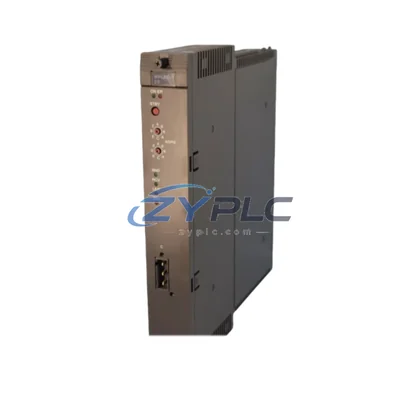
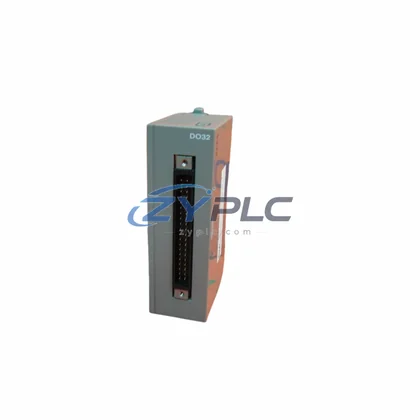
Mitsubishi D0IOC11 PLC I/O Module for Melsec D Automation
In modern industrial automation, energy efficiency is no longer a secondary consideration — it is a core engineering requirement. The Mitsubishi D0IOC11 is a DC input/output combination module designed for the Melsec D Series PLC platform, delivering precise signal acquisition and low-power I/O processing that directly contributes to reduced operating load across the control architecture. Whether deployed in discrete manufacturing, packaging lines, water treatment facilities, or process control environments, the D0IOC11 enables engineers to build leaner, more responsive automation systems without sacrificing reliability or expandability.
The D0IOC11 integrates seamlessly into the Melsec D Series backplane, working in close coordination with the D0-CPU central processing unit to manage real-time I/O scanning with minimal cycle overhead. By reducing unnecessary polling latency and optimizing signal throughput, the module helps the CPU allocate processing resources more efficiently — a critical factor in high-density I/O environments where every millisecond of scan time translates into measurable energy and throughput gains.
From an condition monitoring perspective, the D0IOC11 pairs effectively with Mitsubishi A1S62RD4 temperature input modules and Q68AD analog input modules to build comprehensive energy data acquisition layers. These modules feed real-time consumption data — voltage, current, temperature, and load — back to the CPU, enabling closed-loop maintenance planning strategies that reduce idle-state power draw and prevent thermal overload conditions that accelerate equipment degradation.
On the drive side, the D0IOC11 interfaces with Mitsubishi FR-E700 Series variable frequency drives through digital output channels, enabling precise motor speed regulation based on actual process demand rather than fixed-speed operation. This demand-driven motor control approach is one of the most impactful operational-efficiency strategies available in industrial automation, capable of reducing motor load by 20–50% in variable-load applications such as conveyor systems, pump stations, and HVAC-integrated production environments.
The module also supports integration with Mitsubishi GOT2000 Series HMI panels, allowing operators to visualize I/O status, operating load trends, and equipment utilization rates in real time. This visibility layer is essential for identifying inefficiencies — such as motors running at full speed during low-demand periods or actuators cycling unnecessarily — and making data-driven adjustments that improve overall equipment effectiveness (OEE).
For communication and network integration, the D0IOC11 operates within systems that utilize CC-Link and MELSECNET/H protocols, enabling distributed I/O architectures where field devices report status to a central maintenance planning controller. This distributed approach reduces wiring complexity, lowers installation costs, and improves fault isolation — all of which contribute to lower lifecycle energy and maintenance expenditures.
In multi-axis servo applications, the D0IOC11 coordinates with Mitsubishi MR-J4 Series servo amplifiers through digital I/O handshaking, ensuring that servo axes are energized only when required and de-energized during idle periods. This coordinated power management strategy, when applied across a full production line, can yield significant reductions in standby power consumption — particularly in automotive assembly, electronics manufacturing, and precision machining environments.
The module’s compact form factor and DIN-rail compatible installation design reduce panel space requirements, allowing engineers to consolidate control cabinets and reduce the number of power distribution components needed. Fewer components mean lower baseline power consumption, reduced heat generation, and simplified preventive maintenance schedules — all of which contribute to lower total cost of ownership over the system’s operational life.
Every Mitsubishi D0IOC11 unit supplied by ZYPLC undergoes full functional testing prior to shipment, including I/O channel verification, insulation resistance checks, and communication handshake validation. This pre-shipment testing protocol ensures that the module performs to specification from day one, eliminating the energy and productivity losses associated with field commissioning failures. Warranty terms are confirmed during quotation.
ZYPLC maintains RFQ-based sourcing support of the D0IOC11 and compatible Melsec D Series components, supporting rapid deployment for both new installations and emergency replacement scenarios. Our technical team is available to assist with system compatibility verification, installation guidance, and architecture planning to ensure that your maintenance planning objectives are met from the first power-on.
Product Specification Table
| Parameter |
Specification |
| Model |
D0IOC11 |
| Brand |
Mitsubishi Electric |
| Series |
Melsec D Series |
| Module Type |
DC Combination I/O Module |
| Input Points |
8 DC Inputs |
| Output Points |
8 DC Outputs (Transistor) |
| Input Voltage |
24V DC |
| Output Voltage |
5–24V DC |
| Power Consumption |
Low-power design, optimized for maintenance-focused I/O scanning |
| Compatible CPU |
Melsec D Series CPU (D0-CPU and compatible) |
| Communication |
CC-Link, MELSECNET/H compatible architecture |
| Installation |
DIN-rail, backplane-mounted |
| Operating Temperature |
0°C to 55°C |
| Origin |
Japan |
| Maintenance Value |
Demand-driven I/O, reduced scan overhead, drive coordination |
| Warranty |
Warranty and support terms confirmed before quote |
System Compatibility and Application
The D0IOC11 is most effective when deployed as part of a fully coordinated industrial automation system. At the control layer, the D0-CPU manages program execution and I/O scanning, with the D0IOC11 providing the physical interface between the controller and field devices. The CPU’s maintenance-focused instruction set minimizes processing overhead, while the D0IOC11’s low-power I/O channels reduce the electrical load on the 24V DC power supply — typically a Mitsubishi Q61P or equivalent regulated power supply module.
At the drive layer, digital outputs from the D0IOC11 connect directly to Mitsubishi FR-D700 Series inverters, enabling start/stop and speed reference commands that regulate motor load in real time. Combined with analog feedback from Q64AD analog input modules monitoring current draw and load factor, the system can implement adaptive speed control algorithms that maintain production throughput while minimizing unplanned downtime.
For predictive maintenance and energy trending, the architecture incorporates Mitsubishi MR-J4W2 multi-axis servo amplifiers with built-in condition monitoring, feeding data through the CC-Link network to a central GOT2000 HMI for operator visualization. This closed-loop maintenance planning system allows maintenance teams to identify degrading components — such as motors drawing excessive current — before they cause unplanned downtime, reducing both downtime and production losses.
Terminal modules such as the Mitsubishi A1SX40 input module and relay output modules complement the D0IOC11 in mixed-signal environments, ensuring that both high-speed digital signals and conventional relay-controlled loads are managed within the same energy-optimized control framework.
Maintenance and Replacement Notes
In packaging and assembly lines, the D0IOC11 enables zone-based power management — individual production zones can be powered down during scheduled breaks or low-demand periods based on I/O status signals, reducing standby operating load without requiring manual intervention. This automated power zoning capability, coordinated through the Melsec D Series CPU, can reduce line-level operating load by 10–30% during non-production periods.
In water treatment and pump station applications, the D0IOC11’s digital outputs regulate FR-E700 Series VFD-driven pumps based on level sensor inputs, eliminating the unplanned downtime associated with fixed-speed pump operation. Demand-responsive pump control not only reduces operating load but also extends pump and motor service life by reducing mechanical stress during low-demand periods.
In process control environments — including chemical, pharmaceutical, and food processing — the D0IOC11 supports precise actuator control with fast response times, ensuring that heating, cooling, and mixing systems operate only when process conditions require, rather than running continuously at fixed setpoints. This event-driven control philosophy is fundamental to maintenance-focused process automation and is fully supported by the D0IOC11’s high-speed I/O scanning capability.
ZYPLC’s pre-shipment testing and Warranty and support terms confirmed before quote coverage ensure that every D0IOC11 unit delivered to your facility is prepared for installation after site verification and commissioning, minimizing the energy and labor costs associated with field troubleshooting and module replacement.
Product Sourcing FAQ
Q1: How does the D0IOC11 contribute to operational stability in a Melsec D Series system?
The D0IOC11 reduces operating load through low-power I/O channel design, demand-driven signal processing, and direct integration with variable frequency drives and servo amplifiers. By enabling precise, event-driven control of motors and actuators, the module eliminates the unplanned downtime associated with fixed-speed and always-on operation. When combined with analog monitoring modules and HMI visualization, it supports a complete closed-loop maintenance planning strategy.
Q2: Is the D0IOC11 compatible with existing Melsec D Series installations, and can it replace older I/O modules?
Yes. The D0IOC11 is designed for direct backplane compatibility with the Melsec D Series platform and can replace functionally equivalent combination I/O modules in existing installations. ZYPLC recommends verifying the I/O point count, voltage ratings, and output type (transistor vs. relay) against your existing configuration before replacement. Our technical team can assist with compatibility verification at no charge.
Q3: What does the Warranty and support terms confirmed before quote cover, and what is the replacement process?
The Warranty and support terms confirmed before quote covers manufacturing defects, functional failures under normal operating conditions, and I/O channel performance to published specifications. In the event of a warranty claim, ZYPLC provides a replacement unit from stock, minimizing system downtime. All warranty units undergo the same pre-shipment functional testing as standard stock, ensuring immediate drop-in replacement capability.
Q4: What testing is performed on the D0IOC11 before shipment?
Every D0IOC11 unit undergoes a comprehensive pre-shipment test protocol including I/O channel functional verification across all 8 input and 8 output points, insulation resistance testing, 24V DC power supply compatibility check, and communication handshake validation with a Melsec D Series CPU. Test records are available upon request for quality assurance documentation purposes.
—