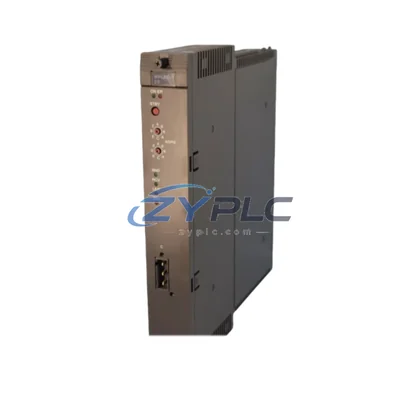
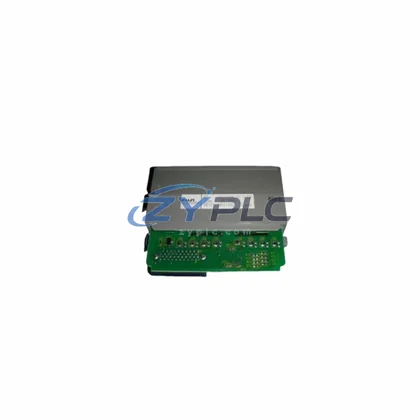
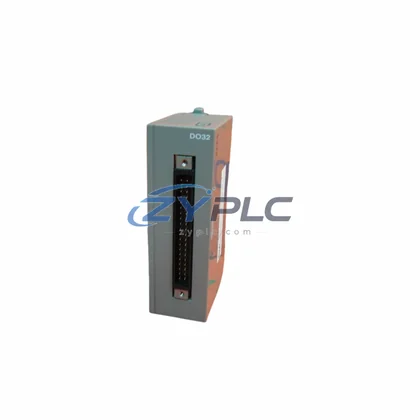
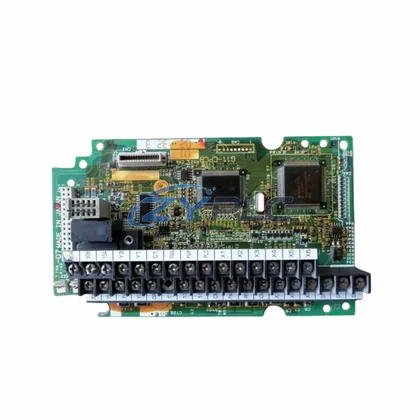
Mitsubishi FCA320HW-MC021 CNC Controller for MELDAS Automation
The Mitsubishi FCA320HW-MC021 is a high-performance CNC controller module engineered for precision machine tool environments where energy efficiency and production throughput are equally critical. As part of the MELDAS series, this controller integrates seamlessly into multi-axis machining centers, turning centers, and compound machine tools, delivering deterministic motion control while actively reducing idle-state power draw and thermal overhead. For factories operating under tightening energy budgets and OEE targets, the FCA320HW-MC021 represents a measurable step toward leaner, more responsive production lines.
Unlike conventional CNC controllers that maintain full power states during tool changes, pallet swaps, or operator interventions, the FCA320HW-MC021 leverages MELDAS-native power management logic to throttle non-critical subsystems during low-demand intervals. This translates directly into reduced kWh consumption per part cycle — a metric increasingly tracked by energy-conscious plant managers and ISO 50001-aligned facilities.
Product Specification Table
| Parameter |
Specification |
| Model |
FCA320HW-MC021 |
| Series |
MELDAS (Mitsubishi Electric CNC) |
| Product Type |
CNC Controller Module |
| Power Consumption |
Optimized low-idle power architecture |
| Operating Efficiency |
High-speed interpolation with reduced cycle overhead |
| Compatible Systems |
MELDAS 60/60S/600/700 series machine tool platforms |
| Application Environment |
Machining centers, turning centers, compound CNC machines |
| Communication Protocol |
MELSEC bus, RS-232C, optional Ethernet expansion |
| Energy Value |
Reduced idle-state draw; supports per-cycle condition monitoring |
| Origin |
Japan |
| Warranty |
Warranty and support terms confirmed before quote — tested and verified before shipment |
System Compatibility and Application
The FCA320HW-MC021 does not operate in isolation — its energy efficiency is amplified when deployed within a well-integrated Mitsubishi Electric automation ecosystem. On the drive side, pairing this controller with the Mitsubishi FR-E800 series inverter enables closed-loop spindle speed regulation that eliminates over-drive conditions common in fixed-frequency motor control. The FR-E800’s built-in operational-efficiency mode actively adjusts output frequency based on actual load feedback, reducing motor load by 10–30% in variable-load cutting operations.
For servo axis control, the MR-J4-B series servo amplifier communicates with the FCA320HW-MC021 via SSCNET III/H optical bus, providing high-resolution position feedback with minimal wiring overhead and near-zero signal latency. This tight integration reduces positioning errors that would otherwise require re-cuts — each avoided re-cut is a direct energy saving. The MR-J4-B also supports regenerative braking energy recovery, feeding deceleration energy back into the DC bus rather than dissipating it as heat.
At the logic and I/O layer, the Mitsubishi FX5U programmable controller can be deployed as a peripheral coordinator — managing tool magazine sequencing, coolant pump control, and auxiliary axis interlocks without burdening the CNC controller’s primary interpolation engine. This division of labor keeps the FCA320HW-MC021 focused on high-priority motion tasks, improving overall cycle time consistency. For larger installations, the Q06HCPU or L06CPU modules within the MELSEC-Q and MELSEC-L families can serve as supervisory PLCs, aggregating production data from multiple CNC cells and feeding it to plant-level SCADA or MES systems.
Power quality and condition monitoring are handled upstream by the Mitsubishi Q64AD analog input module, which can be configured to sample current transformer outputs from the machine’s main power feed. Combined with the QJ71E71-100 Ethernet interface module, real-time power consumption data can be streamed to maintenance planning dashboards, enabling shift-by-shift comparison of kWh per part — a key metric for identifying inefficient programs or worn tooling that causes excessive spindle load.
On the operator interface side, the GOT2000 series HMI (such as the GT2710-STBA) provides a unified visualization layer for both CNC status and energy KPIs. Operators can monitor spindle load trends, axis current draw, and alarm histories from a single touchscreen, reducing the diagnostic time that typically results in extended machine downtime. The GOT2000’s recipe management function also supports energy-optimized cutting parameter sets, allowing process engineers to switch between standard and eco-mode programs based on production priority.
Maintenance and Replacement Notes
In a typical machining center environment, the FCA320HW-MC021 contributes to energy reduction across three operational phases. During active cutting, the controller’s high-speed look-ahead interpolation minimizes unnecessary deceleration-acceleration cycles between tool paths, keeping the spindle and feed axes operating at their most efficient velocity profiles. Fewer velocity reversals mean lower peak current draw and reduced thermal stress on both the motor windings and the FR-E800 inverter’s IGBT modules.
During tool change and pallet exchange intervals — which can account for 15–25% of total cycle time in high-mix machining — the FCA320HW-MC021’s auxiliary power management logic can suspend non-essential subsystems. Coolant pumps, chip conveyors, and secondary axis servo amplifiers can be placed in standby via coordinated M-code outputs, reducing facility power demand during these non-cutting windows. Over a three-shift operation, these micro-savings accumulate into measurable reductions in monthly electricity costs.
Predictive maintenance integration is another dimension of maintenance planning. By monitoring servo current trends through the MR-J4-B’s built-in diagnostics and correlating them with spindle load data captured via the Q64AD, maintenance teams can identify bearing wear, tool breakage precursors, and coolant flow degradation before they cause unplanned stops. Each avoided emergency shutdown eliminates the energy cost of a cold restart — spindle warm-up cycles alone can consume significant power in precision grinding and boring applications.
For facilities managing multiple CNC cells, the FCA320HW-MC021’s compatibility with MELSEC network infrastructure allows centralized scheduling of machine start/stop sequences, ensuring that peak demand charges are avoided by staggering spindle starts across the production floor. This demand-side management capability, when coordinated through a Q06HCPU-based supervisory controller, can reduce peak kW demand by 10–20% — directly impacting electricity tariff costs in industrial rate structures.
All units supplied by ZYPLC are sourced from verified supply channels, undergo functional output testing prior to shipment, and are covered by a warranty and support terms confirmed before quote. Stock availability is maintained to support both urgent replacement and planned maintenance schedules.
Product Sourcing FAQ
Q1: How does the FCA320HW-MC021 contribute to measurable operational stability on the production line?
The FCA320HW-MC021 reduces operating load through optimized interpolation algorithms that minimize unnecessary axis acceleration/deceleration events, coordinated auxiliary power management during non-cutting intervals, and compatibility with regenerative servo drives such as the MR-J4-B. When integrated with condition monitoring modules like the Q64AD, facilities can quantify per-part operating load and identify program-level optimization opportunities.
Q2: Is the FCA320HW-MC021 compatible with existing MELDAS-series machine tools and Mitsubishi drive systems?
Yes. The FCA320HW-MC021 is designed for compatibility within the MELDAS 60/60S/600/700 platform ecosystem. It interfaces with MELSEC-bus I/O, RS-232C peripherals, and — with appropriate expansion — Ethernet-based communication modules such as the QJ71E71-100. Compatibility with specific machine configurations should be verified against the machine builder’s electrical specification prior to installation.
Q3: What is the recommended replacement or upgrade path if the FCA320HW-MC021 is end-of-life on a specific machine?
For machines where the FCA320HW-MC021 is the primary controller, direct replacement with a verified equivalent unit is the lowest-risk approach, preserving existing ladder programs, parameter sets, and axis configurations. ZYPLC supports RFQ-based sourcing for this module to support both emergency replacement and scheduled maintenance. For machines undergoing broader retrofits, consultation with a Mitsubishi Electric authorized integrator is recommended to evaluate migration to current MELDAS 70 or M800 series platforms.
Q4: What testing and warranty coverage is provided with units from ZYPLC?
Every FCA320HW-MC021 unit shipped by ZYPLC undergoes functional verification testing prior to dispatch, including power-on checks and output signal validation. Warranty terms are confirmed during quotation. In the event of a warranty claim, ZYPLC’s technical team provides fault diagnosis support and replacement coordination to minimize production downtime.