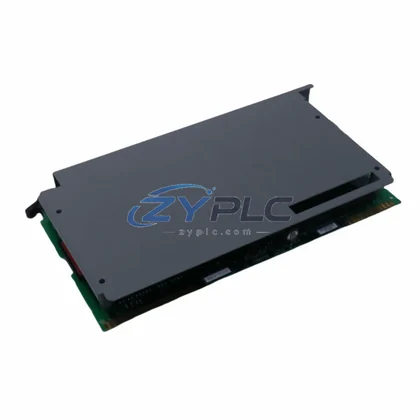
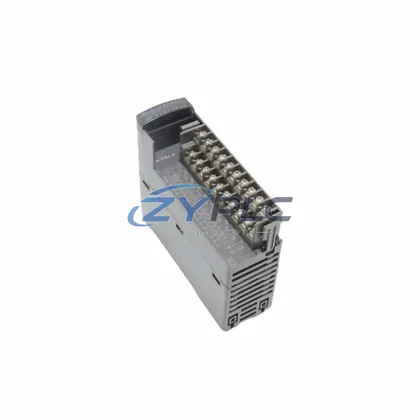
Mitsubishi FCUA-EX10 Industrial Network Interface for MELDAS Systems: Bridging the Industrial Data Link
In modern smart factory environments, seamless data flow between field devices, CNC controllers, remote I/O modules, HMI panels, SCADA platforms, drives, sensors, and supervisory systems is no longer optional — it is the foundation of operational excellence. The Mitsubishi FCUA-EX10 CNC I/O Expansion Module is engineered precisely for this mission. Designed to extend and enhance the I/O capacity of Mitsubishi MELDAS CNC systems, the FCUA-EX10 serves as a critical node in the industrial data chain, enabling reliable signal acquisition, protocol-level communication, and real-time data exchange across multi-layer automation architectures.
Whether you are integrating a high-speed machining center into a plant-wide SCADA network, expanding the I/O footprint of an existing MELDAS controller, or building a new smart manufacturing cell from the ground up, the FCUA-EX10 delivers the connectivity, stability, and expandability that industrial engineers demand. Its robust design, proven compatibility with the MELDAS CNC ecosystem, and support for industrial communication standards make it an indispensable component for factories pursuing Industry 4.0 transformation.
Compatibility & Integration Notes
| Specification |
Details |
| SKU / Part Number |
FCUA-EX10 |
| Brand |
Mitsubishi Electric |
| Series |
MELDAS CNC |
| Product Type |
CNC I/O Expansion Module |
| Protocol Support |
MELDAS I/O Link, Serial Communication, Industrial Bus Interface |
| Interface Type |
I/O Expansion Bus, CNC Controller Interface |
| Communication |
Real-time I/O data exchange with MELDAS CNC host controller |
| Network Compatibility |
MELDAS CNC Series, Compatible with CC-Link and MELSEC network architectures |
| System Application |
CNC Machining Centers, Smart Factory Automation, SCADA/HMI Integration |
| Origin |
Japan |
| Warranty |
Warranty and support terms confirmed before quote — Tested before shipment, Availability confirmed by RFQ supply guaranteed |
Connected Automation Data Flow
The FCUA-EX10 sits at the heart of a tightly integrated automation data chain. In a typical smart factory deployment, the data journey begins at the sensor and actuator layer — proximity switches, servo feedback encoders, and spindle load sensors feed real-time signals into the FCUA-EX10’s expanded I/O channels. These signals are then transmitted via the MELDAS I/O Link bus to the host Mitsubishi MELDAS C70 or MELDAS 700 Series CNC controller, where motion logic, tool compensation, and machining parameters are processed with microsecond precision.
As the CNC controller executes its program, the FCUA-EX10 ensures that every digital input and output — from tool change confirmation signals to coolant valve commands — is communicated without latency or data loss. This deterministic I/O performance is critical in high-speed machining environments where a missed signal can mean a scrapped workpiece or an unplanned machine stop.
Moving up the automation hierarchy, the MELDAS CNC system interfaces with Mitsubishi GOT2000 Series HMI panels via the GT Designer3 communication driver, giving operators a real-time graphical view of machine status, alarm history, and production counters. Simultaneously, the Mitsubishi MR-J4 Series Servo Amplifiers connected to the CNC’s servo bus report axis position, torque, and fault data back through the controller, creating a closed-loop feedback chain that the FCUA-EX10 helps sustain by maintaining I/O channel integrity across all connected axes.
At the network layer, the MELDAS CNC system connects to the plant’s Mitsubishi MELSEC Q Series PLC — such as the Q06HCPU — via CC-Link or Ethernet, enabling coordinated control between the CNC machining cell and the broader production line. The QJ71E71-100 Ethernet Interface Module facilitates this connection, allowing SCADA software running on supervisory PCs to poll real-time production data, spindle utilization rates, and alarm logs from the CNC controller. The FCUA-EX10’s expanded I/O capacity ensures that all field-level signals are available to this upper-layer data collection without bottlenecks.
For remote monitoring and diagnostics, the system architecture supports integration with edge gateway devices that aggregate data from multiple MELDAS CNC units across the factory floor. The Mitsubishi MELIPC MI5122-VW edge computing platform, for example, can collect I/O state data, process it locally, and push summarized production KPIs to cloud-based MES or ERP systems — enabling plant managers to monitor OEE, cycle times, and fault frequencies from anywhere in the world. The FCUA-EX10’s role in this chain is foundational: without reliable I/O expansion, the data richness that edge and cloud analytics depend on simply cannot be achieved.
In multi-axis machining centers, the FCUA-EX10 is often deployed alongside the FCUA-EX11 or additional MELDAS I/O expansion units to accommodate the full range of machine I/O points — from pallet changers and automatic tool changers to safety interlocks and part-present sensors. This modular expansion approach allows machine builders and system integrators to scale I/O capacity precisely to application requirements without over-engineering the control architecture.
Variable frequency drives such as the Mitsubishi FR-A800 Series Inverter are also commonly integrated into MELDAS-based machining cells, controlling spindle motors and auxiliary axes. The FCUA-EX10 provides the I/O interface points needed to coordinate drive run/stop commands, speed reference signals, and fault feedback within the CNC program, ensuring that spindle control is fully synchronized with the machining cycle.
Solving Data Isolation in Industrial Sites
One of the most persistent challenges in industrial automation is data isolation — the condition where machines, controllers, and systems operate in silos, unable to share information with each other or with supervisory platforms. The FCUA-EX10 directly addresses this challenge within the MELDAS CNC ecosystem by expanding the physical I/O capacity of the controller, eliminating the signal bottlenecks that force engineers to choose between machine functionality and network connectivity.
In older factory environments, CNC machines often lack sufficient I/O points to support both their core machining functions and the additional signals required for SCADA integration, remote monitoring, or safety system connectivity. The FCUA-EX10 resolves this by adding I/O channels that can be allocated to network interface signals, remote diagnostic triggers, or production counting outputs — without modifying the core CNC control program or disrupting existing machine operations.
Protocol unification is another critical benefit. By operating natively within the MELDAS I/O Link architecture, the FCUA-EX10 ensures that all expanded I/O data is immediately accessible to the CNC controller’s communication stack, which in turn interfaces with CC-Link, MELSEC-NET, and Ethernet-based SCADA systems. This eliminates the need for external protocol converters or gateway devices at the machine level, reducing system complexity, minimizing potential failure points, and lowering overall integration costs.
For production line transparency, the FCUA-EX10 enables engineers to expose machine-level signals — such as cycle start, feed hold, alarm active, and program number — to plant-wide monitoring systems in real time. This data visibility supports OEE calculation, predictive maintenance scheduling, and production reporting without requiring manual data entry or operator intervention. The result is a factory floor where every machine speaks the same data language, and where production managers have the real-time insight they need to make informed decisions.
System expansion is equally straightforward. As production requirements grow and new machining capabilities are added, the modular nature of the MELDAS I/O expansion architecture — anchored by units like the FCUA-EX10 — allows engineers to add I/O capacity incrementally, protecting the original capital investment while accommodating new automation requirements.
Industrial Connectivity FAQ
Q1: What communication protocols does the FCUA-EX10 support, and is it compatible with CC-Link networks?
The FCUA-EX10 operates on the MELDAS I/O Link bus, which is the native communication protocol for Mitsubishi MELDAS CNC I/O expansion. While the module itself communicates directly with the MELDAS CNC host controller via the I/O Link interface, the CNC controller can be connected to CC-Link, MELSEC-NET, and Ethernet networks through dedicated communication modules such as the QJ71E71-100, enabling full integration with plant-wide SCADA and PLC systems.
Q2: How does the FCUA-EX10 ensure network stability and minimize communication latency in high-speed machining environments?
The FCUA-EX10 is designed for deterministic, real-time I/O communication within the MELDAS CNC architecture. The MELDAS I/O Link protocol uses a cyclic, synchronous communication method that guarantees fixed scan times and eliminates the variable latency associated with asynchronous communication protocols. This ensures that all I/O signals — including safety interlocks, servo feedback, and SCADA interface points — are updated within the CNC controller’s scan cycle, maintaining machine performance and data integrity even in demanding high-speed applications.
Q3: Can the FCUA-EX10 be integrated with third-party SCADA or HMI systems, and what is required for system expansion?
Yes. While the FCUA-EX10 interfaces natively with Mitsubishi MELDAS CNC controllers, the expanded I/O data it provides is accessible to any SCADA or HMI system that communicates with the CNC controller via standard industrial protocols. Mitsubishi GOT2000 HMI panels, Wonderware, iFIX, and other SCADA platforms can access MELDAS CNC data — including FCUA-EX10 I/O states — through Ethernet or CC-Link connections. System expansion is achieved by adding additional MELDAS I/O expansion modules to the I/O Link bus, with the total number of expansion units determined by the specific MELDAS CNC controller model in use.
Q4: What quality assurance and warranty coverage does the FCUA-EX10 include?
Every FCUA-EX10 unit supplied by ZYPLC undergoes functional testing prior to shipment to verify I/O channel integrity, communication bus performance, and connector condition. The module is Warranty terms are confirmed during quotation. Availability confirmed by RFQ inventory ensures fast order fulfillment, and our technical team is available to support installation, configuration, and troubleshooting throughout the warranty period.