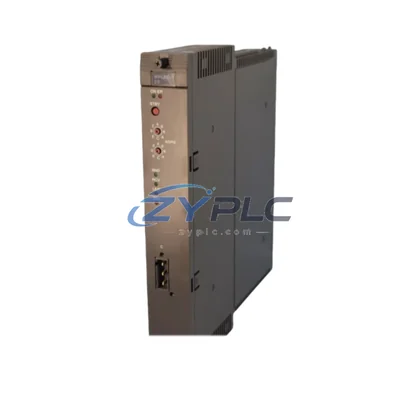
Mitsubishi FX-EEPROM-4 Memory for FX Series
In modern industrial automation, the integrity of a programmable logic controller’s memory subsystem is foundational to the reliability of the entire control architecture. The Mitsubishi FX-EEPROM-4 is a 4K-step EEPROM memory cassette engineered specifically for the Mitsubishi FX Series PLC platform, providing non-volatile program storage that ensures control logic is preserved across power cycles, firmware updates, and field maintenance events. Rather than viewing this component in isolation, system architects and maintenance engineers must understand how the FX-EEPROM-4 fits within the broader layered automation hierarchy — from the CPU and I/O layers through to the communication, power, and HMI layers — and how its presence directly enhances system consistency, expandability, redundancy, and long-term serviceability.
The FX-EEPROM-4 plugs directly into the memory cassette port of compatible FX Series CPU modules, including the FX3U and FX3G main units, providing a seamless upgrade path for installations that require program portability or rapid controller replacement without the need for a programming device on-site. When a CPU module such as the FX3U-32MT/ES is replaced in the field, the FX-EEPROM-4 cassette can be transferred directly to the new unit, restoring the full control program instantly. This capability is critical in high-availability environments such as power distribution substations, water treatment SCADA systems, and continuous process lines where unplanned downtime carries significant operational cost.
At the control layer, the FX-EEPROM-4 works in concert with the FX3U CPU’s internal RAM and the optional FX3U-FLROM-64L flash ROM cassette to form a tiered memory architecture. Engineers can configure the CPU to boot from the EEPROM cassette, ensuring that even after a complete battery failure, the control program remains intact and the system restarts autonomously. This is particularly valuable in remote installations — mining conveyors, offshore pump stations, or unmanned substations — where manual program restoration is impractical.
At the I/O layer, the FX-EEPROM-4 supports architectures that incorporate expansion modules such as the FX3U-16EX digital input expansion, FX3U-16EYT transistor output module, and FX3U-4AD analog input module. The stored program on the EEPROM cassette governs all I/O mapping, scaling parameters, and interlock logic for these expansion units. Because the program is stored in non-volatile EEPROM rather than battery-backed RAM, the risk of I/O misconfiguration following a power event is eliminated, reducing commissioning time after maintenance windows.
At the communication layer, the FX-EEPROM-4 stores the ladder logic and communication initialization routines that govern modules such as the FX3U-ENET Ethernet adapter, FX3U-232ADP-MB RS-232 communication adapter, and FX3U-485ADP-MB RS-485 multi-drop adapter. In Modbus RTU or CC-Link architectures, the communication parameters embedded in the stored program are critical to network stability. The EEPROM cassette ensures these parameters survive any power interruption, maintaining network topology integrity across the full control system.
At the power layer, the FX-EEPROM-4 reduces dependency on the FX Series CPU’s internal lithium battery (such as the FX3U-32BL battery unit) for program retention. While the battery continues to maintain the real-time clock and data registers, the EEPROM cassette independently preserves the program, creating a dual-layer retention strategy that extends mean time between failures and simplifies preventive maintenance scheduling.
At the HMI layer, operator panels connected via RS-422 or Ethernet — such as Mitsubishi GOT2000 series terminals — rely on the PLC program stored in the FX-EEPROM-4 to maintain consistent screen-to-tag mapping. When the control program is updated and written to the EEPROM cassette, HMI tag references remain stable, reducing the risk of screen errors during system upgrades. This system integration between the memory cassette, CPU, and HMI layer is a key advantage in multi-vendor automation environments.
Product Specification Table
| Parameter |
Specification |
| Model |
FX-EEPROM-4 |
| System Role |
Non-volatile program memory cassette for FX Series PLC CPU |
| Memory Capacity |
4K steps (EEPROM) |
| Compatible CPU Series |
Mitsubishi FX1S, FX1N, FX2N, FX3U, FX3G, FX3S |
| Memory Type |
EEPROM (Electrically Erasable Programmable Read-Only Memory) |
| Write Endurance |
Approx. 10,000 write cycles |
| Data Retention |
10 years (without power) |
| Operating Voltage |
Supplied via CPU cassette port (3.3V logic) |
| Operating Temperature |
0°C to 55°C |
| Storage Temperature |
-25°C to 75°C |
| Communication Interface |
Direct cassette slot (no external wiring required) |
| Installation |
Tool-free cassette insertion into FX CPU memory port |
| Warranty |
warranty terms confirmed during quotation |
| Origin |
Japan |
System Compatibility Notes
The FX-EEPROM-4 achieves its greatest value when deployed as part of a fully coordinated FX Series control system. A typical architecture for a mid-scale process control application might include the FX3U-64MT/ES as the primary CPU, paired with the FX-EEPROM-4 for program storage and the FX3U-32BL battery for data register retention. Digital I/O expansion via the FX3U-16EX and FX3U-16EYT modules extends the system’s field device connectivity, while the FX3U-4AD handles analog signal acquisition from pressure transmitters, flow meters, or temperature sensors.
Network connectivity is achieved through the FX3U-ENET Ethernet module, enabling SCADA integration via Modbus TCP or MC Protocol, while the FX3U-485ADP-MB provides RS-485 Modbus RTU connectivity to variable frequency drives, smart meters, or remote I/O stations. The FX3U-232ADP-MB supports legacy serial device integration, ensuring backward compatibility in brownfield installations. All communication initialization routines and device address maps are stored on the FX-EEPROM-4, making the cassette the single source of truth for the system’s communication architecture.
For applications requiring program portability across multiple identical machines — such as packaging lines, injection molding cells, or conveyor systems — the FX-EEPROM-4 enables a golden program strategy: a master cassette is programmed and verified, then duplicated to spare cassettes for rapid deployment. This approach, combined with the FX3U-CNV-BD communication board for local programming access, dramatically reduces commissioning time for multi-machine rollouts.
Industrial Application Notes
The FX-EEPROM-4 is deployed across a wide range of industrial sectors where program integrity and rapid recovery are non-negotiable requirements. In manufacturing automation, it supports high-speed assembly lines where the FX3U CPU controls servo drives, vision systems, and robotic end-effectors; the EEPROM cassette ensures that production recipes and motion profiles survive any power interruption. In power distribution, it is used in feeder protection panels and motor control centers where the PLC program governs protection relay logic, load shedding sequences, and alarm management — applications where battery-only program retention is considered insufficient for safety-critical operations.
In water and wastewater treatment, the FX-EEPROM-4 supports SCADA-connected FX3U systems managing pump sequencing, chemical dosing, and level control across geographically distributed lift stations. The non-volatile memory ensures that remote stations restart correctly after grid outages without operator intervention. In petrochemical and oil and gas applications, it is used in wellhead control panels and pipeline monitoring systems where the PLC must restart autonomously and resume normal operation within seconds of a power restoration event.
In mining and metallurgy, the FX-EEPROM-4 supports conveyor drive control, crusher sequencing, and ventilation management systems where the harsh environment — vibration, dust, and temperature extremes — demands robust, battery-independent program storage. In packaging and material handling, it enables rapid changeover between product SKUs by storing multiple program variants that can be selected via HMI input, reducing format change time from hours to minutes.
Product Compatibility FAQ
Q1: Is the FX-EEPROM-4 compatible with both FX2N and FX3U CPU modules, and can the same cassette be used interchangeably between these generations?
The FX-EEPROM-4 is compatible with the FX2N, FX3U, FX3G, FX1N, and FX1S CPU families, all of which share the same physical cassette port form factor. However, programs written for FX3U (which supports 64K steps of internal RAM) cannot be fully stored on the 4K-step FX-EEPROM-4 if the program exceeds 4K steps. For FX2N applications with programs under 4K steps, the cassette is fully interchangeable. Engineers should verify program step count before deploying the cassette as a cross-generation transfer medium. Our warranty terms confirmed during quotation covers the cassette hardware regardless of which compatible CPU generation it is used with.
Q2: How does the FX-EEPROM-4 interact with the FX3U built-in RAM during normal operation, and what happens during a power cycle?
During normal operation, the FX3U CPU executes the program from its internal RAM for maximum scan speed. The FX-EEPROM-4 serves as the boot source: on power-up, the CPU checks for a valid program on the cassette and, if found, copies it to RAM before beginning execution. This means the EEPROM cassette is read once at startup and does not affect runtime scan performance. On power loss, the RAM contents are lost, but the EEPROM cassette retains the program indefinitely — no battery required for program retention. This architecture is ideal for installations where battery maintenance is difficult or where battery failure risk is unacceptable.
Q3: What is the recommended procedure for updating the program on an installed FX-EEPROM-4, and how does the warranty terms confirmed during quotation apply to field-written cassettes?
To update the program on an installed FX-EEPROM-4, connect a programming device (such as a PC running GX Works2 or GX Developer) to the FX3U CPU via the FX3U-232ADP-MB or USB-SC09-FX cable, download the new program to the CPU RAM, then use the PLC built-in ROM write function to transfer the updated program from RAM to the EEPROM cassette. The cassette supports approximately 10,000 write cycles, making it suitable for frequent program updates throughout its service life. Our warranty terms confirmed during quotation covers manufacturing defects in the cassette hardware and applies regardless of the number of write cycles performed during normal operation, provided the cassette is used within its specified electrical and environmental ratings.