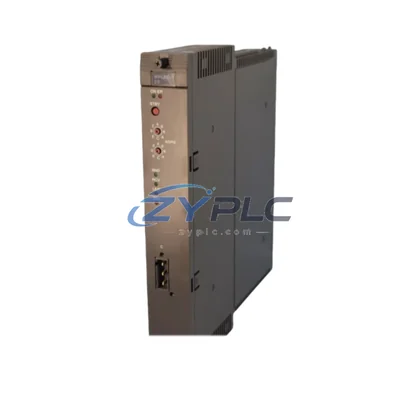
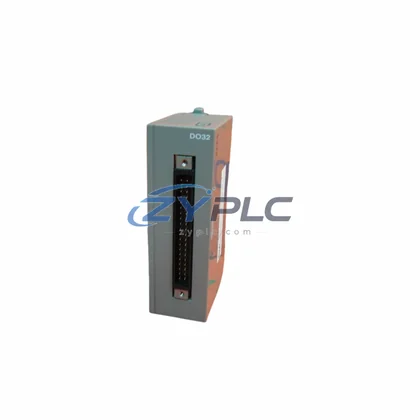
Mitsubishi FX2-128MR Relay Output Module for FX Series
The Mitsubishi FX2-128MR is a high-density relay output PLC module engineered for seamless integration within the FX2 and broader FX series control system architecture. With 128 I/O points and a relay-based output configuration, this module occupies a critical position in the I/O layer of distributed and centralized automation systems, delivering reliable discrete signal switching across a wide range of industrial voltages and load types. Whether deployed in standalone machine control or embedded within a multi-tier SCADA-linked architecture, the FX2-128MR provides the signal density, electrical isolation, and system compatibility required for demanding industrial environments.
In a complete FX series control architecture, the FX2-128MR operates in close coordination with the CPU layer, typically paired with controllers such as the FX2N-128MR or FX2N-80MR as the primary processing unit. The CPU module handles program execution, scan cycle management, and upstream communication, while the FX2-128MR extends the physical I/O capacity to field devices including solenoid valves, motor contactors, indicator lamps, and relay-driven actuators. This layered approach ensures that the control layer remains logically clean while the I/O layer absorbs the full complexity of field wiring.
Power distribution within the system is managed through dedicated power supply modules such as the FX2N-PSU or compatible DIN-rail mounted 24VDC supplies, which provide stable operating voltage to both the CPU and I/O expansion modules. Proper power architecture is essential when deploying high-density relay output modules like the FX2-128MR, as relay coil switching loads can introduce transient noise that must be filtered at the power layer to protect upstream logic circuits.
At the network and communication layer, the FX2-128MR integrates naturally into systems using the FX2N-232IF or FX2N-485ADP communication adapters, enabling RS-232C and RS-485 connectivity for upstream SCADA, HMI, or data logging systems. For Ethernet-based architectures, the FX2N-ENET-ADP provides TCP/IP connectivity, allowing the FX2 platform to participate in plant-wide MES or DCS integration without requiring a gateway controller. The FX2-128MR’s role in these networked architectures is to provide the physical output layer that executes commands issued from the communication-linked CPU.
Human-machine interface integration is typically achieved through Mitsubishi GOT series panels or third-party HMI terminals connected via RS-422 or Ethernet. The FX2-128MR’s I/O status is reflected in real time on the HMI, giving operators visibility into relay states, fault conditions, and output activation sequences. This transparency is essential for rapid fault diagnosis and reduces mean time to repair in production environments.
For systems requiring expansion beyond the base module’s I/O capacity, the FX2N-CNV-IF conversion interface and FX2N-EX extension modules allow additional I/O blocks to be appended to the main rack, maintaining a unified programming namespace and consistent scan behavior. The FX2-128MR can serve as the primary output block in such expanded configurations, with analog I/O handled by FX2N-4AD or FX2N-4DA special function modules mounted on the same backplane.
In redundancy-critical applications, the FX2-128MR is often deployed in parallel output configurations where dual relay paths provide failover capability for safety-critical actuators. Combined with watchdog timer logic in the CPU and external relay monitoring circuits, this approach meets the reliability requirements of applications in power distribution, water treatment, and chemical process control.
Long-term maintainability is a core design consideration for any system incorporating the FX2-128MR. Relay output modules have defined mechanical and electrical lifespans measured in switching cycles, and proactive replacement scheduling based on operational data prevents unplanned downtime. ZYPLC maintains consistent stock of the FX2-128MR and compatible FX2 series components, supporting both initial project builds and ongoing maintenance programs with a warranty terms confirmed during quotation on all supplied units.
Product Specification Table
| Parameter |
Specification |
| System Role |
High-Density Relay Output I/O Module |
| Total I/O Points |
128 (Input + Output) |
| Output Type |
Relay Contact Output |
| Output Voltage Range |
5–240V AC / 5–30V DC |
| Max Output Current |
2A per point |
| Compatible CPU Series |
Mitsubishi FX2, FX2N, FX2NC |
| Communication Interface |
Via FX2N-232IF, FX2N-485ADP, FX2N-ENET-ADP |
| Power Supply |
24V DC (external), compatible with FX2N-PSU |
| Mounting |
DIN Rail / Panel Mount |
| Operating Temperature |
0°C to 55°C |
| Protection Rating |
IP20 |
| Country of Origin |
Japan |
| Warranty |
warranty terms confirmed during quotation (ZYPLC) |
System Compatibility Notes
The FX2-128MR achieves its full potential when deployed as part of a coordinated FX series control system. A typical architecture begins with the FX2N-128MR or FX2N-80MR as the central CPU module, executing the ladder logic program and managing the scan cycle. The FX2-128MR connects to this CPU via the standard FX2 expansion bus, extending the output capacity without requiring additional programming hardware or communication configuration.
Power integrity is maintained through the FX2N-PSU power supply module, which delivers regulated 24VDC to the I/O bus. For systems with high relay switching frequency, supplementary filtering capacitors and surge suppressors are recommended at the terminal block level. Terminal modules such as the FX2N-TB wiring terminal block simplify field wiring and reduce installation time for the dense I/O count of the FX2-128MR.
Communication to upstream systems is handled by the FX2N-232IF for RS-232C serial links and the FX2N-485ADP for multi-drop RS-485 networks, enabling Modbus RTU or proprietary FX protocol communication with SCADA and HMI systems. Where Ethernet connectivity is required, the FX2N-ENET-ADP provides TCP/IP integration without replacing the existing FX2 CPU. Analog process variables are managed by the FX2N-4AD analog input module and FX2N-4DA analog output module, which share the same backplane as the FX2-128MR and are addressed within the same program data register space. For systems requiring CC-Link fieldbus integration, the FX2N-32CCL CC-Link interface module enables the FX2 platform to participate in Mitsubishi’s open fieldbus network, connecting to remote I/O stations, inverters, and servo drives across the plant floor.
Industrial Application Notes
The FX2-128MR is deployed across a broad range of industrial sectors where high-density discrete output control is required. In manufacturing and assembly lines, the module controls pneumatic actuators, conveyor motor starters, and part-present indicator lamps across multi-station production cells. Its relay output type provides electrical isolation between the PLC logic circuit and the field load, protecting the CPU from voltage spikes generated by inductive loads.
In power distribution and electrical substation applications, the FX2-128MR drives protection relay coils, circuit breaker trip circuits, and alarm annunciator panels. The module’s ability to switch both AC and DC loads at voltages up to 240V AC makes it suitable for direct interface with substation control circuits without intermediate relay panels.
For water treatment and pumping station automation, the FX2-128MR manages pump motor starters, valve actuators, and chemical dosing system outputs. Its wide operating temperature range and DIN rail mounting make it suitable for installation in outdoor control cabinets with appropriate enclosure ratings. In mining and metallurgical processing environments, the module’s robust relay output design withstands the high-vibration, high-dust conditions typical of crusher control panels and conveyor drive systems. The warranty terms confirmed during quotation provided by ZYPLC ensures that replacement units are available to support rapid maintenance turnaround in these remote or continuous-operation facilities.
Product Compatibility FAQ
Q1: Is the FX2-128MR compatible with both FX2 and FX2N CPU modules?
The FX2-128MR is designed for the FX2 series platform and is electrically and mechanically compatible with FX2N CPU modules via the standard FX2N expansion bus connector. Engineers should verify the total I/O point count against the FX2N CPU’s maximum expansion capacity, which varies by model. The FX2N-128MR CPU, for example, supports up to 256 total I/O points including expansion modules, making the FX2-128MR a compatible and practical expansion choice for high-density output applications.
Q2: How should the FX2-128MR be integrated into a system with existing CC-Link or Ethernet communication?
The FX2-128MR itself does not include a built-in communication interface; all network connectivity is managed at the CPU level through communication adapter modules. For CC-Link integration, the FX2N-32CCL module is mounted on the same backplane and configured as a CC-Link master or slave station. For Ethernet, the FX2N-ENET-ADP provides TCP/IP connectivity. The FX2-128MR’s I/O data is mapped into the CPU’s output register space and is accessible to all communication modules sharing the same CPU bus, enabling full system integration with upstream SCADA, MES, or DCS systems without additional hardware.
Q3: What does the warranty terms confirmed during quotation cover, and how does ZYPLC support long-term maintenance programs?
ZYPLC’s warranty terms confirmed during quotation covers manufacturing defects and functional failures under normal operating conditions for all FX2-128MR units supplied. For long-term maintenance programs, ZYPLC maintains buffer stock of the FX2-128MR and compatible FX2 series components, enabling rapid dispatch for emergency replacements. Customers operating continuous-process facilities are encouraged to establish a standing inventory agreement to ensure module availability independent of global supply chain fluctuations. Technical support for installation, commissioning, and fault diagnosis is available through ZYPLC’s engineering team.