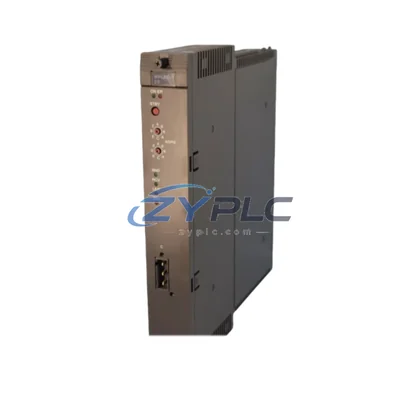
Mitsubishi FX2N-128MR-001 PLC for FX2N Automation
The Mitsubishi FX2N-128MR-001 is a high-performance programmable logic controller from the MELSEC FX2N series, engineered to deliver precise, energy-efficient control across demanding industrial automation environments. With 128 I/O points and relay output architecture, this PLC serves as the central execution node for factories seeking to reduce unnecessary power consumption, tighten production cycle times, and extend the operational lifespan of connected equipment. Whether deployed in discrete manufacturing, material handling, or process control, the FX2N-128MR-001 provides the processing speed and I/O density required to eliminate idle unplanned downtime and maximize equipment utilization rates.
In modern production lines, energy inefficiency rarely stems from a single component — it accumulates across poorly coordinated motor starts, unoptimized conveyor timing, and reactive rather than predictive maintenance cycles. The FX2N-128MR-001 addresses these challenges at the control layer, enabling engineers to implement structured ladder logic that governs motor sequencing, output duty cycles, and inter-device communication with millisecond-level precision. When paired with Mitsubishi’s FR-D720 compact inverter drive, the controller can regulate motor speed dynamically based on real-time load feedback, cutting energy draw during partial-load operations by a measurable margin compared to fixed-speed alternatives.
Product Specification Table
| Parameter |
Specification / Value |
| Model SKU |
FX2N-128MR-001 |
| I/O Points |
128 (64 inputs / 64 outputs) |
| Output Type |
Relay Output |
| Power Supply |
100–240V AC |
| Program Capacity |
8,000 Steps |
| Scan Time |
0.08 ms / step (basic instructions) |
| Compatible Series |
MELSEC FX2N, FX2NC, FX3U (expansion) |
| Communication Protocol |
RS-422, optional CC-Link, Ethernet via adapter |
| Application Environment |
Discrete manufacturing, conveyor systems, HVAC, packaging lines |
| Maintenance Value |
Dynamic I/O scheduling, reduced idle output activation, motor interlock logic |
| Operating Temperature |
0°C to 55°C |
| Origin |
Japan |
| Warranty |
warranty terms confirmed during quotation — tested before shipment |
System Compatibility and Application
Deploying the FX2N-128MR-001 as the primary controller in an industrial automation system allows system integrators to build layered control strategies that span from field-level sensing to supervisory data collection. At the field level, the FX2N-16EX input expansion module extends the controller’s sensing reach, enabling the PLC to monitor additional process signals — such as motor current feedback, proximity sensor states, and conveyor jam detection — without adding processing latency. This expanded sensing capability is the foundation of any effective condition monitoring strategy: you cannot optimize what you cannot measure.
For analog process variables such as temperature, pressure, or flow rate, the FX2N-2AD analog input module feeds real-world data directly into the FX2N-128MR-001’s processing core. The controller can then execute PID control routines that modulate output devices — including the FR-E740 inverter — to maintain setpoints with minimal overshoot, reducing the energy penalty associated with aggressive motor acceleration and deceleration cycles. In pump and fan applications, this alone can yield significant reductions in kilowatt-hour consumption per production shift.
At the drive layer, the Mitsubishi FR-A740 high-performance inverter complements the FX2N-128MR-001 by providing vector-controlled motor speed regulation across a wide torque range. When the PLC issues speed reference commands via analog output or RS-485 communication, the FR-A740 responds with precise frequency adjustments that align motor output to actual mechanical demand — eliminating the unplanned downtime inherent in throttling fixed-speed motors through mechanical means. For smaller auxiliary motors, the FR-D720S single-phase inverter offers a compact, cost-effective alternative within the same control ecosystem.
Operator visibility into energy consumption and machine status is delivered through the Mitsubishi GT1055-QSBD GOT1000 series HMI, which connects to the FX2N-128MR-001 via RS-422 and displays real-time I/O states, alarm histories, and production counters. Operators can identify energy anomalies — such as a motor running at full speed during a scheduled idle period — directly from the HMI panel without requiring engineering intervention. This visibility shortens the feedback loop between unplanned downtime detection and corrective action.
For facilities requiring network-level energy data aggregation, the FX2N-128MR-001 can be integrated into a CC-Link fieldbus network using the FX2N-16CCL-M CC-Link master module. This allows the PLC to exchange I/O data and energy-related status information with remote I/O stations, other MELSEC controllers, and condition monitoring gateways — creating a unified data backbone that supports both real-time control and historical energy trend analysis. When connected to a Q06HCPU-based MELSEC Q series supervisory controller, the FX2N-128MR-001 operates as a distributed field controller, reporting production metrics upward while executing local control logic autonomously.
Maintenance and Replacement Notes
In a typical packaging line scenario, the FX2N-128MR-001 manages the sequencing of conveyor belts, labeling stations, and reject mechanisms across 64 output channels. Without intelligent control, each of these actuators would operate on fixed timers, consuming power regardless of whether upstream processes have delivered product to their stations. By implementing interlock logic in the FX2N-128MR-001’s ladder program, engineers can ensure that downstream conveyors only activate when upstream sensors — connected through the FX2N-16EX expansion — confirm product presence. This demand-driven activation pattern reduces unnecessary relay switching cycles and extends the service life of output contacts, lowering both energy costs and maintenance frequency.
In press and stamping applications, the FX2N-128MR-001 coordinates hydraulic pump motor start sequences to prevent simultaneous inrush current spikes that inflate peak demand charges on industrial electricity tariffs. By staggering motor starts across a 200–500 ms window using the controller’s high-resolution timer instructions, facilities can reduce their measured peak demand without any change to production throughput — a direct reduction in energy cost with zero capital expenditure on new equipment.
Predictive maintenance integration is another dimension of power optimization enabled by the FX2N-128MR-001. By logging motor run-hours, output switching counts, and fault event timestamps into the controller’s data registers, maintenance teams can schedule interventions before failures occur. Unplanned downtime is one of the largest hidden energy costs in manufacturing: restarting cold equipment, running accelerated catch-up cycles, and operating at reduced efficiency during warm-up all consume disproportionate energy. The FX2N-128MR-001’s data logging capability, when combined with the GT1055 HMI’s trend display, transforms reactive maintenance into a scheduled, energy-conscious process.
Every unit shipped by ZYPLC undergoes functional output testing, communication port verification, and program execution validation prior to dispatch. Stock availability is maintained to support rapid deployment requirements, and all FX2N-128MR-001 units are covered by a warranty terms confirmed during quotation from the date of shipment — ensuring that your production line investment is protected from day one.
Product Sourcing FAQ
Q1: How does the FX2N-128MR-001 contribute to measurable operational stability on a production line?
The FX2N-128MR-001 enables demand-driven output control, motor start sequencing, and PID-based drive regulation. When integrated with inverter drives such as the FR-D720 or FR-A740, the controller eliminates fixed-speed motor operation during partial-load conditions, directly reducing kilowatt-hour consumption per production cycle.
Q2: Is the FX2N-128MR-001 compatible with existing MELSEC FX2N expansion modules and communication adapters?
Yes. The FX2N-128MR-001 is fully compatible with the MELSEC FX2N expansion ecosystem, including the FX2N-16EX input module, FX2N-2AD analog input module, FX2N-16CCL-M CC-Link master, and RS-422/RS-485 communication adapters. This allows incremental system expansion without replacing the base controller.
Q3: Can the FX2N-128MR-001 replace an older FX2N unit without reprogramming?
In most cases, yes. The FX2N-128MR-001 maintains instruction set and I/O compatibility with other FX2N series controllers. Existing ladder programs can typically be transferred via GX Developer or GX Works2 software with minimal modification, reducing replacement project risk and downtime.
Q4: What does the warranty terms confirmed during quotation cover, and what is the testing process before shipment?
All FX2N-128MR-001 units supplied by ZYPLC are tested for output relay function, power supply integrity, communication port operation, and program execution prior to shipment. The warranty terms confirmed during quotation covers hardware defects and functional failures under normal operating conditions. Replacement or repair support is provided directly through ZYPLC’s technical team.