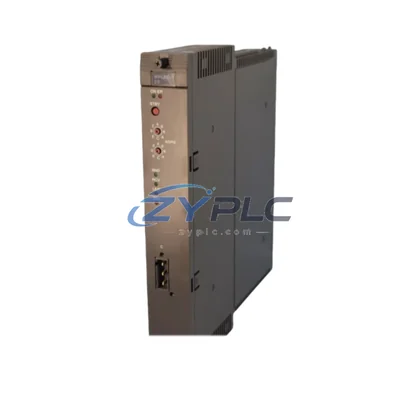
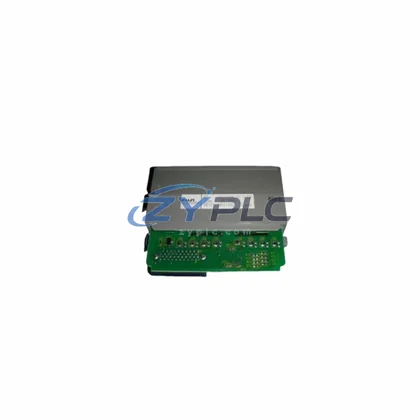
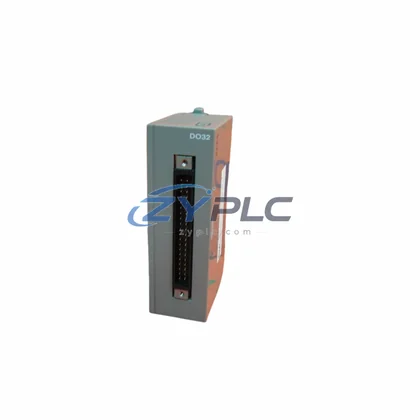
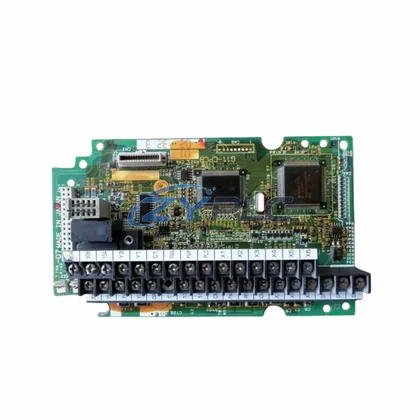
The Mitsubishi FX2NC-16EX is a 16-point digital input expansion module engineered for seamless integration within the MELSEC FX2NC compact PLC platform. Rather than functioning as a standalone peripheral, the FX2NC-16EX is designed as a structural component of a layered automation architecture — extending the signal acquisition capacity of the FX2NC CPU while maintaining the compact form factor and high-density wiring standards demanded by modern industrial control panels. Its role spans the I/O layer, directly interfacing with field-level sensors, proximity switches, limit switches, and digital transmitters, and feeding real-time process data upward through the control hierarchy to the CPU for logic execution and system response.
In a complete FX2NC-based control system, the FX2NC-16EX operates in close coordination with the FX2NC-32MT or FX2NC-64MT CPU modules, which serve as the central processing units managing ladder logic, timer functions, and inter-module communication. The expansion bus architecture of the FX2NC series allows the FX2NC-16EX to be connected directly via the FX2NC-CNV-IF conversion interface adapter, enabling compact bus-connected expansion without the need for additional wiring harnesses. This tight physical and electrical integration reduces signal latency and simplifies cabinet layout — a critical advantage in space-constrained control enclosures found in packaging lines, conveyor systems, and process skids.
At the network and communication layer, the FX2NC-16EX-equipped system can be extended with the FX2NC-ENET-ADP Ethernet adapter or the FX2NC-232-BD and FX2NC-485-BD serial communication boards, enabling SCADA connectivity, remote monitoring, and multi-drop RS-485 network participation. These communication modules allow the digital input states captured by the FX2NC-16EX to be transmitted upstream to supervisory systems, DCS platforms, or MES layers without additional protocol conversion hardware. The result is a vertically integrated data path from field sensor to enterprise system, all anchored by the FX2NC expansion architecture.
On the output side, the FX2NC-16EX is typically paired with output expansion modules such as the FX2NC-16EYT transistor output module or the FX2NC-32EYT for higher-density output requirements. Together, these I/O modules form a balanced input/output layer that supports complex interlocking logic, safety relay activation, and actuator control across the full range of industrial applications. For analog signal acquisition, the FX2NC-4AD or FX2NC-8AD analog input modules can be added to the same expansion bus, creating a mixed-signal I/O architecture capable of handling both discrete and continuous process variables within a single compact controller platform.
From a human-machine interface perspective, the FX2NC-16EX-based system integrates naturally with Mitsubishi GOT2000 series HMI panels via RS-422 or Ethernet, providing operators with real-time visibility into input states, alarm conditions, and system diagnostics. The GOT2000 platform supports FX2NC native communication protocols, eliminating the need for third-party drivers and ensuring stable, low-latency screen refresh rates even in high-cycle-time applications. This HMI integration is particularly valuable in applications such as water treatment control panels, pharmaceutical batch systems, and food processing lines where operator interaction with input status is frequent and time-sensitive.
For system redundancy and long-term maintainability, the FX2NC-16EX supports hot-swap-compatible expansion configurations when used with appropriate FX2NC backplane and bus termination accessories. Maintaining a spare FX2NC-16EX module in inventory is a standard practice for facilities operating continuous production processes, as module replacement can be completed without full system shutdown in many configurations. The module’s compact DIN-rail mounting and standardized connector interface further reduce mean time to repair (MTTR), supporting the operational continuity requirements of mining, metallurgy, and petrochemical applications.
Product Specification Table
| Parameter |
Specification |
| System Role |
Digital Input Expansion Module — I/O Layer |
| Compatible Platform |
Mitsubishi MELSEC FX2NC Series PLC |
| Number of Input Points |
16 Points (DC Input) |
| Input Voltage |
24V DC |
| Input Current |
Approx. 7mA per point |
| Isolation Method |
Photocoupler Isolation |
| Response Time |
1ms / 10ms (selectable) |
| Connection Interface |
FX2NC Expansion Bus (via FX2NC-CNV-IF) |
| Communication Capability |
Native FX2NC Bus; Compatible with FX2NC-ENET-ADP, FX2NC-232-BD, FX2NC-485-BD |
| Mounting |
DIN Rail / Direct Panel Mount |
| Operating Temperature |
0°C to 55°C |
| Operating Humidity |
35% to 85% RH (non-condensing) |
| Power Consumption |
Supplied via FX2NC Expansion Bus |
| Weight |
Approx. 150g |
| Warranty |
warranty terms confirmed during quotation — Tested & Verified |
System Compatibility Notes
A fully realized FX2NC control architecture built around the FX2NC-16EX typically includes the following coordinated components: the FX2NC-32MT or FX2NC-64MT CPU module as the central logic processor; the FX2NC-CNV-IF conversion interface for compact bus expansion; the FX2NC-16EYT transistor output module for actuator and relay control; the FX2NC-4AD analog input module for process variable acquisition; the FX2NC-ENET-ADP Ethernet adapter for SCADA and MES connectivity; the FX2NC-232-BD serial board for RS-232 device communication; the FX2NC-485-BD for RS-485 multi-drop network participation; the FX2NC-32EYT for high-density output expansion; and the Mitsubishi GOT2000 HMI series for operator interface and real-time diagnostics. Each of these components occupies a defined layer within the control hierarchy, and the FX2NC-16EX serves as the primary field-signal gateway at the I/O layer — ensuring that all upstream logic, communication, and visualization functions receive accurate, timely, and electrically isolated digital input data.
Industrial Application Notes
The FX2NC-16EX is deployed across a broad range of industrial sectors where compact, reliable digital input expansion is required within a structured control architecture. In manufacturing and assembly automation, the module captures position feedback from proximity sensors, part-present detectors, and end-of-travel limit switches, enabling the FX2NC CPU to execute precise sequencing logic for robotic cells and conveyor indexing systems. In water and wastewater treatment, the FX2NC-16EX monitors pump run/fault status, valve open/close feedback, and level switch states across distributed pump stations, providing the control layer with the discrete input data needed for automatic process switching and alarm generation. In power distribution and electrical substation applications, the module interfaces with circuit breaker auxiliary contacts, protection relay trip outputs, and interlock status signals, supporting the FX2NC CPU in executing substation automation sequences with high electrical isolation integrity. In petrochemical and process industries, the FX2NC-16EX handles emergency shutdown (ESD) input signals, pressure switch states, and flow switch feedback within compact local control panels, contributing to the safety interlock layer of the overall process control system. In mining and metallurgy, the module’s robust photocoupler isolation and wide operating temperature range make it suitable for deployment in harsh environments where electrical noise, vibration, and temperature variation are significant operational factors.
Product Compatibility FAQ
Q1: Is the FX2NC-16EX compatible with both FX2NC-32MT and FX2NC-64MT CPU modules, and how many expansion modules can be connected?
The FX2NC-16EX is fully compatible with all FX2NC series CPU modules, including the FX2NC-32MT and FX2NC-64MT. The FX2NC platform supports up to 8 expansion modules connected via the FX2NC expansion bus, allowing a maximum of 128 additional I/O points beyond the CPU’s onboard I/O. The FX2NC-CNV-IF conversion interface adapter is required to connect the first expansion module to the CPU unit, after which additional modules connect in series along the expansion bus.
Q2: Can the FX2NC-16EX be used in a system that also includes analog input modules and communication adapters without exceeding the CPU’s expansion capacity?
Yes. The FX2NC expansion architecture supports mixed-module configurations, allowing the FX2NC-16EX to coexist on the same expansion bus with analog modules such as the FX2NC-4AD and communication adapters such as the FX2NC-ENET-ADP or FX2NC-232-BD. Each module occupies one expansion slot, and the total number of expansion modules must not exceed the CPU’s supported maximum. Power consumption across all expansion modules must also be verified against the FX2NC CPU’s internal power supply capacity to ensure stable system operation.
Q3: What does the warranty terms confirmed during quotation cover, and what is the recommended maintenance practice for long-term system reliability?
The warranty terms confirmed during quotation covers manufacturing defects, electrical failures under normal operating conditions, and functional non-conformance to published specifications. For long-term system reliability, it is recommended to maintain at least one spare FX2NC-16EX module per installation site, particularly in continuous-process environments where unplanned downtime carries significant operational cost. Periodic inspection of input wiring, connector seating, and photocoupler response time verification should be included in the site’s preventive maintenance schedule. All modules supplied are tested and verified prior to shipment.