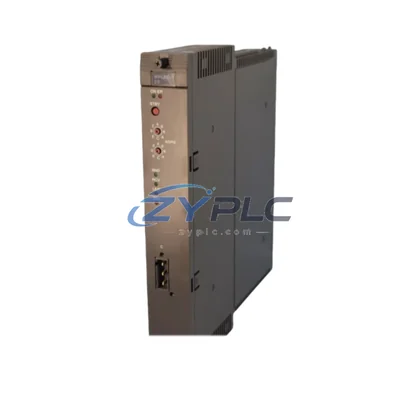
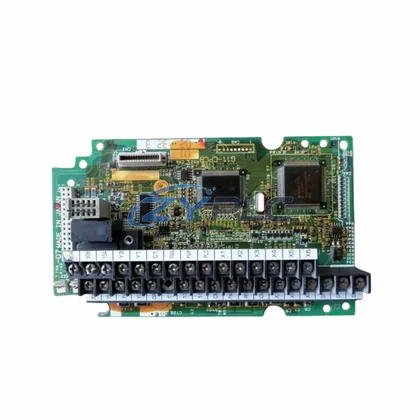
Mitsubishi FX2NC-CNV-IF PLC for FX2NC Automation
The Mitsubishi FX2NC-CNV-IF is a precision-engineered PLC conversion interface module designed to bridge FX2N-series expansion modules with the compact FX2NC main unit. In modern industrial environments where energy efficiency and production continuity are non-negotiable, this interface module plays a critical role in maintaining a lean, responsive, and power-optimized automation architecture. By enabling seamless integration between FX2N peripheral I/O blocks and the FX2NC controller, the FX2NC-CNV-IF eliminates the need for redundant wiring infrastructure, reduces signal latency, and contributes directly to lower idle-state power consumption across the control panel.
In high-throughput manufacturing lines where cycle time optimization is paramount, the FX2NC-CNV-IF supports the FX2NC main unit in maintaining deterministic scan cycles. When paired with expansion modules such as the FX2NC-32MT or FX2NC-64MT, the interface ensures that digital I/O data is transferred with minimal overhead, allowing the CPU to allocate processing resources toward real-time control logic rather than communication management. This directly translates to tighter production line rhythm and reduced inter-cycle idle time — a measurable gain in overall equipment effectiveness (OEE).
Product Specification Table
| Parameter |
Specification / Value |
| Product SKU |
FX2NC-CNV-IF |
| Product Category |
PLC Conversion Interface Module |
| Compatible Series |
Mitsubishi FX2NC / FX2N |
| Power Consumption |
Low-draw passive interface; no independent power supply required |
| Operating Voltage |
Supplied via FX2NC bus connector |
| Application Environment |
Industrial automation, panel-mount control systems, OEM machinery |
| Maintenance Value |
Eliminates redundant wiring; reduces panel heat load and idle draw |
| Compatible Expansion Modules |
FX2N-series I/O, analog, and communication modules |
| Operating Temperature |
0°C to 55°C |
| Origin |
Japan |
| Warranty |
warranty terms confirmed during quotation |
| Shipping |
Global DHL / FedEx; stock verified before dispatch |
System Compatibility and Application
The FX2NC-CNV-IF is most effective when deployed as part of a cohesive, industrial control architecture. In a typical FX2NC-based system, the main CPU — such as the FX2NC-32MT or FX2NC-96MT — handles the core ladder logic and timing sequences. The FX2NC-CNV-IF acts as the physical and electrical bridge that allows FX2N-series expansion blocks, including the FX2N-16EX input module and FX2N-16EYT transistor output module, to be connected without requiring a separate power bus or additional terminal blocks. This consolidation reduces the total number of active components drawing standby power in the panel.
For analog signal acquisition — critical in condition monitoring applications — the FX2NC-4AD analog input module can be connected through the FX2NC-CNV-IF interface to capture real-time current, voltage, or temperature data from field sensors. This data feeds directly into the FX2NC CPU for closed-loop control decisions, enabling the system to modulate output signals to variable frequency drives such as the Mitsubishi FR-D720 or FR-E720 series. By dynamically adjusting motor speed based on actual load demand rather than fixed setpoints, the system achieves significant reductions in motor load — often Actual operating results depend on the installed system, load profile, and commissioning parameters.
Communication efficiency is equally important in a lean automation architecture. The FX2NC-ENET-ADP Ethernet adapter, when used alongside the FX2NC-CNV-IF in an expanded configuration, enables the FX2NC controller to participate in plant-wide SCADA or MES data exchange without requiring a dedicated communication gateway. This reduces hardware overhead and the associated power draw of additional network nodes. For facilities using CC-Link or RS-485 fieldbus topologies, the FX2N-32CCL CC-Link interface module can similarly be integrated through the conversion interface, enabling centralized energy data aggregation from distributed I/O stations.
Operator visibility is maintained through HMI integration. The Mitsubishi GOT2000 series — particularly the GT2310 compact panel — can be connected to the FX2NC system to display real-time energy metrics, alarm states, and production KPIs. When operators have immediate access to power consumption trends and equipment status, they can make faster decisions to reduce unnecessary machine runtime, contributing to measurable operational stability per shift.
Maintenance and Replacement Notes
In real-world production environments, the FX2NC-CNV-IF contributes to maintenance planning through several interconnected mechanisms. First, by enabling the reuse of existing FX2N expansion hardware within a newer FX2NC-based control panel, manufacturers avoid the capital expenditure and energy cost of replacing entire I/O subsystems. This hardware continuity also reduces the learning curve for maintenance technicians, shortening the mean time to repair (MTTR) when faults occur.
Second, the compact form factor of the FX2NC-CNV-IF minimizes panel space requirements. Smaller control panels require less cooling — a significant source of parasitic operating load in industrial facilities. In environments where multiple control panels operate continuously, reducing the thermal load of each panel through compact, efficient component selection can yield measurable reductions in HVAC energy demand.
Third, the deterministic communication between the FX2NC main unit and its expansion modules — facilitated by the FX2NC-CNV-IF — supports predictive maintenance strategies. When analog data from the FX2NC-4AD is used to monitor motor current signatures or vibration proxy signals, deviations from baseline can trigger early maintenance alerts before catastrophic failure occurs. Preventing unplanned downtime not only protects production throughput but also avoids the unplanned downtime associated with emergency restarts, purge cycles, and reheating of process equipment.
For facilities operating under ISO 50001 maintenance planning frameworks or pursuing carbon reduction targets, the FX2NC-CNV-IF represents a low-cost, high-impact component that supports broader system-level efficiency goals. Its role in enabling modular, scalable automation architectures means that maintenance planning measures — such as load shedding during off-peak periods or dynamic speed control via the FR-D720 VFD — can be implemented without redesigning the entire control system.
All units supplied by ZYPLC are sourced from verified distribution channels, undergo pre-shipment functional testing, and are covered by a warranty terms confirmed during quotation. Stock availability is confirmed prior to order processing, and global logistics are handled via DHL and FedEx with full tracking.
Product Sourcing FAQ
Q1: How does the FX2NC-CNV-IF contribute to operational stability in an FX2NC system?
The FX2NC-CNV-IF enables the reuse of FX2N-series expansion modules within an FX2NC architecture, eliminating the need for additional power supplies or interface converters. This reduces the total number of active components in the panel, lowering standby power consumption and panel heat generation. When combined with analog monitoring via the FX2NC-4AD and variable speed control through a Mitsubishi FR-D720 drive, the system can achieve significant reductions in motor energy use.
Q2: Is the FX2NC-CNV-IF compatible with all FX2N expansion modules?
The FX2NC-CNV-IF is designed to connect FX2N-series expansion I/O, analog, and communication modules to the FX2NC main unit. This includes digital I/O modules such as the FX2N-16EX and FX2N-16EYT, analog modules such as the FX2NC-4AD, and communication modules such as the FX2N-32CCL. Compatibility should be verified against the specific FX2NC CPU model and firmware version in use.
Q3: Can this module be used as a direct replacement in an existing FX2NC panel?
Yes. The FX2NC-CNV-IF is a standard Mitsubishi Electric component and can be used as a direct replacement for a failed or end-of-life unit in an existing FX2NC control panel. No programming changes are required, as the module is transparent to the CPU’s I/O mapping. ZYPLC recommends verifying the hardware revision of the existing module before ordering to ensure physical connector compatibility.
Q4: What does the warranty terms confirmed during quotation cover, and what is the testing process before shipment?
All FX2NC-CNV-IF units supplied by ZYPLC are covered by a warranty terms confirmed during quotation against manufacturing defects and functional failure under normal operating conditions. Prior to shipment, each unit undergoes a pre-dispatch functional verification to confirm connector integrity and communication handshake with a reference FX2NC system. Units that do not pass testing are quarantined and not dispatched. Warranty claims are processed directly through ZYPLC’s technical support team.