Mitsubishi IFALM11 Alarm Board: Compatibility and Replacement Notes
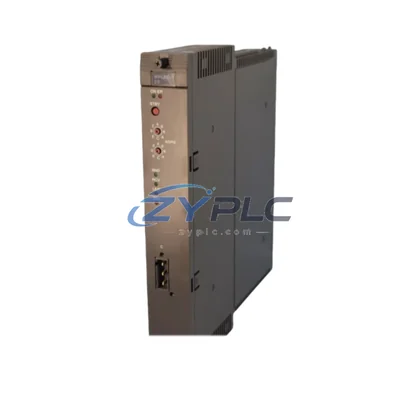
The Mitsubishi Electric IFALM11 Alarm Board is a purpose-built alarm and status monitoring module designed for seamless integration within the Mitsubishi IF Series programmable controller architecture. Rather than functioning as a standalone diagnostic device, the IFALM11 occupies a critical position within the layered automation hierarchy — bridging the control layer, I/O layer, and human-machine interface layer to deliver real-time alarm signal management, system fault detection, and operational continuity across complex industrial environments.
In modern distributed control architectures, alarm management is not a peripheral function — it is a core pillar of system reliability. The IFALM11 integrates directly into the IF Series backplane, working in concert with the CPU module, power supply unit, and I/O expansion modules to ensure that fault signals are captured, classified, and escalated without latency. This tight architectural coupling eliminates the signal ambiguity that often arises when alarm functions are handled by external relay logic or standalone annunciators, resulting in a more deterministic and auditable control system.
From a system design perspective, the IFALM11 supports engineers in achieving IEC 61511 and ISA-18.2 alarm management objectives by providing structured alarm prioritization at the hardware level. When paired with the IF Series CPU module and a compatible HMI panel, alarm states are propagated through the control network with full timestamp integrity, enabling operators to distinguish between process alarms, equipment faults, and communication errors in real time. This capability is especially valuable in continuous process industries where alarm floods can mask critical fault conditions.
Product Specification Table
| Parameter |
Specification |
| Model |
IFALM11 |
| Brand |
Mitsubishi Electric |
| Series |
IF Series PLC |
| System Role |
Alarm Board / Fault Status Monitor |
| Module Type |
Alarm Management Module |
| Installation |
IF Series Backplane / Rack Mount |
| Communication |
Internal IF Series Bus |
| Operating Temperature |
0°C to 55°C |
| Storage Temperature |
-20°C to 75°C |
| Power Supply |
Supplied via IF Series Backplane |
| Origin |
Japan |
| Warranty |
warranty terms confirmed during quotation |
| system integration |
Supported — IF Series Architecture |
| Condition |
New / Tested Surplus |
System Compatibility Notes
The IFALM11 achieves its full operational value when deployed as part of a coordinated IF Series control system. In a typical architecture, the IF Series CPU module — such as the IFCPU11 or IFCPU21 — serves as the central processing unit, executing ladder logic and managing data exchange across all connected modules. The IFALM11 interfaces directly with this CPU via the IF Series internal bus, receiving process variable data and outputting alarm status signals without requiring additional wiring or external relay panels.
Power integrity is maintained through the IF Series power supply module, which provides regulated DC voltage to the backplane and all installed modules including the IFALM11. In redundant power configurations, dual power supply modules can be deployed to eliminate single points of failure, with the IFALM11 continuing to monitor alarm states transparently during power source switchover events.
On the I/O layer, the IFALM11 works alongside digital input modules and analog input modules within the IF Series rack to capture field-level signals from sensors, transmitters, and actuator feedback circuits. Alarm thresholds defined in the CPU program are evaluated against these real-time inputs, with the IFALM11 providing a dedicated hardware channel for alarm annunciation that does not compete with standard I/O scan cycles.
For communication-intensive applications, the IF Series communication module — such as an Ethernet or MELSECNET interface card — enables alarm data to be transmitted upstream to SCADA systems, MES platforms, or historian servers. This network-layer integration ensures that alarm events recorded by the IFALM11 are available for trend analysis, regulatory reporting, and predictive maintenance workflows. Terminal block modules and wiring duct components within the control cabinet further support clean signal routing between the IFALM11 and field devices, reducing noise-induced false alarms in electrically demanding environments.
In HMI-integrated architectures, the IFALM11 alarm outputs are mapped to GOT series graphic operator terminals or third-party SCADA displays, providing operators with visual and audible alarm notifications. This human-machine interface layer integration is essential for compliance with alarm management standards and for reducing operator response time during abnormal process conditions.
Industrial Application Notes
Manufacturing and Assembly Lines: In automotive and electronics manufacturing, the IFALM11 monitors equipment fault states across multi-station production lines. Alarm signals from servo drives, conveyor motors, and vision inspection systems are consolidated through the IF Series architecture, enabling rapid fault isolation and minimizing unplanned downtime. The module’s integration with the CPU layer ensures that alarm acknowledgment is logged with production batch data for quality traceability.
Power Generation and Distribution: In power plant auxiliary systems and substation automation, the IFALM11 provides alarm monitoring for protection relay outputs, transformer temperature sensors, and switchgear status contacts. Its deterministic alarm response within the IF Series backplane supports the fast fault detection requirements of electrical protection schemes, where millisecond-level alarm latency can determine the scope of equipment damage.
Petrochemical and Refinery Process Control: In continuous process plants, the IFALM11 is deployed within safety-instrumented system architectures to monitor process deviation alarms from pressure transmitters, flow meters, and level sensors. Its hardware-level alarm classification capability supports alarm rationalization programs by distinguishing between process alarms, equipment alarms, and operator guidance messages at the controller level.
Water and Wastewater Treatment: Municipal water treatment facilities use the IFALM11 to monitor pump station faults, chemical dosing system alarms, and filtration process deviations. The module’s compatibility with the IF Series distributed I/O architecture allows alarm monitoring to be extended across geographically dispersed pump stations using a single control network, reducing the infrastructure cost of remote alarm management.
Mining and Metallurgical Processing: In ore processing and smelting operations, the IFALM11 monitors high-temperature process alarms, conveyor overload conditions, and dust suppression system faults. Its robust operating temperature range and backplane-powered design make it suitable for installation in control rooms adjacent to high-heat process areas, where ambient temperature management is a continuous engineering challenge.
Product Compatibility FAQ
Q1: Is the IFALM11 compatible with all IF Series CPU modules and backplane configurations?
The IFALM11 is designed for installation within the Mitsubishi Electric IF Series rack system and is compatible with IF Series CPU modules and standard IF Series backplanes. It communicates via the internal IF Series bus, which means no additional communication wiring is required between the alarm board and the CPU. Engineers should verify the specific backplane slot count and power budget when designing multi-module configurations to ensure adequate power supply capacity for all installed modules including the IFALM11.
Q2: How does the IFALM11 support long-term maintenance and system lifecycle management?
The IFALM11 is supplied with a warranty terms confirmed during quotation covering manufacturing defects and functional failures under normal operating conditions. For long-term maintenance planning, the module’s backplane-mounted design allows hot-swap replacement in systems configured for modular redundancy, minimizing maintenance downtime. Spare module inventory is recommended for critical applications, and ZYPLC maintains tested surplus stock to support rapid replacement requirements across global industrial sites.
Q3: Can the IFALM11 be integrated into a redundant control architecture, and what are the engineering considerations?
In redundant IF Series architectures, the IFALM11 can be installed in both primary and standby controller racks to provide continuous alarm monitoring during CPU switchover events. Engineering teams should ensure that alarm state synchronization between primary and standby systems is managed at the CPU program level, with the IFALM11 providing independent hardware alarm outputs in each rack. Communication gateway modules within the IF Series architecture can be configured to aggregate alarm data from both racks, providing a unified alarm view at the SCADA or HMI layer without alarm duplication or missed events during switchover.