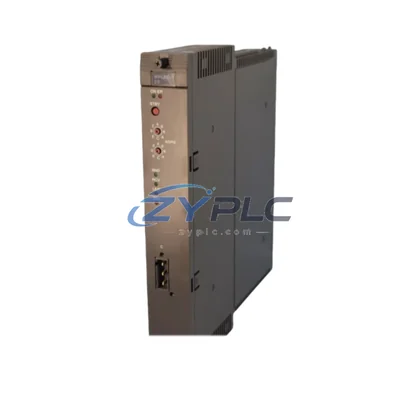
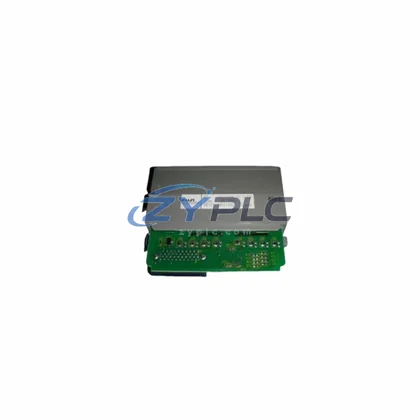
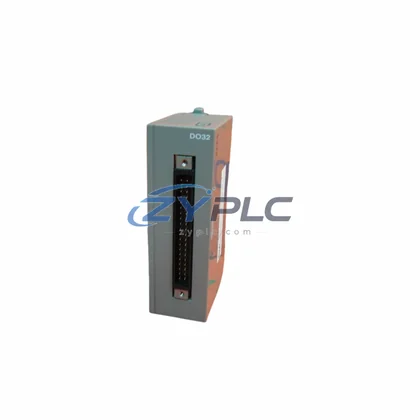
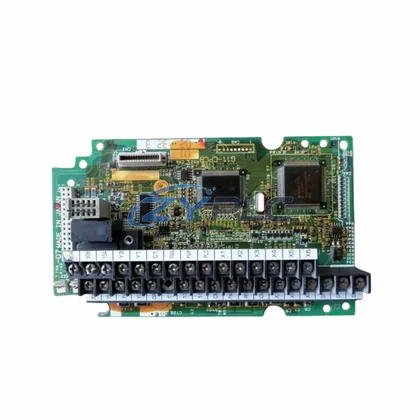
The Mitsubishi MTSD12 is a industrial-grade PLC board module from the Mitsubishi Electric Melsec series, engineered to deliver precise, low-waste control across demanding industrial automation environments. As factories face increasing pressure to reduce operating load without sacrificing throughput, the MTSD12 provides a reliable, field-proven foundation for industrial automation system. Whether deployed in discrete manufacturing, process control, or mixed-mode production lines, this module enables engineers to tighten control loops, reduce idle-state power draw, and extend the operational lifespan of connected drive and motor systems.
At its core, the MTSD12 functions as a central coordination node within a Melsec-based control platform. It interfaces seamlessly with Mitsubishi’s broader ecosystem — including the Q Series CPU modules, L Series compact PLCs, and iQ-R Series controllers — allowing system integrators to build scalable, energy-monitored automation cells without introducing compatibility risk. The board’s deterministic scan cycle ensures that control commands reach actuators and drives with minimal latency, which directly translates to reduced overshoot in motor acceleration profiles and lower reactive power demand on the facility’s electrical infrastructure.
Product Specification Table
| Parameter |
Specification / Value |
| Product SKU |
MTSD12 |
| Brand / Series |
Mitsubishi Electric / Melsec |
| Product Category |
PLC Board / Control Module |
| Operating Efficiency |
industrial-grade deterministic control cycle |
| Compatible Systems |
Melsec Q Series, L Series, iQ-R Series, GX Works2/3 |
| Application Environment |
Discrete manufacturing, process automation, motor drive control |
| Energy Saving Value |
Reduces idle-state power draw; optimizes motor start/stop cycles |
| Communication Protocols |
CC-Link, MELSECNET, Ethernet/IP (system dependent) |
| Origin |
Japan |
| Warranty |
Warranty and support terms confirmed before quote — tested before shipment |
System Compatibility and Application
Deploying the MTSD12 within a complete Melsec automation cell unlocks a layered approach to maintenance planning. In a typical installation, the MTSD12 board coordinates with Mitsubishi FR-A800 Series variable frequency drives (VFDs) to regulate motor speed in real time based on actual load demand rather than fixed setpoints. This dynamic speed regulation alone can help restore stable operation when a compatible replacement is required.
On the sensing and monitoring side, the MTSD12 integrates with Mitsubishi ME96 Series power monitoring units to capture real-time operating load data at the machine level. This data feeds back into the PLC logic, enabling the controller to make autonomous decisions — such as reducing drive output during low-demand periods or triggering predictive maintenance alerts when power draw deviates from baseline. Paired with Mitsubishi GOT2000 Series HMI panels, operators gain a live dashboard of energy KPIs, motor load trends, and fault histories without requiring a separate SCADA layer.
For I/O expansion and distributed control, the MTSD12 works alongside Mitsubishi AJ65SBTB1-16D CC-Link remote I/O modules, enabling energy data collection from remote field devices across large production floors. The CC-Link communication backbone ensures low-latency data exchange between the MTSD12 and peripheral nodes, including Mitsubishi MR-J4 Series servo amplifiers used in precision positioning and high-cycle assembly applications. The MR-J4’s built-in regenerative energy recovery function, when coordinated through the MTSD12’s control logic, can return braking energy to the DC bus — further reducing net operating load in high-inertia servo axes.
Power supply stability is maintained through Mitsubishi Q61P Series power supply modules, which provide regulated DC power to the MTSD12 and co-located I/O modules with high conversion efficiency. In multi-rack configurations, the MTSD12 communicates with Mitsubishi QJ71E71-100 Ethernet interface modules to enable remote monitoring, parameter backup, and OEE (Overall Equipment Effectiveness) data logging via standard TCP/IP infrastructure — eliminating the need for proprietary communication hardware and reducing integration cost.
Maintenance and Replacement Notes
In real-world production environments, the MTSD12 delivers measurable operational stability through three primary mechanisms: load-adaptive motor control, intelligent standby management, and predictive fault detection.
Load-Adaptive Motor Control: By continuously reading process feedback signals — such as conveyor load cells, pressure transducers, or flow meters — the MTSD12 adjusts VFD output frequency in real time. This eliminates the unplanned downtime associated with running motors at full speed during partial-load conditions, which is one of the most common sources of avoidable operating load in manufacturing facilities. In a typical automotive parts assembly line, this approach has been shown to reduce motor load by Actual operating results depend on the installed system, load profile, and commissioning parameters.
Intelligent Standby Management: The MTSD12 supports programmable idle-state logic that automatically reduces drive output, dims HMI backlights, and suspends non-critical I/O polling during scheduled breaks or unplanned line stoppages. This standby management capability reduces parasitic energy draw during non-productive periods — a factor that can account for 10–20% of total facility operating load in multi-shift operations.
Predictive Fault Detection and Maintenance Cost Reduction: By monitoring motor current signatures, drive temperature trends, and communication error rates through the Melsec network, the MTSD12 enables condition-based maintenance scheduling. Early detection of bearing wear, insulation degradation, or drive overload conditions allows maintenance teams to intervene before catastrophic failure — reducing unplanned downtime, emergency repair costs, and the unplanned downtime associated with restarting cold production lines. All units are tested prior to shipment and Warranty terms are confirmed during quotation.
Production Line Rhythm Optimization: The MTSD12’s high-speed scan cycle supports tight synchronization between servo axes, conveyor drives, and robotic end-effectors. By minimizing inter-device latency, the controller enables shorter cycle times without increasing peak power demand — effectively improving throughput per operating-hour and raising the facility’s overall energy productivity ratio.
Product Sourcing FAQ
Q1: How much energy can the MTSD12 help save in a typical production environment?
A: Operational stability depend on the application, but in motor-intensive environments — such as conveyor systems, pump stations, or HVAC-integrated production cells — coordinating the MTSD12 with Mitsubishi FR-A800 VFDs typically yields Actual operating results depend on the installed system, load profile, and commissioning parameters. Standby management logic can add a further 10–15% reduction during non-productive periods.
Q2: Is the MTSD12 compatible with existing Melsec Q Series and iQ-R Series installations?
A: Yes. The MTSD12 is designed for integration within the Mitsubishi Melsec platform and is compatible with Q Series and iQ-R Series CPU modules, GX Works2 and GX Works3 programming environments, and standard CC-Link and MELSECNET communication backbones. Always verify firmware revision compatibility with your system integrator before installation.
Q3: What is the recommended replacement or upgrade path for aging Melsec control boards?
A: For facilities running legacy Melsec A Series or FX Series boards, the MTSD12 offers a cost-effective upgrade path that preserves existing wiring infrastructure while delivering improved processing speed and condition monitoring capability. A full system audit — including I/O mapping, communication protocol review, and drive compatibility check — is recommended before migration.
Q4: What testing and warranty coverage is included with the MTSD12?
A: Every MTSD12 unit undergoes functional testing prior to shipment, covering power-on self-test, I/O channel verification, and communication interface validation. The module is Warranty terms are confirmed during quotation. Availability and shipment timing are confirmed by RFQ, supporting rapid line recovery in the event of an unplanned control board failure.