OMRON CP1W-40EDT1: Industrial Data Link and Smart Factory Connectivity for CP Series Systems
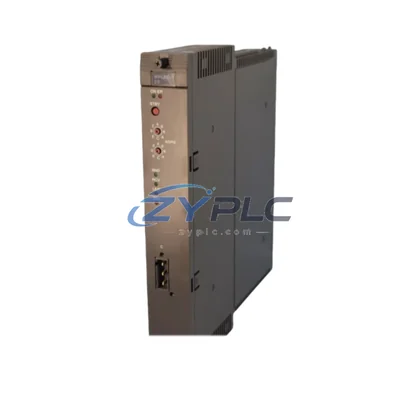
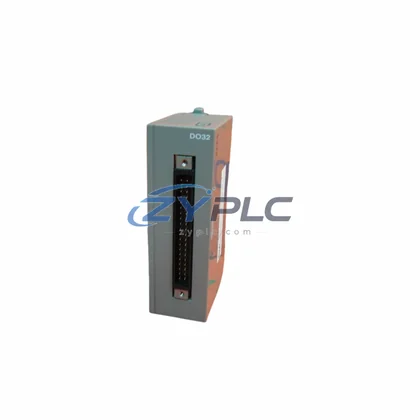
The OMRON CP1W-40EDT1 is a high-density digital I/O expansion unit engineered for seamless integration into CP Series and CJ Series PLC architectures. Featuring 24 transistor inputs and 16 NPN transistor outputs, this module extends the signal acquisition and control capacity of the host CPU unit, forming a critical node in the industrial data chain that connects field devices, controllers, and supervisory systems. In smart factory environments where real-time data flow, protocol consistency, and network stability are non-negotiable, the CP1W-40EDT1 delivers the I/O density and electrical reliability required to sustain continuous production operations.
Compatibility & Integration Notes
| Specification |
Detail |
| SKU / Part Number |
CP1W-40EDT1 |
| Brand |
OMRON |
| Compatible Series |
CP1H, CP1L, CP1E, CJ2M, CJ2H |
| Input Points |
24 x Transistor (NPN/Sink) |
| Output Points |
16 x Transistor NPN (Sink) |
| Communication Interface |
CP Series Expansion Bus (proprietary backplane) |
| Protocol Support |
FINS, EtherNet/IP (via host CPU), Modbus TCP (via gateway) |
| Network Compatibility |
EtherNet/IP, PROFIBUS-DP (via gateway), DeviceNet, Modbus RTU/TCP |
| System Application |
PLC I/O Expansion, Remote I/O Node, SCADA Integration, HMI Data Acquisition |
| Power Supply |
Supplied via CP Series CPU or Power Supply Unit |
| Operating Temperature |
0°C to 55°C |
| Origin |
Japan |
| Warranty |
12 Months |
Connected Automation Data Flow
In a typical smart factory deployment, the CP1W-40EDT1 sits at the edge of the control layer, directly interfacing with sensors, actuators, and field instruments. Signal acquisition begins at the 24 digital inputs, where proximity sensors, photoelectric sensors, and limit switches feed real-time status data into the OMRON CP1H-X40DT-D or CP1L-M60DR-D CPU unit via the CP Series expansion bus. The CPU processes this data and executes ladder logic at scan cycle speeds that support time-critical control loops.
As the control layer communicates upward, the host CPU’s built-in EtherNet/IP port or an attached CJ1W-EIP21 EtherNet/IP Unit bridges the CP Series backplane to the plant Ethernet network. This enables the CP1W-40EDT1’s I/O status to be polled by SCADA platforms such as OMRON SCADA software or third-party systems via the FINS/TCP protocol. HMI panels — including the OMRON NB7W-TW01B or NA5-15W101B — can display live I/O states, alarm conditions, and production counters sourced directly from the expansion unit’s input registers.
For sites requiring protocol conversion — for example, integrating legacy PROFIBUS-DP field devices or Modbus RTU sensors — an OMRON CJ1W-PRM21 PROFIBUS Master Unit or a dedicated industrial gateway such as the Anybus X-gateway can be inserted between the CP Series network and the field bus segment. This architecture eliminates data silos by normalizing heterogeneous device data into a unified EtherNet/IP or FINS data space accessible to the SCADA historian and MES layer.
On the output side, the 16 NPN transistor outputs of the CP1W-40EDT1 drive solenoid valves, relay coils, indicator lights, and variable frequency drives (VFDs) such as the OMRON MX2 Series inverter. Drive run/stop commands and speed reference signals originate from the PLC program, pass through the expansion unit’s output terminals, and reach the VFD’s digital input terminals — completing the closed-loop control chain from SCADA command to physical actuator response. For distributed I/O architectures, the OMRON GRT1-ML2 CompoNet Remote I/O can extend the I/O network beyond the local panel, connecting remote field stations back to the same CP Series CPU over a CompoNet or EtherNet/IP segment.
Edge computing nodes, such as the OMRON NYB Industrial Box PC, can subscribe to the CP Series data via OPC UA or FINS, enabling local analytics, predictive maintenance algorithms, and real-time KPI dashboards without burdening the PLC scan cycle. This layered architecture — from the CP1W-40EDT1 at the field level through the CP Series CPU, EtherNet/IP network, SCADA, and edge analytics — represents the complete industrial data chain that modern smart factories depend on.
Solving Data Isolation in Industrial Sites
Many industrial sites operate with a patchwork of legacy PLCs, proprietary field buses, and isolated control islands that prevent plant-wide visibility. The CP1W-40EDT1, when deployed as part of a CP Series system, directly addresses these challenges:
Protocol Fragmentation: By hosting the CP1W-40EDT1 under a CP1H or CJ2M CPU equipped with EtherNet/IP and FINS communication, engineers can bridge Modbus RTU devices, DeviceNet sensors, and EtherNet/IP controllers into a single unified data namespace. Protocol gateways normalize the data before it reaches the SCADA historian, eliminating the need for custom middleware.
Data Isolation and Production Transparency: The CP1W-40EDT1’s 40-point I/O capacity allows a single expansion unit to consolidate signals from multiple production zones — conveyor status, machine interlocks, quality inspection triggers — into one addressable data block. SCADA and MES systems can query this block in real time, providing operators with a transparent view of production line status without manual data collection.
Remote Monitoring and Diagnostics: Through the host CPU’s Ethernet port, maintenance engineers can remotely access the CP Series program, monitor I/O status, and diagnose faults without physical presence on the factory floor. OMRON’s CX-Programmer and CX-Supervisor tools support remote online monitoring, enabling rapid fault isolation and reduced mean time to repair (MTTR).
System Scalability: The CP Series expansion bus supports up to 7 expansion units per CPU, allowing the I/O count to grow incrementally as production lines expand. Additional CP1W modules — analog input units, temperature sensor units, or communication cartridges — can be added without replacing the host CPU, protecting the capital investment in the control architecture.
Industrial Connectivity FAQ
Q1: Does the CP1W-40EDT1 support EtherNet/IP communication directly?
The CP1W-40EDT1 itself communicates via the CP Series proprietary expansion bus and does not have an independent Ethernet port. EtherNet/IP connectivity is provided by the host CPU unit (e.g., CP1H-X40DT-D with built-in EtherNet/IP) or by adding a CJ1W-EIP21 EtherNet/IP unit to the CJ Series rack. The I/O data from the expansion unit is mapped into the CPU’s memory and made available over EtherNet/IP to SCADA, HMI, and other network nodes.
Q2: Can the CP1W-40EDT1 be integrated with third-party SCADA systems using Modbus TCP?
Yes. When the host CP Series CPU is connected to the plant Ethernet network, Modbus TCP communication can be enabled via the FINS-to-Modbus gateway function available in compatible CPU firmware versions, or through a dedicated protocol converter. This allows third-party SCADA platforms — including Wonderware, Ignition, and Inductive Automation — to read and write CP Series I/O data using standard Modbus TCP register addressing.
Q3: What is the maximum number of CP1W-40EDT1 units that can be connected to a single CP Series CPU?
The CP Series expansion bus supports a maximum of 7 expansion units per CPU unit, subject to the total I/O point limit of the specific CPU model. For the CP1H-X40DT-D, the combined I/O count including expansion units must not exceed 320 points. Engineers should verify the I/O budget against the CPU datasheet before finalizing the expansion configuration.
Q4: What warranty and pre-shipment testing does ZYPLC provide for the CP1W-40EDT1?
All CP1W-40EDT1 units supplied by ZYPLC are covered by a warranty terms confirmed during quotation against manufacturing defects and functional failures. Each unit undergoes pre-shipment functional testing to verify input response, output switching, and bus communication integrity before dispatch. Availability is confirmed via RFQ for same-week shipment, and our technical team can provide configuration support, compatibility verification, and application engineering assistance upon request.