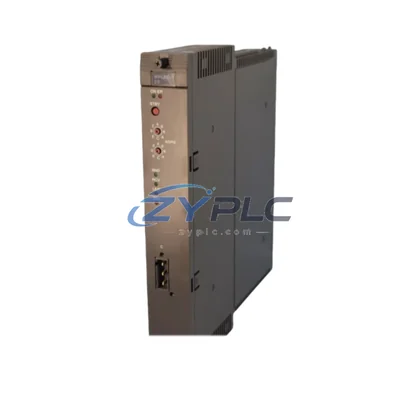
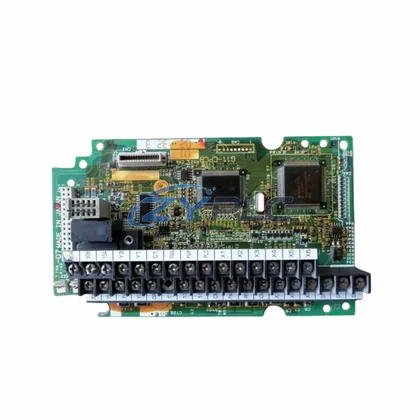
Omron CPM1A-20CDR-A-V1 Compact PLC for CPM1A
The Omron CPM1A-20CDR-A-V1 is a compact, relay-output programmable logic controller engineered for seamless integration within the CPM1A control system architecture. Designed to serve as the central processing unit in small-to-medium automation systems, this controller delivers reliable digital I/O management, deterministic scan-cycle execution, and robust communication capability across a wide range of industrial environments. Whether deployed in standalone machine control or embedded within a layered distributed control system, the CPM1A-20CDR-A-V1 provides the processing consistency and architectural compatibility that system engineers depend on for long-term operational stability.
In modern industrial automation, no controller operates in isolation. The CPM1A-20CDR-A-V1 is purpose-built to function as a coordinated node within a broader control hierarchy — interfacing with upstream supervisory systems, downstream field devices, and peer-level I/O expansion modules. Its architecture supports structured ladder logic programming, enabling engineers to implement complex interlocking, sequencing, and conditional control routines that align with IEC 61131-3 programming standards. The controller’s deterministic cycle time ensures that time-critical processes — such as conveyor synchronization, valve sequencing, and motor interlock management — are executed with the precision required in production-grade environments.
From a system architecture perspective, the CPM1A-20CDR-A-V1 occupies the control layer, receiving process data from field-level sensors and actuators while transmitting status and command signals to higher-level SCADA or HMI platforms. Its relay output configuration makes it particularly well-suited for applications requiring direct switching of inductive loads, solenoid valves, and motor starters without the need for intermediate relay panels. This reduces panel complexity, lowers wiring costs, and improves overall system maintainability — a critical consideration in facilities where uptime is paramount.
Product Specification Table
| System Role |
Compact PLC CPU — Control Layer Node |
| Model |
CPM1A-20CDR-A-V1 |
| Brand |
Omron |
| Series |
CPM1A |
| I/O Points |
20 (12 Inputs / 8 Outputs) |
| Output Type |
Relay (R) |
| Power Supply |
AC 100–240V |
| Program Capacity |
2,048 Instructions |
| Data Memory |
1,024 Words |
| Communication Port |
RS-232C (Peripheral Port) |
| Expansion Capability |
Up to 3 Expansion I/O Units |
| Operating Temperature |
0°C to 55°C |
| Protection Rating |
IP20 |
| Mounting |
DIN Rail / Panel Mount |
| Origin |
Japan |
| Product Category |
Programmable Logic Controllers (PLCs) |
| Warranty |
warranty terms confirmed during quotation |
System Compatibility Notes
The CPM1A-20CDR-A-V1 achieves its full potential when integrated within a coordinated CPM1A-series control architecture. In a typical system deployment, the controller operates alongside expansion I/O units such as the CPM1A-8ER (8-point relay output expansion) and the CPM1A-MAD01 (analog I/O expansion unit), extending the base I/O count to accommodate more complex process variables without requiring a larger CPU platform. For applications demanding analog signal conditioning — such as temperature loop control or pressure regulation — the CPM1A-MAD01 provides the necessary conversion bridge between field transmitters and the digital processing core of the CPM1A-20CDR-A-V1.
Power integrity is foundational to system reliability. The CQM1-PA206 power supply unit is commonly paired with CPM1A-series controllers in panel builds where stable 24VDC field power is required alongside the AC-powered CPU. For communication-intensive architectures, the CPM1-CIF01 RS-232C adapter enables direct PC-to-PLC programming and monitoring connections, while the CPM1-CIF11 RS-422A adapter supports multi-drop network configurations where multiple CPM1A controllers share a single supervisory communication bus.
At the human-machine interface layer, the NT31-ST123-V3 operator terminal integrates natively with the CPM1A-20CDR-A-V1 via the NT Link protocol, providing operators with real-time process visualization, alarm management, and parameter adjustment capability without requiring a separate SCADA server. For larger installations requiring centralized monitoring, the CPM1A-20CDR-A-V1 can be networked to a host CQM1H or CS1-series controller using the CS1W-SCB21-V1 serial communication board, enabling hierarchical data aggregation across multiple machine cells.
Temperature monitoring applications benefit from the addition of the CPM1A-TS002 temperature sensor unit, which connects directly to the CPM1A expansion bus and supports thermocouple inputs for furnace, oven, or heat-treatment process control. For output-intensive applications such as multi-axis conveyor control, the CPM1A-40CDR-A-V1 (40-point relay output variant) or the CPM1A-30CDR-A-V1 (30-point variant) may be selected as the primary CPU, with the CPM1A-20CDR-A-V1 serving as a satellite controller in a distributed I/O topology. This modular approach to system design ensures that control capacity can be scaled incrementally as production requirements evolve, without necessitating a complete platform migration.
Industrial Application Notes
The CPM1A-20CDR-A-V1 is deployed across a broad spectrum of industrial sectors where compact, reliable, and cost-effective PLC control is required. In manufacturing and assembly lines, the controller manages conveyor sequencing, part detection, and reject gate actuation, providing the deterministic control response needed to maintain production throughput targets. Its relay output configuration is particularly valued in environments where direct load switching eliminates the need for intermediate relay panels, reducing both panel footprint and potential failure points.
In water treatment and pumping stations, the CPM1A-20CDR-A-V1 controls pump start/stop sequences, level switch interlocks, and chemical dosing valve actuation. Its wide operating temperature range and DIN rail mounting make it suitable for installation in outdoor equipment enclosures and remote pump houses where environmental conditions are variable. The controller’s low power consumption and compact form factor also make it an ideal choice for building automation and HVAC control applications, where panel space is limited and system reliability over multi-year operational cycles is essential.
In power distribution and electrical substation applications, the CPM1A-20CDR-A-V1 provides auxiliary control for circuit breaker interlocking, transformer cooling fan management, and alarm annunciation systems. Its relay outputs are rated for direct switching of control circuit loads, eliminating the need for additional output relay modules in many standard substation control panel configurations. For packaging and material handling systems, the controller’s high-speed input capability supports encoder feedback and proximity sensor integration, enabling precise position control and product counting functions within high-speed production environments.
Product Compatibility FAQ
Q1: How many expansion I/O units can be connected to the CPM1A-20CDR-A-V1, and which expansion modules are compatible?
The CPM1A-20CDR-A-V1 supports connection of up to three CPM1A-series expansion units, including digital I/O expansion modules (such as the CPM1A-8ER and CPM1A-20EDR1), analog I/O units (CPM1A-MAD01), and temperature sensor units (CPM1A-TS002). All expansion units connect via the dedicated expansion I/O connector on the right side of the CPU unit and are powered directly from the CPU’s internal bus, eliminating the need for separate expansion power supplies in most standard configurations.
Q2: Is the CPM1A-20CDR-A-V1 compatible with existing CPM1A-series programs and communication networks, and can it be integrated into a mixed-generation Omron control architecture?
Yes. The CPM1A-20CDR-A-V1 maintains full instruction set and I/O address compatibility with the broader CPM1A product family, allowing existing ladder logic programs developed for other CPM1A-series CPUs to be transferred with minimal modification. For integration into mixed-generation Omron architectures — including systems incorporating CQM1H, CS1, or CJ1 series controllers — the CPM1-CIF01 or CPM1-CIF11 communication adapters enable serial network connectivity, supporting Host Link (SYSMAC WAY) protocol for supervisory data exchange. This ensures that the CPM1A-20CDR-A-V1 can serve as a subordinate controller within a hierarchical automation network without requiring protocol conversion hardware.
Q3: What does the warranty terms confirmed during quotation cover, and how does ZYPLC support long-term maintenance and spare parts availability for the CPM1A-20CDR-A-V1?
The warranty terms confirmed during quotation covers manufacturing defects and functional failures under normal operating conditions from the date of shipment. ZYPLC maintains dedicated inventory of CPM1A-series components to support both immediate replacement needs and long-term maintenance planning for installed systems. In the event of a warranty claim, our technical team provides fault diagnosis support and expedited replacement dispatch to minimize system downtime. For facilities managing multi-unit CPM1A deployments, ZYPLC recommends maintaining a defined spare parts inventory — including at least one CPM1A-20CDR-A-V1 CPU unit and compatible expansion modules — to ensure rapid recovery capability in the event of an unplanned controller failure.