OMRON CPM2C-32EDTM Industrial Network Interface for CPM2C Systems: Bridging Field Devices and Smart Factory Data Flows
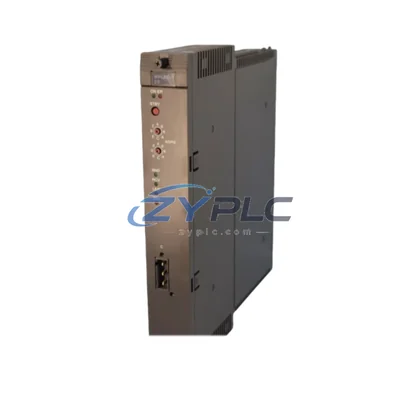
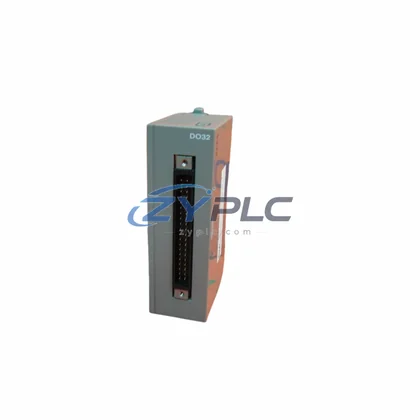
The OMRON CPM2C-32EDTM is a high-density 32-point digital expansion I/O unit engineered for the CPM2C compact PLC series. Designed to extend the I/O capacity of CPM2C controllers in space-constrained industrial environments, this module delivers reliable transistor output performance and seamless integration into modern smart factory architectures. Whether deployed on a discrete manufacturing line, a process control panel, or a distributed automation network, the CPM2C-32EDTM serves as a critical node in the industrial data chain — connecting field-level signals to PLC logic, SCADA systems, and upper-level MES platforms.
In today’s connected factory, every sensor signal, actuator command, and device status must flow accurately and in real time from the field layer to the control layer and beyond. The CPM2C-32EDTM fulfills this role by expanding the native I/O capacity of the CPM2C CPU unit, enabling engineers to scale automation systems without replacing the core controller infrastructure. Its compact form factor and DIN-rail mounting make it ideal for panel-space-sensitive installations, while its transistor output design ensures fast switching response for high-frequency control tasks.
Compatibility & Integration Notes
| Parameter |
Specification |
| SKU / Model |
CPM2C-32EDTM |
| Brand |
OMRON |
| Series |
CPM2C |
| I/O Points |
32 Points (16 Inputs / 16 Outputs) |
| Output Type |
Transistor (NPN/Sinking) |
| Communication Protocol |
OMRON Peripheral Bus (CPM2C Expansion Bus) |
| Interface Type |
Direct Expansion Connector to CPM2C CPU |
| Network Compatibility |
Compatible with CPM2C-S series CPU units; integrates with CompoBus/S, DeviceNet via gateway modules |
| System Application |
PLC I/O Expansion, SCADA Integration, HMI Data Acquisition, Remote Monitoring |
| Power Supply |
Supplied via CPM2C CPU backplane bus |
| Operating Temperature |
0°C to 55°C |
| Origin |
Japan |
| Warranty |
warranty terms confirmed during quotation |
Connected Automation Data Flow
The CPM2C-32EDTM sits at the heart of a layered industrial data flow. At the field level, digital sensors — including proximity switches, photoelectric sensors, and limit switches — feed their binary signals directly into the module’s 16 input channels. These signals are processed by the OMRON CPM2C-S110-DRT-D CPU unit, which executes ladder logic and generates output commands distributed through the CPM2C-32EDTM’s 16 transistor output channels to drive solenoid valves, indicator lights, and relay coils.
For applications requiring network-level data visibility, the CPM2C system can be extended via the OMRON CPM2C-CIF01 RS-232C communication adapter, enabling serial data exchange with HMI panels such as the OMRON NB7W-TW01B touchscreen. This allows operators to monitor I/O status, acknowledge alarms, and adjust setpoints directly from the panel interface — without interrupting the PLC scan cycle.
When the factory network demands higher-level integration, a CompoBus/S gateway module such as the OMRON SRT2-series remote I/O slave can be paired with the CPM2C system to extend digital I/O nodes across the production floor over a high-speed serial bus. This architecture eliminates long home-run wiring runs and reduces installation costs in large-scale panel layouts.
For SCADA connectivity, the CPM2C-32EDTM-equipped controller communicates upstream via the OMRON CX-Server OPC driver or third-party OPC-DA/UA servers, feeding real-time I/O data into supervisory platforms such as Wonderware, Ignition, or OMRON’s own CX-Supervisor SCADA software. This enables plant-wide dashboards, trend logging, and alarm management based on live field data captured through the CPM2C-32EDTM’s input channels.
In drive control applications, the CPM2C-32EDTM output channels interface with OMRON 3G3MX2-series inverters via discrete run/stop and speed-select signals, providing basic variable frequency drive control without requiring a dedicated fieldbus connection. For more advanced drive integration, a DeviceNet communication unit can be added to the CPM2C system to enable parameter read/write and fault diagnostics over the DeviceNet network.
Edge computing scenarios benefit from pairing the CPM2C system with an industrial edge gateway — such as the OMRON NY-series IPC — which aggregates PLC data via serial or Ethernet and forwards it to cloud-based MES or ERP platforms for production analytics, OEE calculation, and predictive maintenance workflows. The CPM2C-32EDTM’s reliable I/O data forms the foundational signal layer for these higher-level digital transformation initiatives.
Solving Data Isolation in Industrial Sites
One of the most persistent challenges in legacy and mid-scale industrial facilities is data isolation — where field devices, PLCs, and upper systems operate in silos, making it impossible to achieve real-time production transparency. The OMRON CPM2C-32EDTM directly addresses this challenge by expanding the I/O capacity of the CPM2C controller, allowing more field devices to be connected to a single control node and reducing the number of isolated control islands on the production floor.
Protocol fragmentation is another common barrier. Many older installations mix devices with incompatible communication standards — RS-232C, RS-485, CompoBus/S, and DeviceNet — making unified data collection difficult. The CPM2C platform, with the CPM2C-32EDTM as its I/O backbone, supports gateway-based protocol bridging through optional communication adapters, enabling a single CPM2C controller to serve as a protocol aggregation point for mixed-protocol device networks.
Remote monitoring and diagnostics are increasingly critical for reducing unplanned downtime. By connecting the CPM2C system to an OPC server or SCADA platform, maintenance teams gain remote visibility into the real-time status of every I/O point managed by the CPM2C-32EDTM — enabling predictive fault detection, remote alarm acknowledgment, and historical data logging without requiring on-site personnel for routine status checks.
System scalability is built into the CPM2C architecture. Up to three expansion I/O units — including additional CPM2C-32EDTM modules — can be connected to a single CPM2C CPU, allowing the control system to grow incrementally as production requirements expand. This modular expansion approach protects the initial hardware investment while providing a clear upgrade path for future automation phases.
All units supplied by ZYPLC undergo pre-shipment functional testing to verify I/O channel integrity, communication bus handshake, and output switching performance. Stock availability is maintained for rapid order fulfillment, and every CPM2C-32EDTM is backed by a warranty terms confirmed during quotation covering manufacturing defects and operational failures under normal industrial use conditions.
Industrial Connectivity FAQ
Q1: Does the CPM2C-32EDTM support real-time communication with SCADA systems?
The CPM2C-32EDTM itself is an expansion I/O unit that communicates directly with the CPM2C CPU via the internal expansion bus. SCADA connectivity is achieved at the CPU level through serial communication adapters (RS-232C/RS-485) or OPC server drivers, which expose all I/O data — including points managed by the CPM2C-32EDTM — to supervisory platforms in real time.
Q2: Is the CPM2C-32EDTM compatible with DeviceNet or CompoBus/S networks?
The CPM2C-32EDTM connects directly to the CPM2C CPU expansion bus and does not independently participate in DeviceNet or CompoBus/S networks. However, when the CPM2C CPU is equipped with the appropriate network communication unit or gateway adapter, the entire CPM2C system — including I/O managed by the CPM2C-32EDTM — becomes accessible over these industrial networks.
Q3: How many CPM2C-32EDTM units can be connected to a single CPM2C CPU?
The CPM2C series supports connection of up to three expansion I/O units per CPU unit. This allows a maximum expansion of 96 additional I/O points (using three CPM2C-32EDTM modules), providing significant scalability for growing automation applications without requiring a controller upgrade.
Q4: What warranty and testing standards apply to CPM2C-32EDTM units supplied by ZYPLC?
Every CPM2C-32EDTM supplied by ZYPLC is covered by a warranty terms confirmed during quotation against manufacturing defects and operational failures. Prior to shipment, each unit undergoes functional verification testing including I/O channel continuity checks and expansion bus communication validation, ensuring the module arrives ready for immediate installation and commissioning.