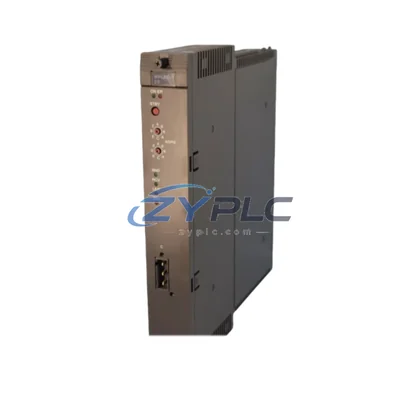
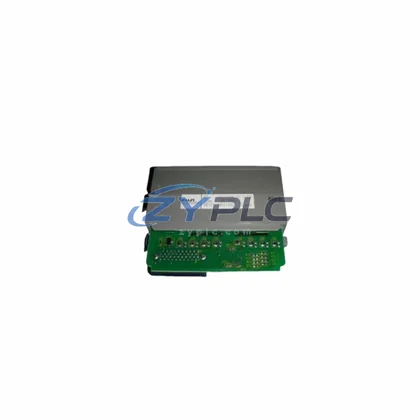
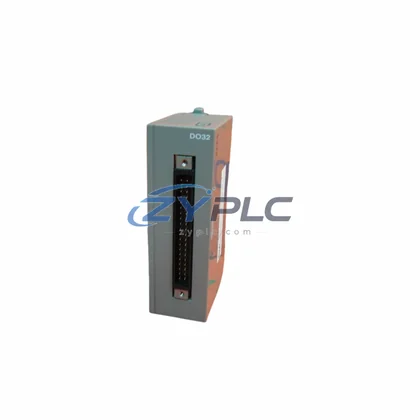
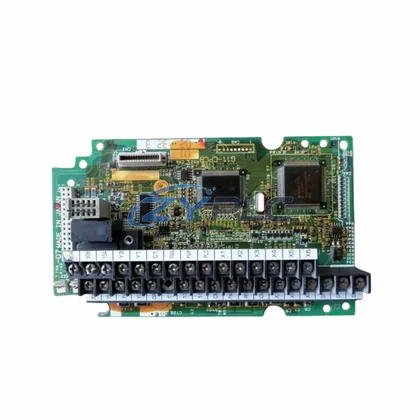
The Omron OPIC1 is a industrial-grade photoelectric sensor controller belonging to Omron’s renowned E3X series — a platform engineered specifically for demanding industrial environments where energy precision, detection reliability, and minimal downtime are non-negotiable. In modern manufacturing, every watt of unnecessary power consumption and every millisecond of unplanned downtime translates directly into lost productivity and inflated operational costs. The OPIC1 addresses these challenges at the sensing layer, delivering stable, low-power optical signal processing that feeds accurate real-time data into the broader automation architecture.
Unlike conventional sensor controllers that operate at fixed sensitivity thresholds regardless of ambient conditions, the OPIC1 employs adaptive signal processing to maintain detection accuracy while minimizing power draw. This makes it an ideal front-end component in maintenance-focused production lines where sensor data quality directly influences the efficiency of downstream drive and control systems.
Product Specification Table
| Parameter |
Specification / Value |
| SKU |
OPIC1 |
| Brand / Series |
Omron / E3X |
| Product Type |
Photoelectric Sensor Controller (Fiber Amplifier Unit) |
| Power Consumption |
Low-power design; optimized for continuous 24/7 industrial operation |
| Operating Voltage |
12–24 V DC (compatible with standard PLC I/O power rails) |
| Response Frequency |
High-speed response for precise production line timing control |
| Output Type |
NPN / PNP transistor output; compatible with major PLC input modules |
| Compatible Systems |
Omron CJ/CS/NX/NJ series PLCs, Mitsubishi MELSEC, Siemens S7 I/O modules |
| Application Environment |
Assembly lines, packaging machinery, conveyor systems, semiconductor fab, food processing |
| Energy Saving Value |
Reduces false triggers and redundant actuator cycles, lowering system-wide unplanned downtime |
| Origin |
Japan |
| Warranty |
Warranty and support terms confirmed before quote — tested and verified before shipment |
System Compatibility and Application
The OPIC1 does not operate in isolation — its true value emerges when integrated into a coherent, industrial automation system. At the control layer, the OPIC1 feeds detection signals directly into an Omron CJ2M CPU unit or NX1P2 compact machine controller, where the PLC logic interprets sensor states to trigger or suppress actuator commands. By eliminating false positives at the sensing stage, the OPIC1 prevents unnecessary activation of pneumatic cylinders, servo drives, and conveyor motors — each of which represents a discrete energy cost per cycle.
On the drive side, accurate sensor feedback from the OPIC1 enables tighter coordination with Omron MX2 series inverters and 3G3RX variable frequency drives, allowing motor speed to be modulated precisely in response to actual workpiece presence rather than fixed timing schedules. This demand-driven motor control approach can help restore stable operation when a compatible replacement is required.
For servo-driven positioning axes, the OPIC1 integrates cleanly with Omron G5 series servo drives paired with R88M servo motors, providing the position trigger signals needed for high-accuracy pick-and-place and press-fit operations. Precise triggering eliminates dwell time at end-of-travel positions, reducing heat generation in servo amplifiers and extending motor insulation life.
At the I/O expansion layer, the OPIC1 connects through standard Omron GX-series EtherCAT remote I/O terminals or CJ1W-ID211 digital input modules, enabling distributed sensor networks across large production cells without signal degradation. This distributed architecture reduces wiring harness complexity and the associated voltage drop losses that contribute to hidden downtime in large installations.
For condition monitoring and power quality analysis, the OPIC1-equipped line benefits from integration with Omron KM-N2 power monitors or KM50 series energy measurement units, which capture real-time kWh consumption data at the panel level. When sensor-triggered actuator cycles are logged against power consumption timestamps, maintenance engineers can identify energy spikes correlated with specific detection events — a key input for predictive maintenance scheduling.
At the HMI layer, operators interact with the system through an Omron NB7W-TW01B touchscreen HMI or NA5 series panel, where sensor status, detection counts, and energy trend data are visualized in real time. This visibility enables shift supervisors to identify underperforming detection zones before they cause line stoppages, supporting a proactive rather than reactive maintenance culture.
Maintenance and Replacement Notes
In a typical automotive parts assembly line running two shifts per day, photoelectric sensor controllers like the OPIC1 are responsible for triggering hundreds of thousands of detection events per shift. Each false trigger — caused by ambient light interference, contaminated fiber tips, or poorly calibrated sensitivity — results in an unnecessary actuator cycle. On a line with 40 pneumatic cylinders averaging 8W of solenoid valve power each, even a 5% false-trigger rate across 500,000 daily cycles generates measurable wasted energy and accelerated valve wear.
The OPIC1’s stable detection performance under variable ambient conditions directly reduces this false-trigger rate. Combined with the E3X series’ digital sensitivity display, maintenance technicians can verify and fine-tune detection margins during scheduled PM windows rather than reacting to nuisance stops. This shift from reactive to scheduled maintenance reduces unplanned downtime — one of the largest hidden energy costs in manufacturing, since idle lines with powered-up drives, HVAC, and lighting consume 40–60% of their running energy without producing output.
On packaging lines where the OPIC1 monitors label presence, cap detection, or fill-level verification, accurate detection directly controls the reject rate. Fewer false rejects mean less rework energy, less compressed air consumed by reject blow-off nozzles, and less material waste — all of which contribute to a measurable reduction in the line’s energy intensity per unit produced.
For facilities pursuing ISO 50001 maintenance planning certification or internal carbon reduction targets, deploying high-accuracy sensor controllers like the OPIC1 at every detection point in the production process provides a granular foundation for energy data collection. When each detection event is timestamped and correlated with drive energy logs from the MX2 inverters and power monitor data from the KM-N2 units, the facility gains the sensor-to-meter data chain needed to calculate and report energy per unit produced — a core metric for industrial maintenance planning programs.
Every OPIC1 unit shipped by ZYPLC undergoes full functional testing prior to dispatch, including output signal verification, sensitivity calibration check, and power consumption measurement. Units are supplied with a warranty and support terms confirmed before quote covering manufacturing defects and operational failures under normal industrial use conditions. Availability confirmed by RFQ inventory ensures short lead times, supporting both planned maintenance replacements and urgent breakdown scenarios.
Product Sourcing FAQ
Q1: How does the Omron OPIC1 contribute to reducing operating load on a production line?
The OPIC1 reduces unplanned downtime by delivering highly accurate detection signals that prevent false actuator triggers. Each unnecessary actuator cycle — whether a pneumatic valve, servo move, or conveyor start — consumes energy without producing output. By minimizing false triggers, the OPIC1 reduces the total number of actuator cycles per shift, directly lowering operating load at the drive and pneumatic layers of the automation system.
Q2: Is the OPIC1 compatible with PLCs and inverters from other brands?
Yes. The OPIC1 outputs a standard NPN or PNP transistor signal at 12–24 V DC, which is compatible with the digital input modules of all major PLC platforms including Mitsubishi MELSEC Q/L/iQ-R series, Siemens S7-1200/1500, and Allen-Bradley CompactLogix. It also interfaces directly with the digital input terminals of Omron MX2 and 3G3RX inverters for speed reference switching applications.
Q3: What is the recommended replacement or upgrade path for aging E3X series sensor controllers?
For facilities currently running older E3X-DA or E3X-NA series amplifiers, the OPIC1 is a compatible replacement that maintains the same fiber connector interface and output signal characteristics. No rewiring is required in most installations. For applications requiring IO-Link communication or advanced diagnostics, Omron’s E3NX-FA series fiber amplifiers offer an upgrade path with digital communication capability for integration into IIoT condition monitoring architectures.
Q4: What does the warranty and support terms confirmed before quote cover, and what is the pre-shipment testing process?
Every OPIC1 unit supplied by ZYPLC is tested for output signal integrity, sensitivity range, and power consumption before shipment. The warranty and support terms confirmed before quote covers failures resulting from manufacturing defects or component faults under normal operating conditions (12–24 V DC supply, industrial temperature range). Warranty claims are processed directly through ZYPLC’s technical support team. Contact us at plc.sales@zyplc.com or +86 19859288691 for warranty registration and support.