Parker HSSI-ED2 Industrial Network Interface for Compax3 Systems: Precision Data Links for Smart Factory Automation
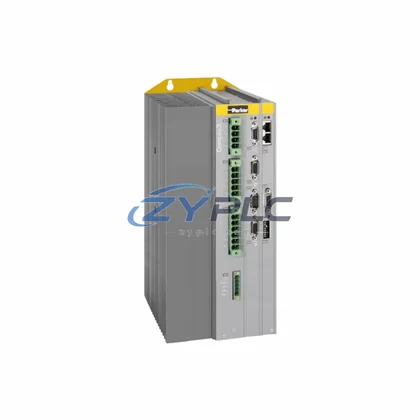
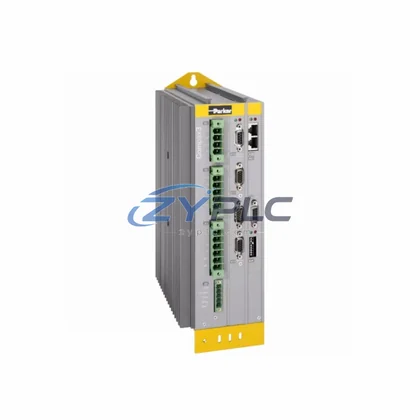
The Parker HSSI-ED2 is a high-speed serial interface encoder feedback board engineered for seamless integration within the Compax3 servo drive platform. Designed to bridge the communication gap between servo drives, motion controllers, and upper-level automation systems, the HSSI-ED2 delivers reliable, real-time data exchange across the full industrial network stack — from field-level sensors and actuators to SCADA platforms and enterprise MES systems. In modern smart factory environments where data latency, protocol compatibility, and network stability are mission-critical, the HSSI-ED2 stands as a foundational connectivity component.
Compatibility & Integration Notes
| Parameter |
Specification |
| SKU |
HSSI-ED2 |
| Brand |
Parker Hannifin |
| Series |
Compax3 |
| Interface Type |
High-Speed Serial Interface (HSSI) Encoder Feedback Board |
| Protocol Support |
HSSI (High-Speed Serial), Encoder Feedback, RS-422 compatible signaling |
| Communication |
Real-time encoder position feedback, bidirectional data transfer |
| Network Compatibility |
Compax3 servo drive family, Parker ACR motion controllers, PAC systems |
| System Application |
CNC, Robotics, Packaging, Semiconductor, Material Handling, Smart Factory |
| Gateway Function |
Encoder-to-drive protocol translation, position data relay to upper systems |
| Origin |
USA |
| Warranty |
warranty terms confirmed during quotation |
| Availability |
RFQ Available — export shipping options available |
Connected Automation Data Flow
In a fully integrated Compax3 servo system, the HSSI-ED2 acts as the critical encoder interface layer that feeds real-time position and velocity data directly into the Compax3 servo drive’s control loop. This data is then processed and relayed upstream through Parker’s ACR9000 multi-axis motion controller, which coordinates synchronized motion across multiple servo axes on the production line. The ACR9000 communicates with the plant-level SCADA system via EtherNet/IP or Modbus TCP, enabling operators to monitor axis positions, velocity profiles, and fault states from a centralized HMI dashboard.
Within the same automation cell, the HSSI-ED2-equipped Compax3 drive interfaces with Parker’s P-Series HMI panels, providing local visualization of drive status, encoder counts, and alarm conditions. Alongside the servo system, Parker 890 AC drives manage variable-speed conveyor and pump loads, with their process data aggregated through a Modbus RTU gateway into the same SCADA network. Remote I/O modules — such as Parker’s distributed I/O blocks — collect digital and analog signals from proximity sensors, photoelectric sensors, and pressure transducers, feeding this field data into the PLC control layer.
The PLC — typically a Parker PAC motion controller or a third-party Siemens/Allen-Bradley unit — processes all incoming I/O data and issues coordinated motion commands back to the Compax3 drives via the HSSI-ED2 interface. For multi-axis applications such as gantry systems or robotic pick-and-place cells, the Compax3H (hydraulic variant) and Compax3F (fieldbus variant) drives operate in parallel, all sharing encoder feedback data through their respective HSSI interface boards. An edge gateway aggregates drive diagnostics, encoder fault logs, and cycle time data, transmitting structured JSON payloads to the cloud MES platform for predictive maintenance analysis. Industrial Ethernet switches with managed VLAN configurations ensure that time-sensitive motion control traffic is isolated from general plant network traffic, maintaining deterministic communication latency below 1 ms across the servo network.
Solving Data Isolation in Industrial Sites
One of the most persistent challenges in legacy industrial environments is protocol fragmentation — servo drives, PLCs, HMIs, and SCADA systems often speak different communication languages, creating data silos that prevent real-time visibility and coordinated control. The Parker HSSI-ED2 directly addresses this by providing a standardized, high-speed encoder feedback interface that integrates cleanly into the Compax3 drive’s internal communication architecture, eliminating the need for external signal converters or protocol bridges at the drive level.
For facilities transitioning from isolated machine control to plant-wide transparency, the HSSI-ED2 enables the Compax3 drive to expose encoder position data to upper-level systems without additional hardware. This means that SCADA engineers can configure real-time position trending, alarm thresholds, and remote diagnostic dashboards without modifying the core motion control program. Remote monitoring becomes straightforward: maintenance teams can access drive health data, encoder error counts, and communication status from any networked workstation or mobile device, dramatically reducing mean time to repair (MTTR) for servo-related faults.
System expansion is equally simplified. As production lines grow — adding new servo axes, integrating collaborative robots, or extending conveyor networks — additional Compax3 drives equipped with HSSI-ED2 boards can be commissioned and networked without redesigning the existing communication architecture. The HSSI interface’s deterministic data transfer ensures that each new axis integrates into the motion controller’s synchronization scheme with minimal tuning effort, supporting scalable smart factory deployments from single-machine cells to multi-line production floors.
Industrial Connectivity FAQ
Q1: What communication protocols does the Parker HSSI-ED2 support?
The HSSI-ED2 supports Parker’s proprietary High-Speed Serial Interface (HSSI) protocol, which provides deterministic, low-latency encoder position and velocity feedback between the encoder and the Compax3 servo drive. This data is then made available to upper-level systems (ACR controllers, SCADA, HMI) via the drive’s primary fieldbus interface (EtherNet/IP, PROFIBUS, CANopen, depending on the Compax3 variant).
Q2: Is the HSSI-ED2 compatible with third-party PLCs and SCADA systems?
Yes. While the HSSI-ED2 interfaces directly with the Compax3 drive, the drive itself supports multiple fieldbus protocols that connect to third-party PLCs and SCADA platforms. This makes the HSSI-ED2 compatible with Siemens TIA Portal, Rockwell Studio 5000, Wonderware, Ignition SCADA, and other industry-standard automation environments through the Compax3’s fieldbus layer.
Q3: How does the HSSI-ED2 contribute to network stability in high-speed servo applications?
The HSSI-ED2 uses a dedicated high-speed serial channel isolated from the drive’s main power electronics, ensuring that encoder feedback signals remain clean and interference-free even in electrically noisy industrial environments. This dedicated channel maintains communication integrity at encoder update rates exceeding 1 MHz, supporting stable closed-loop control at high servo velocities.
Q4: What warranty and pre-shipment testing does the HSSI-ED2 include?
Every Parker HSSI-ED2 unit supplied by ZYPLC undergoes pre-shipment functional testing to verify encoder interface integrity, signal quality, and communication handshake with the Compax3 drive platform. All units are covered by a warranty terms confirmed during quotation against manufacturing defects, with export shipping options available from RFQ-confirmed sourcing. For volume orders or urgent requirements, contact our technical sales team for lead time confirmation.