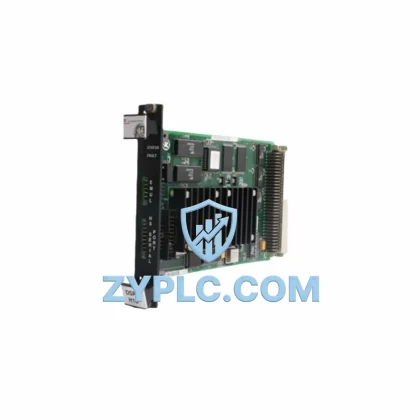
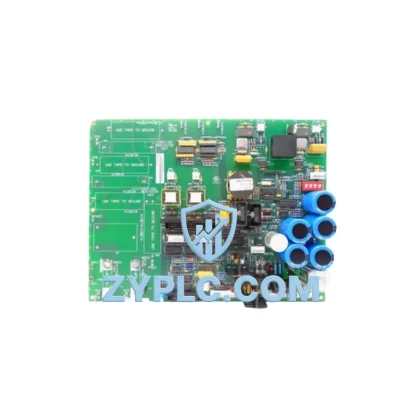
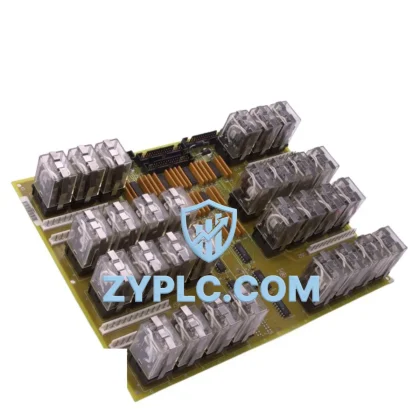
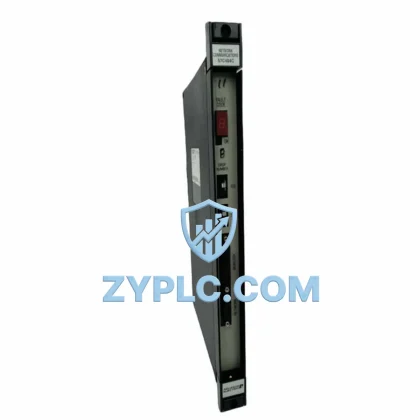
PRO SC203-100A-002IR-010-01K-05 Signal Conditioner for SC200
In modern distributed control systems, signal integrity and architectural consistency are not optional — they are the foundation upon which reliable automation is built. The PRO SC203-100A-002IR-010-01K-05 is a precision signal conditioner engineered specifically for deployment within SC200 series control architectures, where it serves as a critical bridge between field-level instrumentation and the higher-level control and data acquisition layers. Rather than functioning as a standalone device, this module is designed to operate as an integrated component within a layered automation hierarchy, contributing to system-wide signal fidelity, redundancy capability, and long-term maintainability.
The SC203-100A-002IR-010-01K-05 addresses one of the most persistent challenges in industrial control engineering: the reliable conditioning and isolation of analog signals across mixed-voltage field environments. Whether deployed in a continuous process plant, a discrete manufacturing line, or a hybrid SCADA-DCS topology, this module ensures that upstream controllers receive clean, conditioned, and electrically isolated signals — eliminating ground loops, suppressing noise, and protecting sensitive I/O cards from field-side transients.
From a system architecture perspective, this signal conditioner occupies the I/O layer of the control hierarchy, sitting between field transmitters and the analog input modules of the SC200 controller platform. Its role is to normalize signal ranges, provide galvanic isolation, and deliver loop-powered or externally powered signal paths depending on the field device configuration. This makes it directly compatible with SC200 series analog input cards, and it is routinely deployed alongside modules such as the SC200-AI8 eight-channel analog input card and the SC200-AO4 analog output module, ensuring that the entire signal chain from sensor to controller maintains consistent electrical characteristics.
Within the control layer, the SC203-100A-002IR-010-01K-05 supports seamless integration with SC200 CPU modules, including the SC200-CPU-01 and SC200-CPU-02 redundant processor units. When deployed in a redundant CPU architecture, the signal conditioner’s isolated outputs ensure that both primary and standby processors receive identical, uncorrupted signal representations — a requirement for bumpless switchover during CPU failover events. This is particularly important in applications such as power generation, petrochemical processing, and water treatment, where process upsets caused by signal discontinuities during controller switchover can have significant operational and safety consequences.
At the network layer, the SC200 platform typically employs PROFIBUS DP, Modbus RTU, or EtherNet/IP as its primary communication protocols. The SC203-100A-002IR-010-01K-05 does not itself participate in network communication — its role is purely at the signal conditioning level — but its outputs feed directly into I/O modules that interface with the SC200 communication backplane. This means that the quality of data presented to the network layer is directly dependent on the conditioning accuracy of this module. Engineers integrating this conditioner into SC200 backplane assemblies should ensure compatibility with the SC200-BP-08 eight-slot backplane and the SC200-BP-16 sixteen-slot expansion backplane, both of which support hot-swap module replacement for maintenance without process interruption.
Power supply architecture is another area where the SC203-100A-002IR-010-01K-05 contributes to overall system resilience. The module is designed to operate from the 24 VDC rail commonly provided by SC200-series power supply units such as the SC200-PS-24V redundant power module. In installations where power redundancy is required, the conditioner’s low power consumption profile allows it to be supported by dual-redundant power feeds without exceeding the current budget of the redundant power architecture. This is a key consideration in critical infrastructure applications where power supply failure must not result in signal loss at the I/O layer.
For human-machine interface integration, the conditioned signals produced by the SC203-100A-002IR-010-01K-05 are ultimately displayed and acted upon at the HMI layer. SC200-compatible HMI platforms, including panel-mounted operator stations running SCADA software connected via OPC-UA or Modbus TCP, rely on the accuracy of conditioned analog values to present operators with reliable process data. Inaccurate or noisy signals at the conditioning layer propagate upward through the system, degrading the quality of trend data, alarm setpoint accuracy, and process control loop performance. By maintaining signal accuracy within the specified tolerance band, this conditioner directly supports HMI data quality and operator decision-making confidence.
At the execution layer, the conditioned outputs from the SC203-100A-002IR-010-01K-05 may drive analog setpoint inputs on variable frequency drives, electro-pneumatic positioners, or motorized control valves. In these applications, signal conditioning accuracy directly affects the precision of final control element positioning, which in turn determines process variable control quality. Engineers specifying this module for closed-loop control applications should verify that the conditioner’s output accuracy and response time are compatible with the dynamic requirements of the control loop.
Product Specification Table
| Parameter |
Specification |
| System Role |
Analog Signal Conditioner — I/O Layer |
| Compatible Platform |
SC200 Series DCS / Control Architecture |
| Input Signal |
4–20 mA / 0–10 V (field transmitter) |
| Output Signal |
4–20 mA isolated analog output |
| Isolation Voltage |
1000 V galvanic isolation (input/output/power) |
| Supply Voltage |
24 VDC (±10%) |
| Accuracy |
±0.1% of full scale |
| Operating Temperature |
-20°C to +60°C |
| Mounting |
DIN rail, compatible with SC200 control cabinet |
| Communication |
Passive signal path; feeds SC200 analog I/O modules |
| system integration |
Full system integration with SC200 architecture |
| Warranty |
12-Month Warranty — parts and labor |
System Compatibility Notes
The SC203-100A-002IR-010-01K-05 is most effectively deployed as part of a coordinated SC200 system architecture rather than as an isolated component. In a typical SC200-based control cabinet, this conditioner works in concert with the SC200-CPU-01 primary processor, the SC200-CPU-02 redundant standby processor, and the SC200-BP-16 sixteen-slot backplane to form the core of the control node. Analog signals conditioned by the SC203 module are routed to the SC200-AI8 analog input card, which digitizes and transmits the values to the CPU via the backplane bus.
On the output side, the SC200-AO4 analog output module receives setpoint commands from the CPU and drives field actuators, completing the closed-loop control path. Power to the entire assembly is provided by the SC200-PS-24V redundant power supply module, which supports dual-feed input for uninterrupted operation. For installations requiring digital I/O expansion, the SC200-DI16 and SC200-DO16 discrete I/O modules can be added to the same backplane, allowing the SC203 signal conditioner to coexist within a mixed analog-digital I/O architecture without any signal interference.
In networked architectures, the SC200-GW-PBUS PROFIBUS DP gateway module provides connectivity between the SC200 backplane and upstream SCADA or DCS host systems, ensuring that the conditioned analog values processed by the SC203 module are available to the plant-wide control network. Terminal modules such as the SC200-TM-32 field wiring termination block simplify field cable connections and support loop testing without disturbing the conditioner’s installed wiring — a significant advantage during commissioning and periodic maintenance activities.
Industrial Application Notes
The PRO SC203-100A-002IR-010-01K-05 finds application across a broad range of industrial sectors where SC200-based control architectures are deployed. In power generation facilities, this conditioner is used to process signals from turbine inlet temperature transmitters, generator excitation current sensors, and boiler drum level transmitters, providing the SC200 control system with clean, isolated analog representations of critical process variables.
In petrochemical and refinery applications, the module conditions signals from pressure transmitters, flow meters, and analytical instruments in hazardous area installations, where galvanic isolation is a safety requirement as well as a signal quality measure. Water and wastewater treatment plants deploy this conditioner in pump station control panels, where it processes flow and level signals from submersible transmitters operating in electrically noisy environments. Mining and mineral processing operations use the SC203 module in conveyor control systems and crusher monitoring applications, where vibration and electrical interference from high-power drive equipment make signal conditioning essential for reliable process control.
In discrete manufacturing and packaging line applications, the conditioner supports integration of analog sensors — including load cells, position transducers, and web tension sensors — into SC200-based machine control architectures, enabling precise closed-loop control of process parameters that directly affect product quality and throughput.
Product Compatibility FAQ
Q1: Is the SC203-100A-002IR-010-01K-05 compatible with both the SC200-BP-08 and SC200-BP-16 backplanes?
The SC203-100A-002IR-010-01K-05 is a DIN rail-mounted signal conditioner that operates independently of the SC200 backplane slot architecture. It conditions field signals before they enter the backplane-mounted I/O modules, making it compatible with any SC200 backplane configuration. Its 24 VDC supply can be sourced from the same power rail that feeds the SC200-PS-24V module, simplifying cabinet power distribution design.
Q2: How does this conditioner support redundant CPU architectures in SC200 systems?
Because the SC203-100A-002IR-010-01K-05 provides galvanically isolated analog outputs, its conditioned signal can be distributed to the analog input modules serving both the primary SC200-CPU-01 and the redundant SC200-CPU-02 processors simultaneously. This ensures that both processors receive identical signal representations, enabling bumpless CPU switchover without signal discontinuity. The conditioner’s passive signal path introduces no additional latency that would affect redundancy switchover timing.
Q3: What does the 12-Month Warranty cover, and how is long-term spare parts availability managed?
The 12-Month Warranty covers manufacturing defects and component failures under normal operating conditions for a period of twelve months from the date of shipment. During the warranty period, defective units are repaired or replaced at no charge. For long-term maintenance planning, it is recommended to maintain a minimum of one spare SC203-100A-002IR-010-01K-05 unit per control cabinet to support rapid replacement during unplanned failures. Our inventory management team maintains stock of this module to support both warranty replacements and ongoing spare parts requirements, with global shipping available to minimize downtime in critical applications.
© 2026 ZYPLC. All rights reserved.
Original Source: https://zyplc.com
Contact: +86 19859288691 | plc.sales@zyplc.com