ProSoft MVI94-MCM: Industrial Data Link for Smart Factory FLEX I/O Networks
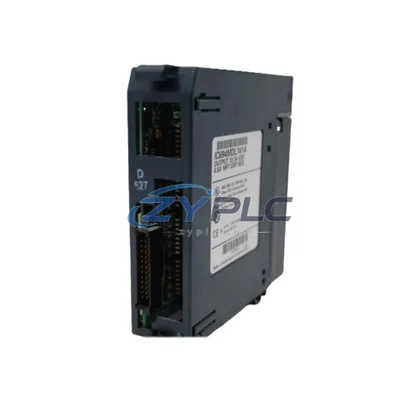
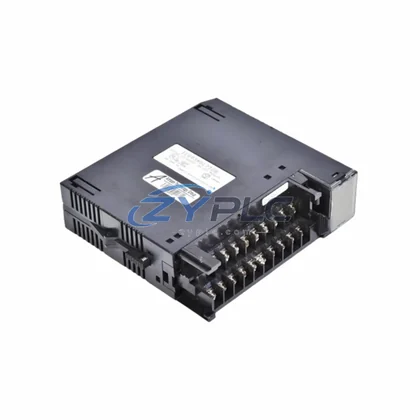
The ProSoft MVI94-MCM is a high-performance Modbus communication module engineered for seamless integration within Allen-Bradley 1794 FLEX I/O platforms. As industrial facilities accelerate their journey toward smart manufacturing, the MVI94-MCM serves as a critical data bridge — connecting field-level devices, distributed I/O nodes, PLC controllers, and supervisory systems into a unified, real-time communication architecture. Whether your application demands reliable Modbus RTU signal acquisition from remote sensors, protocol conversion between legacy instruments and modern Ethernet-based SCADA platforms, or deterministic data delivery across multi-drop serial networks, the MVI94-MCM delivers the connectivity backbone your automation infrastructure requires.
Designed to plug directly into the Allen-Bradley 1794 FLEX I/O adapter backplane, the MVI94-MCM operates as a Modbus Master or Slave, supporting both RTU and ASCII transmission modes. This dual-mode flexibility allows it to interface with a broad ecosystem of industrial devices — from Modbus-enabled variable frequency drives and smart sensors to legacy PLCs and third-party remote terminal units — without requiring additional protocol converters or external gateways. The module’s internal memory map is directly accessible by the host ControlLogix or FlexLogix processor via the 1794-AENT or 1794-ACN15 adapter, enabling transparent, low-latency data exchange between the field bus and the control layer.
Compatibility & Integration Notes
| Parameter |
Specification |
| SKU |
MVI94-MCM |
| Brand |
ProSoft Technology |
| Series |
MVI94 / Allen-Bradley 1794 FLEX I/O |
| Communication Protocol |
Modbus RTU / Modbus ASCII |
| Operating Mode |
Master / Slave (configurable) |
| Interface Type |
RS-232 / RS-422 / RS-485 (multi-drop serial) |
| Transmission Speed |
300 bps – 115,200 bps |
| Network Compatibility |
Allen-Bradley 1794 FLEX I/O Backplane |
| Host Adapter Support |
1794-AENT (EtherNet/IP), 1794-ACN15 (ControlNet) |
| System Application |
PLC, SCADA, HMI, Remote I/O, DCS Integration |
| Product Type |
Industrial Communication Module / Protocol Gateway |
| Origin |
USA |
| Warranty |
12 Months |
Connected Automation Data Flow
In a typical smart factory deployment, the MVI94-MCM anchors the serial communication layer within a multi-tier automation architecture. At the field level, Modbus RTU instruments — including pressure transmitters, flow meters, temperature sensors, and motor protection relays — transmit process data over RS-485 multi-drop wiring to the MVI94-MCM’s serial port. The module polls these devices cyclically, maps the acquired register data into its internal data table, and makes it immediately available to the host Allen-Bradley ControlLogix L7x or CompactLogix L3x processor through the FLEX I/O backplane.
Upstream, the 1794-AENT EtherNet/IP adapter bridges the FLEX I/O rack to the plant’s Industrial Ethernet backbone, where a Rockwell Automation FactoryTalk View SE HMI or FactoryTalk Historian server can retrieve live process values in real time. Simultaneously, a Kepware KEPServerEX OPC-DA/UA gateway aggregates data from multiple MVI94-MCM nodes across the facility and forwards it to a Wonderware System Platform SCADA or Ignition by Inductive Automation supervisory layer, enabling plant-wide visibility and alarm management.
For drive integration, the MVI94-MCM communicates directly with Allen-Bradley PowerFlex 40 and PowerFlex 525 variable frequency drives configured for Modbus RTU, reading speed references, output frequency, fault codes, and energy consumption data without requiring additional communication cards. In parallel, ProSoft Technology MVI56-MCM modules installed in ControlLogix racks at the main control room exchange data with the FLEX I/O-based MVI94-MCM nodes via the ControlLogix backplane and EtherNet/IP, creating a seamless, hierarchical data flow from field sensor to enterprise MES system.
For remote I/O expansion, the MVI94-MCM works alongside 1794-IB16 digital input and 1794-OB16 digital output modules within the same FLEX I/O rack, sharing the backplane data highway and enabling coordinated control of both discrete and serial communication functions from a single ControlLogix program. Edge computing nodes — such as the Stratus everRun or Cisco IE-4000 industrial switch — sit between the FLEX I/O network and the cloud layer, buffering data during WAN interruptions and ensuring no process event is lost during connectivity gaps.
Solving Data Isolation in Industrial Sites
Legacy manufacturing environments frequently suffer from protocol fragmentation: Modbus RTU instruments on the plant floor cannot communicate natively with EtherNet/IP-based control systems, creating data silos that prevent real-time visibility, delay fault response, and obstruct production optimization. The MVI94-MCM directly resolves this challenge by acting as a transparent protocol gateway embedded within the FLEX I/O rack — eliminating the need for standalone converters, reducing panel footprint, and simplifying network topology.
Sites operating mixed-vendor environments — where Siemens S7-300 PLCs, Schneider Electric Modicon M340 controllers, and Allen-Bradley ControlLogix systems coexist — can use the MVI94-MCM to normalize Modbus data streams into a common register format accessible by any OPC-compliant SCADA platform. This protocol normalization is the foundation of production line transparency: operators at the FactoryTalk View SE console or Ignition Perspective mobile HMI see unified, real-time dashboards regardless of the underlying field device brand or communication standard.
Remote diagnostics are equally critical in distributed plant architectures. The MVI94-MCM’s error counters, communication status bits, and diagnostic registers are mapped directly into the ControlLogix data table, allowing maintenance engineers to monitor serial link health, detect CRC errors, identify unresponsive slave devices, and trigger alarm notifications — all from the SCADA workstation without dispatching field technicians. This capability dramatically reduces mean time to repair (MTTR) and supports predictive maintenance strategies aligned with Industry 4.0 objectives.
System scalability is built into the MVI94-MCM’s architecture. As production capacity grows, additional FLEX I/O racks — each equipped with MVI94-MCM modules — can be added to the EtherNet/IP network without modifying the existing control program structure. The modular FLEX I/O platform supports hot-swap of individual I/O modules, minimizing planned downtime during system expansion. Each MVI94-MCM shipped from ZYPLC undergoes pre-shipment functional testing to verify serial communication integrity, backplane data exchange, and configuration upload/download — ensuring the module is production-ready upon arrival.
Industrial Connectivity FAQ
Q1: What is the maximum number of Modbus slave devices the MVI94-MCM can poll?
The MVI94-MCM supports up to 100 Modbus commands per port in Master mode, allowing it to poll multiple slave devices — including sensors, drives, and remote I/O units — within a single scan cycle. Command execution is sequential, and poll rates depend on baud rate, network load, and slave response times. For high-density polling applications, baud rates of 57,600 or 115,200 bps are recommended to minimize cycle time.
Q2: Is the MVI94-MCM compatible with both ControlNet and EtherNet/IP FLEX I/O adapters?
Yes. The MVI94-MCM is compatible with the 1794-AENT (EtherNet/IP) and 1794-ACN15 (ControlNet) adapters, as well as the 1794-ADN (DeviceNet) adapter, providing flexibility in network topology selection. The module occupies one slot in the FLEX I/O rack and communicates with the host processor through the adapter’s backplane connection, regardless of the upper-level network protocol.
Q3: How does the MVI94-MCM maintain network stability during communication errors or slave device failures?
The module includes configurable error-handling parameters, including retry counts, timeout values, and error response actions. When a slave device fails to respond within the defined timeout window, the MVI94-MCM logs the error in its diagnostic registers, sets a fault bit in the ControlLogix data table, and continues polling remaining devices without halting the entire communication cycle. This fault-tolerant behavior ensures that a single device failure does not disrupt the broader network.
Q4: What warranty and testing standards apply to MVI94-MCM units supplied by ZYPLC?
All MVI94-MCM modules supplied by ZYPLC carry a warranty terms confirmed during quotation covering manufacturing defects and functional failures under normal operating conditions. Prior to shipment, each unit undergoes functional verification testing including serial port communication checks, backplane data exchange validation, and configuration integrity verification. ZYPLC maintains RFQ-confirmed sourcing of MVI94-MCM modules to support urgent project timelines, with same-day dispatch available for orders confirmed before 3:00 PM CST.