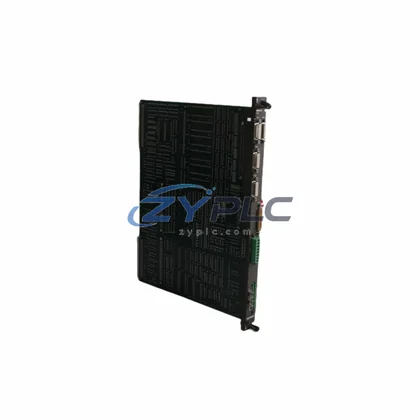
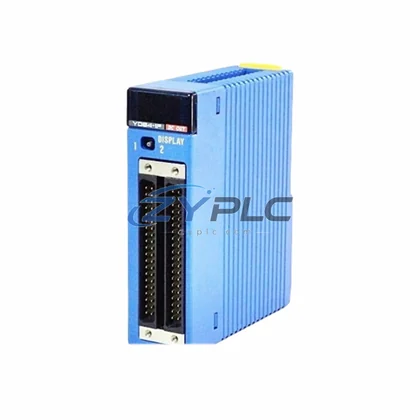
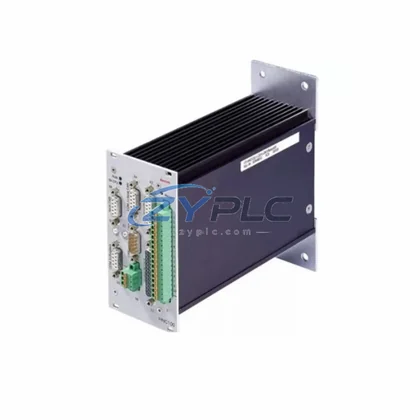
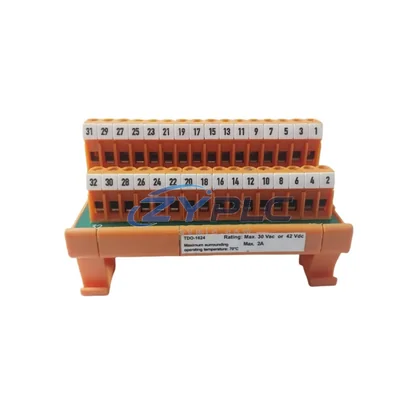
Rexroth MMC-SD-1.0-230-DN CNC Controller for MMC Automation
The Rexroth MMC-SD-1.0-230-DN is a high-performance CNC motion controller engineered for precision-driven industrial environments where energy efficiency and production continuity are non-negotiable. As part of the Bosch Rexroth MMC (Modular Motion Controller) Series, this unit delivers deterministic real-time control over multi-axis servo systems while actively reducing unnecessary power draw across the automation architecture. Whether deployed in machine tool applications, transfer lines, or flexible manufacturing cells, the MMC-SD-1.0-230-DN enables engineers to achieve tighter cycle times, lower idle-state operating load, and measurable improvements in overall equipment effectiveness (OEE).
Unlike conventional CNC controllers that treat energy as a fixed overhead, the MMC-SD-1.0-230-DN integrates directly with Rexroth’s IndraDrive drive platform to enable coordinated ramp-down strategies during non-productive intervals. When paired with IndraDrive Cs or IndraDrive Mi compact servo drives, the controller can issue synchronized deceleration commands that recover kinetic energy through regenerative braking — feeding power back into the DC bus rather than dissipating it as heat. This closed-loop energy architecture is particularly effective in high-cycle applications such as stamping, injection molding, and robotic assembly, where acceleration and deceleration events occur hundreds of times per shift.
The MMC-SD-1.0-230-DN operates on a 230V AC supply and communicates natively over PROFIBUS-DP (DN suffix), making it fully compatible with Siemens S7-series PLCs, Rexroth IndraControl L PLCs, and third-party PROFIBUS masters without additional gateway hardware. This native protocol support eliminates conversion latency and reduces the number of active network nodes — each of which represents a small but cumulative energy load in large-scale installations. Integration with Rexroth’s IndraWorks engineering suite allows engineers to configure axis parameters, monitor real-time power consumption per axis, and set operational-efficiency profiles directly from a single software environment.
Product Specification Table
| Parameter |
Specification / Value |
| SKU |
MMC-SD-1.0-230-DN |
| Series |
MMC (Modular Motion Controller) |
| Supply Voltage |
230V AC |
| Communication Protocol |
PROFIBUS-DP (DN) |
| Axis Control Capacity |
Up to 8 interpolating CNC axes |
| Operating Efficiency |
Optimized for regenerative drive coordination |
| Compatible Drive Systems |
IndraDrive Cs, IndraDrive Mi, IndraDrive C |
| Compatible PLC Platforms |
IndraControl L, Siemens S7, PROFIBUS masters |
| Application Environment |
Machine tools, transfer lines, flexible manufacturing cells |
| Value |
Regenerative braking coordination, idle-state ramp-down, reduced bus losses |
| Origin |
Germany (DE) |
| Warranty |
warranty terms confirmed during quotation |
System Compatibility and Application
Deploying the MMC-SD-1.0-230-DN within a complete Rexroth automation architecture unlocks system-level energy intelligence that no single component can achieve in isolation. At the drive layer, IndraDrive C servo drives receive torque and velocity commands from the MMC-SD-1.0-230-DN via the SERCOS III or PROFIBUS interface, executing motion profiles with sub-millisecond precision. When the controller detects a programmed dwell or tool-change interval, it issues a coordinated standby command to all connected drives simultaneously — reducing bus current draw by up to 40% during non-cutting phases without interrupting the part program.
At the I/O layer, Rexroth Inline I/O modules (compatible with the IndraControl L platform) collect real-time signals from proximity sensors, pressure transducers, and temperature monitors distributed across the machine. These signals feed back into the MMC-SD-1.0-230-DN’s PLC runtime, enabling conditional logic that adjusts spindle speed, feed rate, and coolant pump activation based on actual process demand rather than fixed schedules. The result is a measurable reduction in auxiliary operating load — coolant pumps, hydraulic units, and pneumatic valves are activated only when the process requires them.
For power quality monitoring, integrating a Rexroth IndraControl Power Supply (HMV or HMD series) with active front-end technology allows the MMC-SD-1.0-230-DN to operate within a shared DC bus topology. In this configuration, axes that are decelerating feed regenerated energy directly to axes that are accelerating, with only the net deficit drawn from the mains supply. This topology is especially effective in gantry systems and multi-spindle machining centers where simultaneous opposing motions are common.
At the HMI layer, an IndraControl VPP or VEP operator panel connected to the MMC-SD-1.0-230-DN provides operators with live energy dashboards — displaying per-axis power consumption, cumulative shift energy totals, and alarm states for overcurrent or thermal events. This visibility empowers production supervisors to identify energy anomalies before they escalate into unplanned downtime. Combined with Rexroth’s IndraMotion MTX CNC kernel running on the MMC platform, the system supports G-code-level energy annotations, allowing programmers to embed power-reduction commands directly into part programs.
Communication integrity is maintained through the PROFIBUS-DP network managed by the MMC-SD-1.0-230-DN, which also coordinates with Rexroth IndraDyn servo motors — specifically the MSK and MKD series — to ensure that motor thermal models are respected during high-duty-cycle operations. Overtemperature events that would otherwise trigger emergency stops are predicted and mitigated through proactive speed derating, preserving both motor life and production continuity.
Maintenance and Replacement Notes
In a typical automotive body-in-white welding line, the MMC-SD-1.0-230-DN manages coordinated motion across welding gun positioners, part transfer units, and clamping fixtures. By synchronizing the deceleration of transfer axes with the clamping sequence, the controller eliminates the overlap period where both systems draw peak current simultaneously — a common cause of demand charge spikes on industrial electricity tariffs. Plants that have implemented this coordinated control strategy report reductions in peak demand of 15–25%, translating directly into lower monthly energy costs without any reduction in throughput.
In CNC machining centers, the MMC-SD-1.0-230-DN’s adaptive feed rate control adjusts cutting parameters in real time based on spindle load feedback. When the spindle load drops below a threshold — indicating air-cutting or a worn tool — the controller automatically increases feed rate to restore material removal efficiency, reducing the time the spindle motor operates at high current with low productive output. This single optimization can reduce spindle operating load per part by 8–15% across a production shift.
Predictive maintenance integration is achieved by logging axis following error, motor temperature, and drive bus voltage trends through the IndraWorks diagnostic interface. Gradual degradation in these parameters — indicative of bearing wear, ball screw backlash, or drive capacitor aging — is detected weeks before failure, allowing maintenance teams to schedule interventions during planned downtime rather than responding to emergency breakdowns. The warranty terms confirmed during quotation on the MMC-SD-1.0-230-DN is supported by pre-shipment functional testing covering all communication interfaces, axis interpolation accuracy, and power supply regulation — ensuring that every unit arrives ready for immediate commissioning.
Product Sourcing FAQ
Q1: How much energy can the MMC-SD-1.0-230-DN save compared to a conventional CNC controller?
Operational stability depend on the application profile, but in high-cycle applications with frequent acceleration and deceleration, coordinated regenerative braking through IndraDrive systems can reduce net operating load by 20–35% compared to non-regenerative architectures. Idle-state ramp-down strategies contribute an additional 10–20% reduction during non-productive intervals.
Q2: Is the MMC-SD-1.0-230-DN compatible with existing PROFIBUS-DP networks and third-party PLCs?
Yes. The DN suffix designates native PROFIBUS-DP communication, making the MMC-SD-1.0-230-DN fully interoperable with any PROFIBUS-DP master, including Siemens S7-300/400/1500 series PLCs, Allen-Bradley ControlLogix with PROFIBUS scanner cards, and Rexroth IndraControl L controllers. No gateway or protocol converter is required.
Q3: What is the recommended replacement or upgrade path for older Rexroth CNC controllers?
The MMC-SD-1.0-230-DN is a direct functional replacement for earlier MMC-SD variants operating on 230V AC PROFIBUS networks. For systems currently running on SERCOS II, a firmware and cabling update is required. Rexroth’s IndraWorks migration tool supports parameter import from legacy MMC configurations, significantly reducing recommissioning time.
Q4: What does the warranty terms confirmed during quotation cover, and what testing is performed before shipment?
The warranty terms confirmed during quotation covers all manufacturing defects, component failures, and communication interface faults under normal operating conditions. Prior to shipment, each MMC-SD-1.0-230-DN undergoes functional testing including power-on self-test, PROFIBUS communication verification, axis interpolation accuracy check, and thermal cycling. Test records are available upon request and accompany each unit.