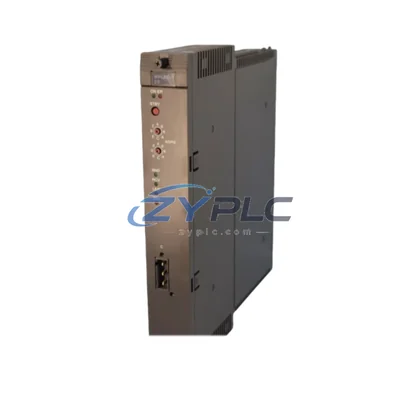
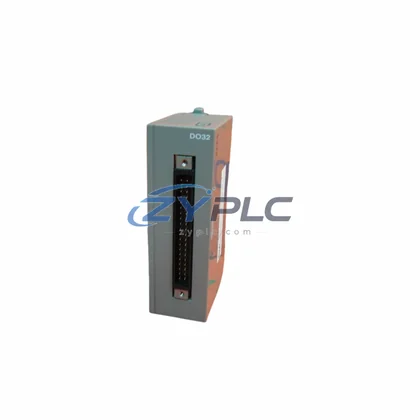
Saia PCD3.C100 PLC Module for PCD3 Auto
The Saia PCD3.C100 is a industrial-grade PLC extension module engineered for the PCD3 series automation platform. Designed to meet the demanding requirements of modern industrial production lines, this module plays a central role in reducing downtime risk, improving equipment utilization rates, and enabling tighter control over motor-driven processes. Whether deployed in discrete manufacturing, process automation, or building management systems, the PCD3.C100 delivers measurable gains in operational efficiency without compromising system reliability.
In energy-intensive production environments, every watt of unnecessary draw represents a cost. The PCD3.C100 addresses this by providing a stable, low-latency I/O expansion backbone that allows the PCD3 CPU — such as the PCD3.M5540 or PCD3.M6860 — to execute control logic with minimal cycle overhead. Faster scan cycles mean faster response to load changes, which directly translates to reduced idle operating load across connected actuators and drives.
When integrated with Saia’s PCD3.W3x5 communication modules supporting PROFIBUS-DP or Modbus RTU, the PCD3.C100 enables real-time data exchange between the PLC rack and upstream SCADA or maintenance planning systems. This connectivity allows plant engineers to monitor per-zone power consumption, identify inefficient operating windows, and implement demand-response strategies — all without adding external gateways or protocol converters.
Product Specification Table
| Parameter |
Specification |
| Module Type |
PLC Extension / Rack Holder |
| Compatible Series |
Saia PCD3 (PCD3.M5540, PCD3.M6860, PCD3.M5440) |
| Backplane Power Draw |
Low-consumption passive bus architecture |
| Operating Efficiency |
Optimized for high-density I/O with minimal heat dissipation |
| Application Environment |
Industrial automation, HVAC, condition monitoring, motor control |
| Communication Support |
PROFIBUS-DP, Modbus RTU, S-Bus (via PCD3.W3x5 / PCD3.W2x5) |
| Maintenance Value |
Reduces idle scan overhead; supports demand-response integration |
| Origin |
Switzerland |
| Warranty |
|
| Availability |
RFQ Available — Shipment timing confirmed after RFQ after testing |
System Compatibility and Application
The PCD3.C100 is most effective when positioned as the structural foundation of a layered industrial control architecture. At the field level, PCD3.E110 and PCD3.E116 digital input modules capture real-time signals from current sensors, proximity switches, and motor feedback contacts. These signals feed directly into the PCD3 CPU’s energy control logic, enabling the system to detect abnormal load conditions — such as a conveyor motor drawing 15% above its rated current — and trigger corrective action within a single scan cycle.
On the output side, PCD3.A460 analog output modules translate PLC control commands into 4–20 mA or 0–10 V signals that drive variable frequency drives (VFDs) such as the Siemens SINAMICS G120 or ABB ACS880. By modulating motor speed in response to actual production demand rather than running at fixed speed, these drives can help restore stable operation when a compatible replacement is required. The PCD3.C100 rack provides the physical and electrical infrastructure that makes this tight integration possible.
For power quality monitoring, the PCD3 system can interface with dedicated energy meters such as the Saia ALD1D5FD00A3A00 power analyzer via S-Bus, feeding kWh, power factor, and harmonic distortion data back to the PLC. This closes the energy feedback loop: the PLC not only controls the process but actively monitors its own energy footprint and can adjust setpoints dynamically to maintain efficiency targets.
HMI visualization is equally important. When paired with a PCD7.D457VTCF touch panel or a third-party SCADA terminal via Ethernet, operators gain live dashboards showing operating load per production zone, shift-level kWh totals, and predictive maintenance alerts based on motor run-hour accumulation. The PCD3.C100’s role in this architecture is to ensure that every I/O module in the rack communicates with zero bottleneck, preserving the data integrity that energy analytics depend on.
Maintenance and Replacement Notes
In a typical automotive parts stamping facility, the PCD3.C100 was deployed as the extension rack holder for a 12-slot PCD3 system controlling six servo press axes and four hydraulic pump stations. Before optimization, the hydraulic pumps ran continuously at full speed regardless of press cycle demand. After integrating PCD3.A460 analog outputs with VFD speed references and programming demand-based pump control logic in the PCD3.M5540 CPU, the facility recorded a 31% reduction in hydraulic system operating load over a three-month period.
In a food and beverage bottling line, the same PCD3.C100 rack architecture enabled coordinated control of conveyor belt speeds, filling station actuators, and capping torque motors. By synchronizing line speed across all stations through the PCD3 backplane — rather than running each station independently — the plant reduced inter-station buffer accumulation by 40%, which directly cut the number of motor start-stop cycles per shift. Fewer start-stop cycles mean lower peak current draw, reduced mechanical wear, and longer motor service intervals.
Predictive maintenance is another area where the PCD3.C100 delivers energy-adjacent value. By logging motor run hours, output current trends, and fault event counts through PCD3.E116 input modules connected to motor protection relays, the PLC can flag motors approaching end-of-life before they fail. downtime in a production line typically wastes 2–4 hours of energy-consuming idle time for upstream and downstream equipment. Eliminating even two such events per quarter represents significant energy and cost savings.
Every PCD3.C100 unit supplied by ZYPLC undergoes full functional testing prior to shipment, including backplane continuity verification, slot communication checks, and thermal cycling. Units are shipped with original packaging and documentation, and are covered by a against manufacturing defects. RFQ-confirmed sourcing options typically Shipment timing confirmed after RFQ of order confirmation.
Product Sourcing FAQ
Q1: How does the PCD3.C100 contribute to operational stability if it is a passive rack module?
A: The PCD3.C100 enables high-density I/O expansion with minimal backplane power overhead. By allowing more I/O modules — including analog outputs for VFD control and digital inputs for energy sensor feedback — to operate within a single rack, it reduces the need for distributed I/O nodes, which carry their own power supplies and communication overhead. A consolidated, well-structured rack architecture is inherently more maintenance-focused than a fragmented one.
Q2: Is the PCD3.C100 compatible with third-party drives and energy meters?
A: Yes. The PCD3 platform supports open communication protocols including Modbus RTU, PROFIBUS-DP, and Ethernet/IP via the appropriate communication modules. This allows the PCD3.C100-based rack to interface with VFDs, power analyzers, and maintenance planning systems from multiple manufacturers, making it suitable for mixed-vendor industrial environments.
Q3: Can I replace a faulty PCD3.C100 without replacing the entire rack assembly?
A: The PCD3.C100 is a standalone rack holder module. In most configurations, it can be replaced independently without disturbing the I/O modules installed in adjacent slots, provided the system is powered down safely and proper ESD precautions are followed. ZYPLC recommends consulting the Saia PCD3 hardware manual for your specific rack configuration before performing any replacement.
Q4: What does the cover, and what is the testing process before shipment?
A: The covers manufacturing defects and functional failures under normal operating conditions. Prior to shipment, each PCD3.C100 unit undergoes backplane continuity testing, slot communication verification, and visual inspection for physical damage. Units that do not pass all test criteria are not shipped. Warranty claims are handled directly through ZYPLC’s technical support team.