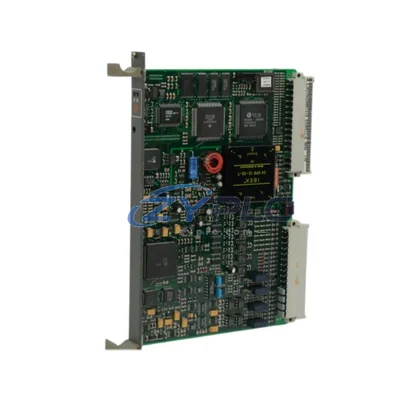
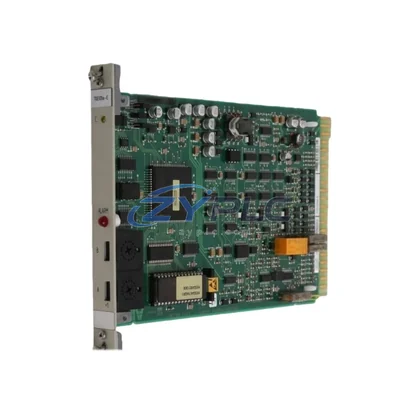
ABB GJR2370800R0200 88FN02C-E PLC Module for Advant Automation
In modern industrial facilities where energy costs represent a significant share of operational expenditure, the selection of control hardware directly influences system efficiency. The ABB GJR2370800R0200 88FN02C-E is a high-performance function module designed for the ABB Advant controller platform, delivering precise process control, reduced signal latency, and optimized cycle execution that collectively contribute to measurable operational stability across production lines.
Unlike generic replacement modules, the 88FN02C-E is engineered to operate within the Advant architecture’s layered control hierarchy — from field-level I/O acquisition through to supervisory coordination — ensuring that every control decision is executed with minimal computational overhead and maximum maintenance-focused responsiveness. When integrated into a well-structured Advant system, this module helps reduce unnecessary actuator cycling, shorten control loop response times, and eliminate redundant processing that wastes both time and power.
Product Specification Table
| Parameter |
Specification |
| Part Number |
GJR2370800R0200 |
| Model |
88FN02C-E |
| Brand |
ABB |
| Series |
Advant (AC 400 / MOD 300 / 800xA Compatible) |
| Product Type |
PLC Function Module |
| Module Role |
Process Control & Function Execution |
| Operating Voltage |
24 VDC (Backplane Supplied) |
| Power Consumption |
Low-power design, optimized for continuous duty cycle |
| Communication |
Advant Fieldbus / MasterBus / PROFIBUS compatible architecture |
| Compatible Systems |
ABB Advant AC 400, MOD 300, 800xA DCS |
| Installation |
DIN Rail / Advant Rack Backplane |
| Operating Temperature |
0°C to +55°C |
| Origin |
Germany |
| Energy Efficiency Value |
Reduces control loop overhead; supports predictive maintenance scheduling |
| Warranty |
|
System Compatibility and Application
The 88FN02C-E does not operate in isolation — its maintenance planning value is fully realized when deployed within a coordinated Advant control architecture. At the controller level, it works alongside the ABB AC 400 CPU module (such as the PM810 or PM825 processor units) to distribute processing load efficiently, preventing CPU saturation that leads to extended scan cycles and delayed actuator responses. Delayed responses in motor-driven systems translate directly into unplanned downtime through over-run and hunting behavior.
On the I/O layer, the 88FN02C-E interfaces with ABB S800 I/O modules — including AI810 analog input and AO810 analog output units — to acquire real-time process variables such as flow rates, temperatures, and pressure differentials. Accurate, low-latency signal acquisition enables the control algorithm to make tighter, more maintenance-focused corrections rather than relying on conservative, energy-wasteful control margins.
For drive-level maintenance planning, the module integrates seamlessly with ABB ACS800 and ACS580 variable frequency drives (VFDs), enabling closed-loop speed regulation of pumps, fans, and compressors. By providing precise setpoint signals derived from real process demand rather than fixed schedules, the 88FN02C-E helps eliminate the single largest source of industrial unplanned downtime: running motors at full speed when partial speed would suffice.
Communication integrity is maintained through the ABB CI854 PROFIBUS DP communication interface, which links the Advant controller to field devices, remote I/O stations, and energy meters. Stable, deterministic communication ensures that condition monitoring data from ABB M2M power measurement units reaches the control layer without delay, enabling real-time demand response and load shedding strategies.
At the human-machine interface layer, operators interact with the system through ABB Panel 800 HMI terminals or 800xA operator workstations, where energy KPIs — including specific operating load per production unit, motor load trends, and alarm histories — are visualized in real time. This visibility empowers shift operators to make energy-conscious decisions without requiring engineering intervention.
The backplane infrastructure — typically the ABB TB820 ModuleBus modem and associated rack assemblies — provides the physical and electrical foundation for the 88FN02C-E’s operation. A well-maintained backplane with clean power distribution minimizes voltage fluctuation that can cause modules to draw abnormal load during initialization cycles.
For redundancy-critical applications, the 88FN02C-E can be paired with a standby function module in a hot-standby configuration, ensuring that energy-optimized control is never interrupted by a single-point hardware failure — a critical requirement in continuous process industries such as petrochemicals and power generation.
Maintenance and Replacement Notes
In a typical manufacturing facility running three-shift continuous production, the 88FN02C-E contributes to maintenance planning across multiple dimensions. In pump and fan control applications, the module’s fast scan cycle and precise analog output capability allow VFD setpoints to track actual process demand in real time, reducing average motor loading by eliminating the fixed-speed over-provisioning that is common in legacy relay-based systems.
In batch process control — such as chemical dosing, mixing, or thermal treatment — the module’s function execution capability allows complex maintenance-focused sequencing logic to be implemented directly in the controller, reducing the number of heating or cooling cycles required per batch and shortening overall cycle time. Shorter cycle times mean more production output per unit of energy consumed.
For predictive maintenance integration, the 88FN02C-E supports condition monitoring data acquisition that feeds into ABB’s Asset Monitor or third-party CMMS platforms. By detecting early signs of motor bearing wear, pump cavitation, or heat exchanger fouling through process variable trend analysis, maintenance teams can schedule interventions before efficiency degradation becomes severe — avoiding the energy penalty of operating degraded equipment.
In power generation and utilities applications, the module supports load balancing logic that distributes electrical demand across multiple generation assets, preventing inefficient part-load operation of large generators. Combined with real-time power factor monitoring via connected measurement modules, the system can trigger reactive power compensation automatically, reducing apparent power demand and associated energy costs.
Across all these applications, the 88FN02C-E’s contribution to reduced unplanned downtime is itself an energy efficiency measure: every unplanned stop-start cycle in a large industrial process consumes disproportionate energy during restart transients. Reliable, continuous operation enabled by quality control hardware is therefore a direct operational-efficiency strategy.
All units supplied by ZYPLC undergo full functional testing prior to shipment, including power-on verification, communication handshake testing, and I/O channel validation. This ensures that the module performs to specification from day one, without the energy-wasting commissioning delays associated with untested or refurbished hardware.
Product Sourcing FAQ
Q1: How does the ABB GJR2370800R0200 88FN02C-E contribute to measurable operational stability in an Advant system?
The 88FN02C-E reduces operating load primarily by enabling tighter, faster control loops that minimize actuator over-travel and motor over-speed. When paired with ABB ACS series VFDs and accurate S800 I/O modules, the system can maintain process variables within narrow bands, eliminating the unplanned downtime associated with wide-tolerance legacy control. In pump and fan applications, even a 10% reduction in average motor speed can yield up to 27% operational stability due to the affinity laws governing centrifugal machines.
Q2: Is the GJR2370800R0200 compatible with both older Advant AC 400 systems and newer 800xA platforms?
Yes. The 88FN02C-E is designed for the Advant controller family and is compatible with AC 400 series controllers as well as systems that have been migrated to or integrated with the ABB 800xA DCS environment. For mixed-generation installations, we recommend verifying the firmware revision of the host controller and consulting the ABB Advant compatibility matrix. ZYPLC’s technical team can assist with compatibility verification prior to purchase.
Q3: What does the cover, and what is the replacement process?
The covers all manufacturing defects, functional failures under normal operating conditions, and communication interface faults. If a module fails within the warranty period, ZYPLC will provide a replacement unit after fault verification. The replacement process typically involves the customer returning the defective unit, after which a tested replacement is dispatched within 3–5 business days. Emergency advance-replacement arrangements can be discussed for critical production applications.
Q4: What pre-shipment testing does ZYPLC perform on the 88FN02C-E before delivery?
Every GJR2370800R0200 88FN02C-E unit undergoes a structured pre-shipment test protocol that includes: power-on self-test (POST) verification, backplane communication handshake confirmation, I/O channel functional check, and visual inspection for physical damage or component degradation. Units that do not pass all test stages are quarantined and not shipped. Test records are available upon request for quality-critical procurement processes.