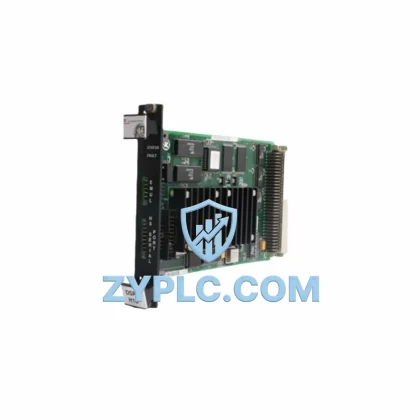
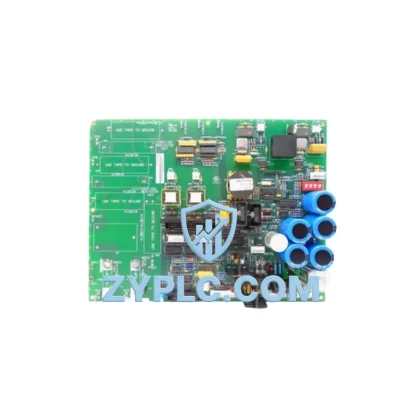
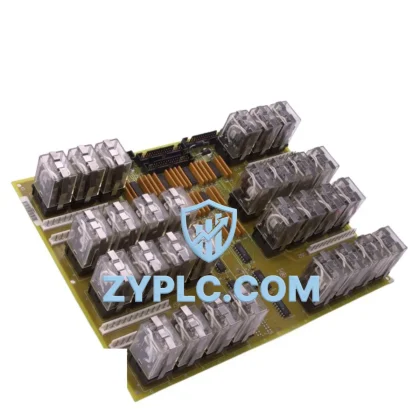
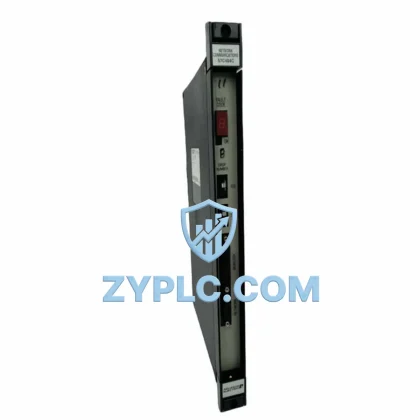
Siemens 16267-1/4 MNI Interface for MODULNET: Compatibility and Replacement Notes
The Siemens 16267-1/4 MNI (MODULNET Interface) Module is a purpose-engineered communication and integration component designed to operate within the layered hierarchy of Siemens MODULNET M-NET distributed control architectures. Rather than functioning as a standalone device, this module serves as a critical bridge between the control layer and the field-level I/O layer, enabling deterministic data exchange, coordinated signal routing, and system-wide configuration consistency across complex industrial automation environments.
In modern industrial control systems, the integrity of the communication backbone determines the reliability of the entire plant operation. The 16267-1/4 fulfills the role of a system integration node — it does not merely pass signals but actively participates in the system’s logical structure, ensuring that upstream CPU decisions are accurately translated into downstream field actions. This system integration capability is what distinguishes it from generic interface components and makes it a preferred choice for system architects designing for long-term operational stability.
When deployed within a MODULNET M-NET topology, the 16267-1/4 interfaces directly with Siemens SIMATIC S5 series programmable logic controllers, including the S5-115U, S5-135U, and S5-155U CPU modules. These CPUs rely on the MNI interface to extend their communication reach across distributed rack configurations, enabling multi-rack system designs where I/O modules, analog input cards, and digital output modules are physically separated from the central processing unit. The module supports the M-NET serial bus protocol, which provides a structured, time-deterministic communication cycle essential for process-critical applications.
From a system architecture perspective, the 16267-1/4 occupies the network layer of the automation hierarchy. Above it, the CPU layer — comprising S5 processors and their associated memory submodules — issues cyclic scan commands and program execution results. Below it, the I/O layer — including digital input modules such as the 6ES5 430 series, analog output modules from the 6ES5 470 series, and specialty function modules — receives and transmits field signals. The MNI interface ensures that this vertical data flow remains synchronized, latency-controlled, and fault-tolerant.
Power supply integrity is equally important in this architecture. The 16267-1/4 operates within racks powered by Siemens PS 951 or PS 952 power supply units, which provide the regulated 24 VDC and 5 VDC rails required by the backplane bus. Proper power sequencing and load distribution across the rack — particularly when multiple interface modules and I/O cards share the same backplane — must be calculated during the engineering phase to prevent voltage droop and communication errors. The module’s low power consumption profile makes it compatible with high-density rack configurations without requiring supplemental power injection.
At the physical installation level, the 16267-1/4 is designed for standard Siemens S5 subrack mounting, compatible with the EU 183U, EU 185U, and EU 187U expansion units. Its slot assignment within the rack follows the MODULNET addressing scheme, where each MNI module is assigned a unique station address that corresponds to its logical position in the M-NET ring or line topology. This addressing must be configured consistently across all nodes to prevent bus conflicts and ensure correct data routing during system startup and runtime.
For human-machine interface integration, the MODULNET architecture supported by the 16267-1/4 is compatible with Siemens OP (Operator Panel) and TP (Touch Panel) devices connected via the MPI or PROFIBUS DP layer above the M-NET bus. Operators can monitor real-time process values, acknowledge alarms, and adjust setpoints through these HMI terminals, with data flowing through the CPU and down through the MNI interface to the field devices. This end-to-end data path — from HMI input to actuator response — is only as reliable as the interface modules that bridge each architectural layer.
Redundancy design is a key consideration for applications in power generation, petrochemical processing, and water treatment facilities. While the base MODULNET M-NET architecture is a single-bus topology, system engineers can implement redundancy at the CPU level using hot-standby S5 processor configurations, with the 16267-1/4 serving as the communication interface for both the primary and standby control paths. This design ensures that a CPU failover event does not interrupt field I/O communication, maintaining process continuity during controller switchover.
Long-term maintenance planning for systems incorporating the 16267-1/4 should account for the module’s role as a single point of integration between control and field layers. Maintaining a spare inventory of MNI interface modules is strongly recommended for facilities operating legacy MODULNET systems, as replacement lead times for discontinued Siemens S5 components can extend beyond acceptable maintenance windows. ZYPLC maintains verified stock of the 16267-1/4 with full functional testing, backed by a 12-Month Warranty, ensuring that replacement units are available for immediate dispatch to minimize unplanned downtime.
Product Specification Table
| Parameter |
Specification |
| SKU / Part Number |
16267-1/4 |
| Brand |
Siemens |
| Series |
MODULNET M-NET |
| System Role |
MNI (MODULNET Interface) Module — Network Layer Bridge |
| Compatible CPU Platforms |
Siemens SIMATIC S5-115U, S5-135U, S5-155U |
| Communication Protocol |
M-NET Serial Bus (MODULNET) |
| Bus Topology |
Ring / Line (M-NET) |
| Rack Compatibility |
EU 183U, EU 185U, EU 187U Expansion Units |
| Power Supply Compatibility |
Siemens PS 951, PS 952 |
| Operating Voltage |
5 VDC / 24 VDC (via backplane) |
| Installation Environment |
Industrial control cabinet, standard DIN rail subrack |
| Mounting |
S5 subrack slot (MODULNET addressing) |
| Country of Origin |
Germany |
| Warranty |
12-Month Warranty (ZYPLC verified stock) |
| system integration |
Supported — M-NET bus contextual data routing |
System Compatibility Notes
The 16267-1/4 achieves its full architectural value when integrated within a coordinated system design that spans multiple functional layers. At the control layer, Siemens S5-135U or S5-155U CPUs execute the user program and manage the cyclic I/O scan. The MNI interface module connects these processors to remote I/O racks via the M-NET bus, extending the system’s physical reach without compromising scan cycle integrity.
Within the I/O layer, digital input modules from the Siemens 6ES5 430 series and digital output modules from the 6ES5 450 series are mounted in expansion racks connected through the 16267-1/4. Analog signals from process transmitters are handled by 6ES5 470 analog input modules, with the MNI interface ensuring that analog data is correctly framed and transmitted to the CPU within the required scan window. For applications requiring high-speed counter inputs or positioning control, Siemens IP 267 intelligent positioning modules can be integrated into the same rack architecture.
At the network layer, the M-NET bus managed by the 16267-1/4 can coexist with higher-level PROFIBUS DP or Industrial Ethernet segments through Siemens CP (Communication Processor) modules installed in the central rack. This multi-network architecture allows the legacy MODULNET system to exchange data with modern SCADA platforms, MES systems, or cloud-based monitoring solutions without requiring a full system replacement.
Terminal modules and marshalling components — including Siemens IM 306 interface modules and standard terminal blocks — provide the physical connection points between field wiring and the I/O modules in the expansion racks. Proper cable routing, shielding, and grounding at these terminal points are essential for maintaining signal integrity across the M-NET bus, particularly in electrically noisy environments such as motor control centers or high-voltage switchgear rooms.
For drive integration, Siemens MICROMASTER or SIMOREG DC drive systems can be connected to the MODULNET architecture through dedicated drive interface modules, with the 16267-1/4 providing the communication path for speed references, torque commands, and drive status feedback. This integration enables coordinated motion control within the same PLC program that manages process I/O, simplifying system architecture and reducing the number of independent control networks.
Industrial Application Notes
The Siemens 16267-1/4 MNI Interface Module has been deployed across a wide range of industrial sectors where legacy MODULNET M-NET systems continue to provide reliable process control. In power generation facilities, the module supports distributed I/O architectures for turbine control, boiler management, and auxiliary systems, where the deterministic M-NET communication cycle ensures that control actions are executed within the required response time for safety-critical interlocks.
In petrochemical and refinery applications, the 16267-1/4 enables multi-rack control system configurations that span large physical distances within process units. The module’s ability to maintain communication integrity in high-temperature, high-vibration environments — when properly installed in climate-controlled control cabinets — makes it suitable for continuous process operations where unplanned shutdowns carry significant economic and safety consequences.
For water and wastewater treatment plants, the MODULNET architecture supported by the 16267-1/4 provides the I/O density and communication reliability required for managing pumping stations, chemical dosing systems, and filtration processes across geographically distributed sites. The module’s compatibility with Siemens S5 CPUs that have been in service for decades means that existing control programs can continue to operate without modification, preserving the engineering investment made during the original system commissioning.
In mining and metallurgical operations, the 16267-1/4 supports conveyor control systems, crusher automation, and smelting process management, where the harsh electrical environment demands robust communication hardware. The module’s industrial-grade design and Siemens manufacturing standards ensure reliable operation in these demanding conditions.
Packaging and material handling lines in food processing and consumer goods manufacturing also benefit from the 16267-1/4’s ability to coordinate multiple I/O racks across a production line, enabling synchronized control of conveyor drives, filling stations, labeling systems, and end-of-line inspection equipment within a single MODULNET control architecture.
Product Compatibility FAQ
Q1: Is the Siemens 16267-1/4 compatible with both S5-135U and S5-155U CPU configurations, and are there any slot restrictions within the expansion rack?
A: Yes, the 16267-1/4 is compatible with both the S5-135U and S5-155U CPU platforms operating within a MODULNET M-NET architecture. Slot assignment within the expansion rack (EU 183U, EU 185U, or EU 187U) must follow the MODULNET station addressing rules defined in the system configuration. Each MNI module must be assigned a unique station address, and the total number of MNI nodes on the M-NET bus must not exceed the maximum supported by the connected CPU’s MODULNET driver. Consult the S5 system manual for your specific CPU variant to confirm the maximum node count and any slot-specific restrictions.
Q2: Can the 16267-1/4 be used in a redundant CPU architecture, and how does it behave during a CPU failover event?
A: The 16267-1/4 can be incorporated into redundant S5 CPU architectures where a hot-standby processor takes over control in the event of a primary CPU failure. During failover, the M-NET bus managed by the MNI interface module continues to operate, as the bus communication is maintained by the interface module independently of the CPU state. The standby CPU assumes control of the M-NET bus upon activation, and field I/O communication resumes within the normal bus cycle time. Proper configuration of the redundancy switchover logic in the S5 program is required to ensure bumpless transfer of control.
Q3: What does the 12-Month Warranty cover for the 16267-1/4, and what is the process for warranty claims or technical support?
A: ZYPLC’s 12-Month Warranty for the Siemens 16267-1/4 covers functional defects identified during normal operation under the specified electrical and environmental conditions. Each unit is tested prior to shipment to verify communication functionality and physical integrity. In the event of a warranty claim, contact ZYPLC directly at plc.sales@zyplc.com or +86 19859288691 with your order reference and a description of the observed fault. ZYPLC will arrange for unit assessment and, where the defect is confirmed as covered under warranty, provide a replacement unit from verified stock to minimize system downtime.
© 2026 ZYPLC. All rights reserved.
Original Source: https://zyplc.com
Contact: +86 19859288691 | plc.sales@zyplc.com