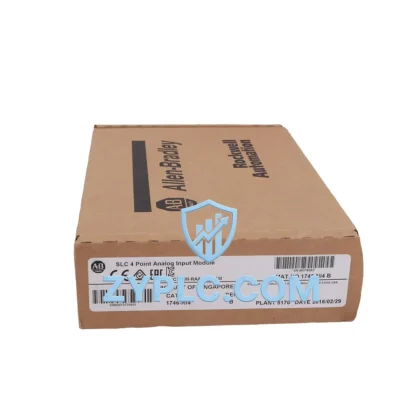
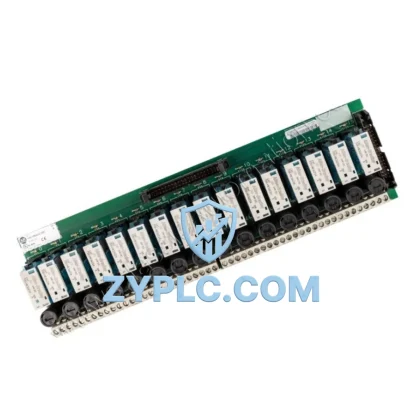
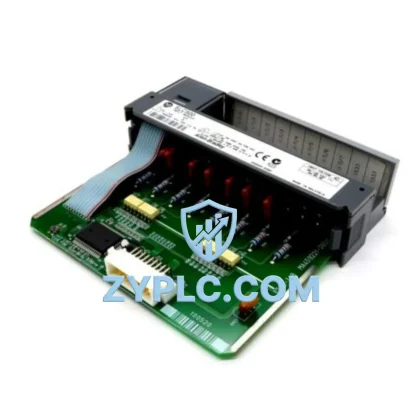
Siemens 39RTMCAN 16207-61/10 Energy-Saving RTD Module for TELEPERM Automation
The Siemens 39RTMCAN 16207-61/10 is a precision RTD (Resistance Temperature Detector) input module engineered for the TELEPERM distributed control system (DCS) platform. In modern industrial facilities where energy efficiency and process stability are paramount, accurate temperature measurement is the foundation of every effective energy optimization strategy. This module delivers high-resolution thermal data directly to the control layer, enabling operators to fine-tune energy consumption, reduce thermal waste, and maintain optimal equipment utilization across continuous production lines.
By integrating the 39RTMCAN 16207-61/10 into your TELEPERM architecture, your facility gains real-time temperature feedback that drives smarter decisions at every level — from burner control and heat exchanger regulation to motor thermal protection and predictive maintenance scheduling. The result is a measurable reduction in unplanned downtime, lower energy bills, and a production line that runs closer to its designed efficiency ceiling.
Efficiency Performance Table
| Parameter |
Specification / Value |
| SKU / Part Number |
39RTMCAN 16207-61/10 |
| Brand |
Siemens |
| Series |
TELEPERM DCS |
| Module Type |
RTD Temperature Input Module |
| Input Channels |
Multi-channel RTD (Pt100 / Pt1000 compatible) |
| Operating Voltage |
24 V DC (low-power bus-powered design) |
| Power Consumption |
Low standby draw; optimized for continuous DCS operation |
| Running Efficiency |
High-accuracy signal conversion; minimizes control loop error |
| Compatible Systems |
Siemens TELEPERM M / ME DCS platforms |
| Application Environment |
Chemical, petrochemical, power generation, utilities, heavy industry |
| Energy Optimization Value |
Enables precise thermal control → reduces energy waste in heating/cooling loops |
| Origin |
Germany |
| Warranty |
12-Month Warranty |
| Stock Status |
In Stock — Ships after outgoing quality test |
Energy-Aware Automation Architecture
The Siemens 39RTMCAN 16207-61/10 does not operate in isolation — it is a critical sensing node within a broader energy-aware automation architecture. In a typical TELEPERM-based plant, this RTD module feeds temperature data into the central process controller, where it interacts with analog output modules such as the Siemens 6DS1310-8AA to regulate control valves and actuators based on real thermal conditions rather than estimated setpoints.
On the drive side, variable frequency drives (VFDs) such as the Siemens SINAMICS G120 series rely on accurate thermal feedback to adjust motor speed dynamically. When the 39RTMCAN reports that a motor winding or pump bearing is approaching its thermal limit, the drive can reduce speed proactively — preventing thermal trips, extending motor life, and avoiding the energy spike associated with emergency restarts. This closed-loop interaction between the RTD module and the drive system is one of the most direct paths to measurable energy savings on the plant floor.
For facilities running Siemens S7-300 or S7-400 PLCs alongside legacy TELEPERM infrastructure, the temperature data captured by the 39RTMCAN 16207-61/10 can be forwarded via PROFIBUS DP communication cards — such as the Siemens CP 342-5 — to higher-level SCADA or MES systems. This integration allows energy managers to correlate temperature trends with production throughput, identifying inefficiencies in real time rather than after the fact.
Power monitoring modules like the Siemens SENTRON PAC3200 work in parallel with RTD inputs to give a complete picture of energy flow. While the PAC3200 tracks electrical consumption at the panel level, the 39RTMCAN tracks thermal behavior at the process level — together, they provide the dual-layer visibility needed for ISO 50001 energy management compliance. Digital I/O modules such as the Siemens ET 200S distributed I/O system can further extend this monitoring capability to remote field stations without adding significant wiring overhead.
In HMI-driven control rooms, operators using Siemens SIMATIC WinCC or SIMATIC OP panels can visualize temperature trends from the 39RTMCAN in real time, enabling shift engineers to spot thermal anomalies before they escalate into equipment failures. This predictive visibility is especially valuable in continuous process industries where unplanned shutdowns carry both energy and production penalties. Coupling the RTD module with a Siemens SITOP PSU300S power supply unit ensures stable, noise-free 24 V DC delivery to the measurement circuit, preserving signal integrity even in electrically noisy environments.
Power Optimization in Real Production Lines
In real-world production environments, the Siemens 39RTMCAN 16207-61/10 contributes to energy optimization through several interconnected mechanisms. First, by providing high-accuracy RTD measurements, it eliminates the temperature measurement error that causes control systems to over-compensate — a common source of hidden energy waste in heating, ventilation, and process cooling applications. A control loop that chases an inaccurate temperature signal will cycle its actuators more frequently, consuming more energy and accelerating mechanical wear.
Second, the module supports tighter production line pacing. In batch manufacturing, temperature is often the rate-limiting variable — a reactor that hasn’t reached setpoint holds up the entire downstream sequence. With the 39RTMCAN delivering fast, reliable thermal data, the control system can confirm readiness conditions more accurately, reducing unnecessary hold times and improving overall equipment effectiveness (OEE). Facilities that have upgraded from failed or degraded RTD modules consistently report a reduction in batch cycle time variance, which translates directly into better energy utilization per unit of output.
Third, the module plays a key role in predictive maintenance programs. Abnormal temperature rise in motors, transformers, or heat exchangers is one of the earliest indicators of developing faults. By logging RTD trends over time through the TELEPERM historian or a connected SCADA system, maintenance teams can schedule interventions during planned downtime windows rather than reacting to unexpected failures. This shift from reactive to predictive maintenance reduces both energy waste (from running degraded equipment at reduced efficiency) and the carbon footprint associated with emergency repair logistics.
Every unit shipped from ZYPLC undergoes a full outgoing quality inspection and functional test before dispatch, ensuring that the 39RTMCAN 16207-61/10 you receive performs to Siemens specification from day one. Combined with our 12-month warranty, this gives procurement and maintenance teams the confidence to plan around this component without building in excessive safety stock.
Energy Optimization FAQ
Q1: How does the 39RTMCAN 16207-61/10 contribute to energy savings in a TELEPERM DCS environment?
The module provides high-accuracy RTD temperature measurements that allow the DCS to execute tighter, more responsive control loops. Accurate thermal data prevents over-heating, reduces actuator cycling, and enables variable-speed drives to operate at optimal load points — all of which reduce unnecessary energy consumption across the process.
Q2: Is the 39RTMCAN 16207-61/10 compatible with modern Siemens PLC and SCADA systems?
The module is natively designed for the TELEPERM M and ME DCS platforms. Integration with modern Siemens S7-series PLCs or WinCC SCADA is achievable via PROFIBUS DP gateway modules or protocol converters. For hybrid architectures, consult your system integrator to confirm the communication bridge configuration.
Q3: What is the recommended replacement process, and how long does it take?
Replacement follows standard TELEPERM hot-swap or cold-swap procedures depending on your system configuration. The module slots into the existing backplane without requiring rewiring of field sensors. Most experienced maintenance technicians complete the swap within 30–60 minutes. ZYPLC recommends performing a loop check and calibration verification after installation to confirm measurement accuracy.
Q4: What does the 12-month warranty cover, and what is the testing process before shipment?
Every Siemens 39RTMCAN 16207-61/10 sold by ZYPLC is tested for functional integrity before dispatch. The 12-month warranty covers manufacturing defects and functional failures under normal operating conditions. Warranty claims are processed directly through ZYPLC’s after-sales team. Contact us at [email protected] or +86 19859288691 for warranty support or pre-purchase technical consultation.
© 2026 ZYPLC. All rights reserved.
Original Source: https://zyplc.com
Contact: +86 19859288691 | [email protected]