Siemens 505-4916A Energy-Saving Relay Output Module for Optimized TI505 Automation
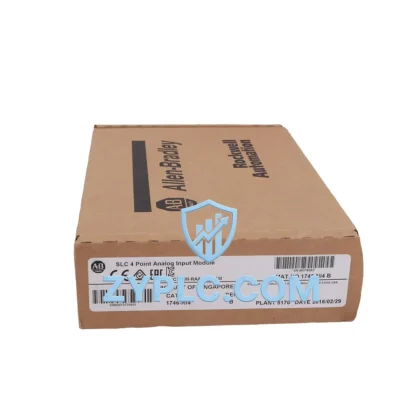
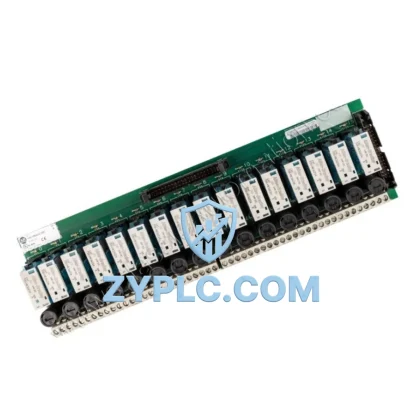
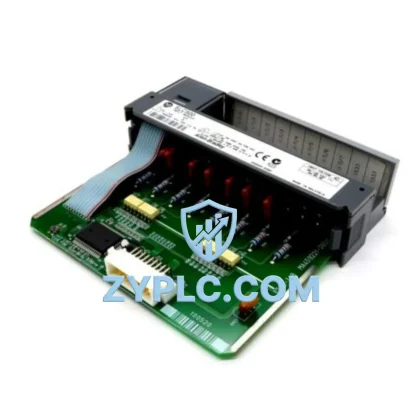
The Siemens 505-4916A is a high-efficiency relay output module engineered for the SIMATIC TI505 programmable logic controller platform. In modern industrial environments where energy costs and equipment utilization directly impact profitability, the 505-4916A delivers precise discrete output control that eliminates unnecessary switching losses, reduces idle-state power draw, and supports tighter production line cycle times. Whether deployed in continuous process control, discrete manufacturing, or hybrid automation architectures, this module provides the output reliability and response consistency that energy-aware facilities demand.
Each unit is sourced from verified supply channels, subjected to full functional testing prior to shipment, and backed by a 12-month warranty. Stock is maintained on-hand for fast dispatch, minimizing procurement lead times and unplanned downtime costs.
Efficiency Performance Table
| Parameter |
Specification |
| SKU |
505-4916A |
| Brand |
Siemens |
| Series |
SIMATIC TI505 |
| Module Type |
Relay Output Module |
| Output Channels |
16 relay discrete outputs |
| Operating Voltage |
24–120V AC/DC (load side) |
| Power Consumption |
Low standby draw; relay-isolated outputs minimize backplane load |
| Running Efficiency |
Relay isolation eliminates leakage current losses to field devices |
| Compatible Systems |
Siemens SIMATIC TI505 PLC racks and I/O expansion chassis |
| Application Environment |
Industrial automation, motor control centers, conveyor systems, HVAC control, process lines |
| Energy Saving Value |
Reduces unnecessary actuator energization through precise PLC-commanded switching |
| Warranty |
12 Months |
| Origin |
Germany |
| Availability |
In Stock — Ships within 1–3 business days |
Energy-Aware Automation Architecture
The 505-4916A operates as a critical execution node within the TI505 control architecture. The SIMATIC TI505 CPU — such as the 505-6860B or 505-6870 — issues discrete output commands through the backplane bus, and the 505-4916A translates those commands into relay contact closures that energize or de-energize field loads with millisecond-level precision. This tight command-to-execution loop is fundamental to energy optimization: actuators, solenoids, and motor starters are only powered when the process logic demands it, not due to control latency or output module drift.
In systems where energy monitoring is integrated, the 505-4916A works alongside power measurement modules such as the Siemens 505-6870 analog input module to feed real-time current and voltage data back to the CPU. When paired with a Siemens OP7 or OP17 HMI panel, operators gain visibility into output states and load conditions without requiring additional field instrumentation, reducing both wiring complexity and measurement overhead.
For variable-speed drive coordination, the 505-4916A relay outputs are commonly used to issue run/stop and direction commands to Siemens MICROMASTER 440 or SINAMICS G120 variable frequency drives. This relay-to-drive interface ensures that motor acceleration and deceleration profiles are governed by the VFD’s internal ramp parameters rather than abrupt switching, directly reducing inrush current events and mechanical wear on coupled equipment.
In distributed I/O configurations, the 505-4916A can be installed in remote I/O racks connected via the TI505 TIWAY-1 network or through Siemens 505-6850B communication modules, allowing output control to be placed physically close to the load. This reduces cable runs, lowers resistive losses in long field wiring, and simplifies troubleshooting during maintenance windows. Complementary analog output modules such as the 505-4920 handle proportional control loops, while the 505-4916A manages the discrete switching layer — together forming a complete mixed-signal output strategy.
For applications requiring coordinated servo motion alongside relay-based discrete control, the TI505 platform supports integration with Siemens SIMODRIVE servo amplifier systems, where the 505-4916A provides enable, fault reset, and mode-select signals. This division of labor — relay outputs for logic-level control, servo drives for motion — keeps the control architecture clean and the energy profile predictable.
Power Optimization in Real Production Lines
In a typical discrete manufacturing cell, uncontrolled output switching is one of the most overlooked sources of energy waste. Relay output modules that suffer from contact bounce, slow dropout times, or excessive coil power consumption contribute to cumulative energy losses that compound across multi-shift operations. The 505-4916A addresses this through its relay-isolated output design, which ensures that each channel draws power only during the active switching event and maintains a stable contact state without continuous coil energization — a characteristic that distinguishes relay outputs from solid-state alternatives in low-duty-cycle applications.
On conveyor and material handling lines, the 505-4916A enables the TI505 CPU to implement zone-based motor control strategies. Individual conveyor segments, diverters, and accumulation zones can be independently enabled and disabled based on upstream and downstream sensor feedback — typically sourced through companion input modules such as the Siemens 505-4116 discrete input module. This zone-control approach eliminates the practice of running entire conveyor systems continuously regardless of product flow, which in high-throughput facilities can reduce motor running hours by 15–30% per shift.
For HVAC and building automation applications within industrial facilities, the 505-4916A controls damper actuators, pump starters, and fan contactors based on process temperature and pressure setpoints managed by the TI505 CPU. When integrated with analog input data from temperature transmitters via the 505-4920 analog input module, the system can implement demand-based control rather than fixed-schedule operation, directly reducing compressor and fan energy consumption during low-load periods.
Predictive maintenance benefits are also realized through the 505-4916A’s role in output state logging. By tracking relay switching frequency and cumulative on-time through the TI505 data table, maintenance teams can identify abnormal cycling patterns that indicate upstream process instability — such as a pressure switch hunting or a sensor threshold set too close to the process operating point. Catching these conditions early prevents both unnecessary energy consumption from repeated actuator cycling and premature mechanical failure of the controlled devices.
All units supplied by ZYPLC undergo pre-shipment functional testing that verifies relay contact continuity, coil response time, and backplane communication integrity. This testing protocol ensures that replacement modules integrate into live production environments without commissioning delays, supporting rapid return-to-operation after unplanned failures.
Energy Optimization FAQ
Q1: How does the 505-4916A contribute to measurable energy savings on a production line?
The module enables the TI505 CPU to implement demand-driven output control — actuators, motors, and solenoids are energized only when process logic requires it. Combined with zone-based control strategies and VFD integration via run/stop relay commands, facilities typically observe reductions in motor idle time and associated energy draw. The relay-isolated design also eliminates leakage current losses common in solid-state output modules under light-load conditions.
Q2: Is the 505-4916A compatible with current TI505 rack configurations and CPU versions?
Yes. The 505-4916A is designed for the SIMATIC TI505 I/O rack system and is compatible with standard TI505 power supplies and CPU modules including the 505-6860B and 505-6870 series. It occupies a standard single-slot position in both local and remote I/O racks. Verify rack slot availability and backplane revision with your system documentation before installation.
Q3: What is the recommended replacement and testing procedure when substituting a failed output module?
Power down the affected rack segment or use hot-swap procedures if supported by your TI505 configuration. Remove the failed module, inspect the backplane connector for damage, and insert the 505-4916A replacement. Restore power and verify output states through the TI505 programming software. ZYPLC-supplied units are pre-tested and include a functional test report. Full system validation should be performed per your site’s change management procedure before returning the line to production.
Q4: What warranty coverage applies to the 505-4916A, and what does it include?
All 505-4916A units supplied by ZYPLC are covered by a 12-month warranty from the date of shipment. The warranty covers functional failure under normal operating conditions and includes replacement or repair at ZYPLC’s discretion. It does not cover damage resulting from incorrect installation, overvoltage events, or operation outside the module’s rated specifications. Contact our technical team at [email protected] for warranty claims and RMA processing.
© 2026 ZYPLC. All rights reserved.
Original Source: https://zyplc.com
Contact: +86 19859288691 | [email protected]